Fort Early and Jubal Early Monument

Why it's listed
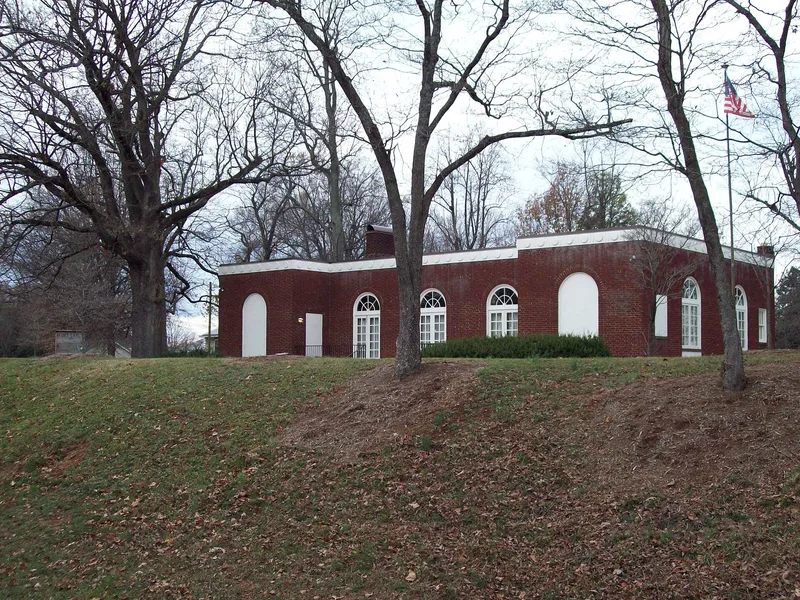
Fort Early is a roughly square earthen fort in Lynchburg, Virginia, raised in June 1864 by Confederate troops under General Jubal A. Early. It was part of the outer defenses of a city that served as a major rail and supply center. When Union General David Hunter approached along the Lynchburg-Salem Turnpike, Early's forces held the line during the Battle of Lynchburg on June 17-18, and Hunter withdrew. The fort is the only part of those defenses that survives. Its earthen walls rise 12 to 15 feet on the outside and enclose a sally port and a brick-paved entrance drive. After the war the land was used for a small school, then passed to the United Daughters of the Confederacy and later the city. A brick clubhouse was built inside the walls in 1922 and now houses a museum of the battle. A 17-foot granite obelisk honoring Early, erected in 1919, stands across the street.
Significance in brief: Fort Early is the only surviving section of Lynchburg's Civil War outer defenses and is tied to the Battle of Lynchburg on June 17-18, 1864, when Early's troops repulsed Union General David Hunter's advance. It is nominated under Criterion A for that association and for the defense of the city. Later commemorative additions, including the monument and clubhouse museum, helped preserve it.
Machine-generated summary. This summary was generated by a language model from the official nomination document and has not been reviewed line by line by an editor. It may contain errors. Check the source document before relying on any detail. Source: nomination document (PDF) · National Archives catalog entry. NRHP reference 01001517, listed January 24, 2002. Summary generated October 2026 (model claude-sonnet-5-5, prompt v1.0-2026-10-29, confidence high).
Key facts
| Address | 3511 Memorial Ave., Lynchburg (Independent City) |
|---|---|
| County | Lynchburg |
| Listed | January 24, 2002 |
| Reference number | 01001517 |
| Resource type | Site |
| Period of significance | 1864--1950 |
| Architect / builder | Clubhouse designed by Craighill and Cardwell according to one source; the form says it is unclear which firm completed the design |
| Architectural style | Earthen fort (no style); clubhouse and monument in Classical Revival (Neo-classical Revival) |
| Criteria |
|
| Areas of significance | Military |
| Level of significance | Local |
| Status (as stated in the nomination) | Described as well preserved. The clubhouse serves as a museum of the Battle of Lynchburg, open to the public by appointment, and the city and a women's club maintain the grounds. |
| Acreage | 1.3 |
| Coordinates | 37.38997, -79.17316 (NPS GIS) |
What listing means for this property
Sites (archaeological sites, battlefields, landscapes) are often listed with a restricted address to protect them from looting or disturbance. Listing is honorary for private owners; federal undertakings on or near the site go through Section 106 review, and state laws may protect burials and artefacts regardless of listing.
General information, not legal or tax advice. Rules change; confirm with your State Historic Preservation Office or a qualified adviser.
Sources and further reading
- National Park Service, National Register of Historic Places database (snapshot May 2026), reference 01001517.
- Nomination form (PDF, National Archives) — catalog entry
- Wikipedia article (used for cross-checking only; text not reproduced here)
- Wikidata Q5471111
- This listing as JSON
Last updated October 2026. Found an error? See the editorial policy for how to report it.