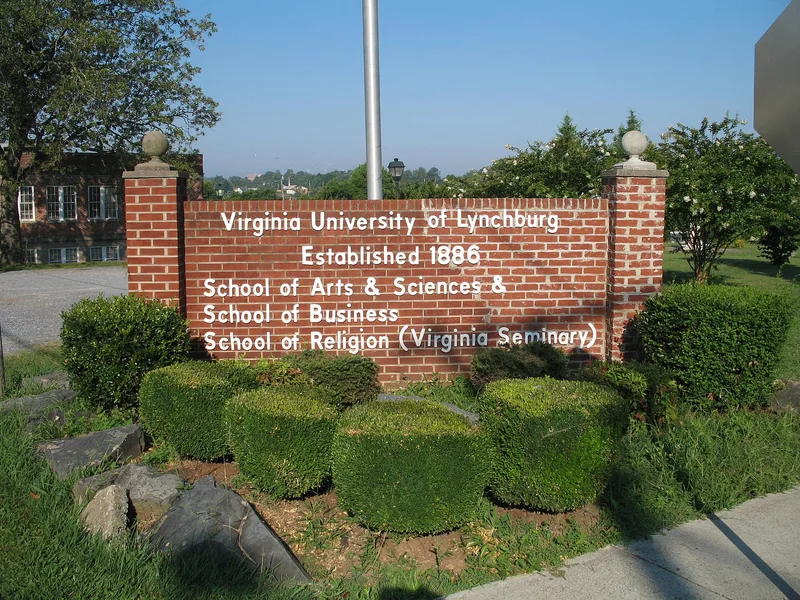
Virginia University of Lynchburg
Also known as: Lynchburg Baptist Seminary; Virginia Seminary; Vdhr 118-5297; Virginia Theological Seminary & College

Why it's listed
Virginia University of Lynchburg occupies a 6.82-acre campus in the Seminary Hill neighborhood of southern Lynchburg, a traditionally African American area. Founded in 1888 as a Baptist seminary, it grew into a college led by African Americans. Three historic brick buildings remain: Graham Hall (1917), a one-story former dining hall; Humbles Hall (1920-21), a two-story Beaux Arts building with corner towers, terra-cotta trim and a 900-seat auditorium; and the Mary Jane Cachelin Memorial Science and Library Building (1946). A limestone bust of president Gregory W. Hayes, erected after his death in 1906, stands where Hayes Hall once stood. Hayes resisted white control of the school and kept academic courses in the curriculum despite pressure to teach only trades. Humbles Hall was designed by Romulus C. Archer, Jr., a Washington, D.C., African American architect. The campus is recognized for its role in Black education and for its architecture.
Significance in brief: The campus is significant for education and Black ethnic heritage as a school that became largely independent of white control and funding under its second president, Gregory W. Hayes. It is also significant for architecture, chiefly Humbles Hall, designed by African American architect Romulus C. Archer, Jr. Its period of significance runs 1888-1960.
Machine-generated summary. This summary was generated by a language model from the official nomination document and has not been reviewed line by line by an editor. It may contain errors. Check the source document before relying on any detail. Source: nomination document (PDF) · National Archives catalog entry. NRHP reference 11000035, listed February 22, 2011. Summary generated October 2026 (model claude-sonnet-5-5, prompt v1.0-2026-10-29, confidence medium).
Key facts
| Address | 2058 Garfield Ave, Lynchburg |
|---|---|
| County | Lynchburg |
| Listed | February 22, 2011 |
| Reference number | 11000035 |
| Resource type | District |
| Period of significance | 1888-1960 |
| Architect / builder | Romulus C. Archer, Jr. (Humbles Hall) |
| Architectural style | Beaux Arts; Colonial Revival |
| Criteria |
|
| Areas of significance | Education, Black, Architecture |
| Level of significance | Local |
| Status (as stated in the nomination) | Still used as a college. Graham Hall, the former dining hall, is currently used for storage. Hayes Hall and Fox Hall were demolished in 1988. |
| Acreage | 6.8 |
| Coordinates | 37.39491, -79.15288 (NPS GIS) |
What listing means for this property
This is a historic district. Buildings within its boundary are either contributing (they add to the district's significance) or non-contributing. Owners of contributing income-producing buildings can claim the 20% federal rehabilitation tax credit; homeowners should look at state credits. National Register districts impose no design review by themselves; a local historic district ordinance, if one exists, does (the difference explained).
General information, not legal or tax advice. Rules change; confirm with your State Historic Preservation Office or a qualified adviser.
Sources and further reading
- National Park Service, National Register of Historic Places database (snapshot May 2026), reference 11000035.
- Nomination form (PDF, National Archives) — catalog entry
- Wikipedia article (used for cross-checking only; text not reproduced here)
- Wikidata Q7934641
- This listing as JSON
Last updated October 2026. Found an error? See the editorial policy for how to report it.