Furr Farm
Also known as: VDHR File No. 053-5056-0001

Why it's listed
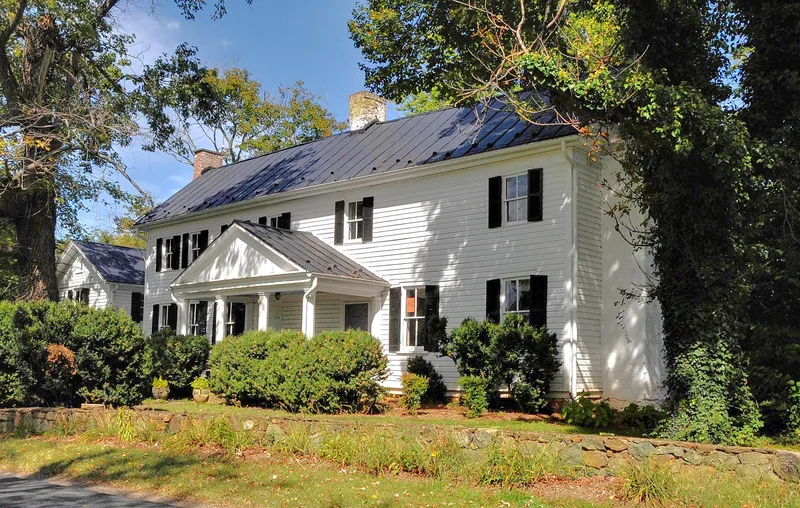
Furr Farm is a 95-acre farm northwest of Aldie in Loudoun County, Virginia, built up over roughly 140 years. Its main house began around 1790 as a two-story log dwelling over a stone basement. A frame addition followed in the early 19th century, a Greek Revival portico in the mid-19th century, and a kitchen and bath addition around 1930. Surrounding the house are a log summer kitchen or meat house, a barn, a stable, a corn crib, a dairy, sheds, and dry-laid fieldstone walls. The farm was the scene of a fierce cavalry fight during the Battle of Aldie on June 17, 1863, when men of the 1st Massachusetts Cavalry were trapped along the stone-walled road. The house served as a field hospital. In 1891 veterans erected a granite monument on the farm, reportedly the first regimental monument placed by Union soldiers on a Southern battlefield. The log house also illustrates a less common two-story form of local log building.
Significance in brief: The farm was the site of the 'Fight at Furr Farm' during the Battle of Aldie on June 17, 1863, in which the 1st Massachusetts Cavalry suffered heavy losses. The 1891 regimental monument on the farm reflects post-war reconciliation. The house is also significant as an evolved vernacular two-story log dwelling that retains much of its late 18th and early 19th century woodwork.
Machine-generated summary. This summary was generated by a language model from the official nomination document and has not been reviewed line by line by an editor. It may contain errors. Check the source document before relying on any detail. Source: nomination document (PDF) · National Archives catalog entry. NRHP reference 12000541, listed August 17, 2012. Summary generated October 2026 (model claude-sonnet-5-5, prompt v1.0-2026-10-29, confidence high).
Key facts
| Address | 40590 Snickersville Tnpk., Aldie |
|---|---|
| County | Loudoun County |
| Listed | August 17, 2012 |
| Reference number | 12000541 |
| Resource type | District |
| Period of significance | Ca. 1790 - ca. 1930 |
| Architectural style | Vernacular (Other); Greek Revival-style portico added mid-19th century |
| Criteria |
|
| Areas of significance | Military, Architecture |
| Level of significance | State |
| Status (as stated in the nomination) | Current function is listed as vacant/not in use. The house was placed under a state preservation easement in 2008, and the farm was sold out of the Furr family in 2010. |
| Acreage | 95.2 |
| Coordinates | 38.99466, -77.66476 (NPS GIS) |
What listing means for this property
This is a historic district. Buildings within its boundary are either contributing (they add to the district's significance) or non-contributing. Owners of contributing income-producing buildings can claim the 20% federal rehabilitation tax credit; homeowners should look at state credits. National Register districts impose no design review by themselves; a local historic district ordinance, if one exists, does (the difference explained).
Noted as vacant in the nomination. Nomination documents can be decades old; current status may differ. If you are considering buying an empty listed property, read the due-diligence checklist.
General information, not legal or tax advice. Rules change; confirm with your State Historic Preservation Office or a qualified adviser.
Sources and further reading
- National Park Service, National Register of Historic Places database (snapshot May 2026), reference 12000541.
- Nomination form (PDF, National Archives) — catalog entry
- Wikipedia article (used for cross-checking only; text not reproduced here)
- Wikidata Q14712345
- This listing as JSON
Last updated October 2026. Found an error? See the editorial policy for how to report it.