Reed, Walter, Birthplace

Why it's listed
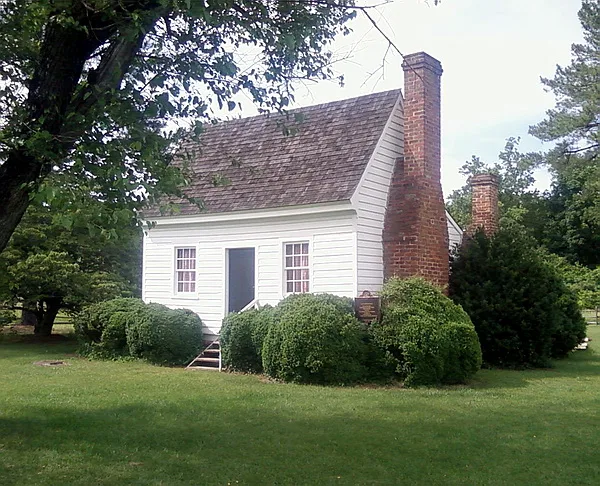
This small frame cottage in Belroi, Gloucester County, Virginia, is where Dr. Walter Reed was born. His father, Rev. Lemuel Sutton Reed, served the Methodist Gloucester Circuit from 1851 to 1852, and the family lived here because the parsonage was not yet finished. The house is one story with three bays, a gable roof, white weatherboarding and short brick piers. It has one main room with a room above and a shed room at the rear. Reed later headed the commission that showed mosquitoes transmit yellow fever. The cottage also illustrates the modest vernacular dwellings once common in Tidewater Virginia, now rare compared with the great plantation houses. The Medical Society of Virginia restored it in 1927, removing a side addition and rebuilding the front chimney with brick from a nearby house. The Association for the Preservation of Virginia Antiquities received it in 1968 and carried out further work in 1970, including a new roof.
Significance in brief: It is the birthplace of Dr. Walter Reed, who proved that mosquitoes transmit yellow fever. It also represents the small vernacular rural dwelling once common in Tidewater Virginia, a type that has largely disappeared. Its preservation through the Reed association keeps an example of an ordinary mid-nineteenth-century Virginian's home.
Machine-generated summary. This summary was generated by a language model from the official nomination document and has not been reviewed line by line by an editor. It may contain errors. Check the source document before relying on any detail. Source: nomination document (PDF) · National Archives catalog entry. NRHP reference 73002017, listed September 20, 1973. Summary generated October 2026 (model claude-sonnet-5-5, prompt v1.0-2026-10-29, confidence high).
Key facts
| Address | SW of Gloucester at jct. of VA 614 and 616, Belroi |
|---|---|
| County | Gloucester County |
| Listed | September 20, 1973 |
| Reference number | 73002017 |
| Resource type | Building |
| Period of significance | 19th Century |
| Architectural style | Early nineteenth-century small vernacular rural dwelling |
| Areas of significance | Health/Medicine, Architecture, Commerce, Historic - Non-Aboriginal, Conservation |
| Level of significance | National |
| Status (as stated in the nomination) | Condition marked excellent and altered, on its original site; restored in 1927 and 1970 and owned by the Association for the Preservation of Virginia Antiquities. |
| Acreage | 9.9 |
| Coordinates | 37.38854, -76.58812 (NPS GIS) |
What listing means for this property
National Register listing is honorary: it recognises significance and does not restrict what a private owner may do without federal money or permits. It unlocks the 20% federal rehabilitation tax credit for income-producing buildings, state credits in many states, and Section 106 review when federal agencies are involved. See what listing means in practice.
General information, not legal or tax advice. Rules change; confirm with your State Historic Preservation Office or a qualified adviser.
Sources and further reading
- National Park Service, National Register of Historic Places database (snapshot May 2026), reference 73002017.
- Nomination form (PDF, National Archives) — catalog entry
- Wikipedia article (used for cross-checking only; text not reproduced here)
- Wikidata Q14713492
- This listing as JSON
Last updated October 2026. Found an error? See the editorial policy for how to report it.