Bremo Slave Chapel
Also known as: Grace Church Parish Hall

Why it's listed
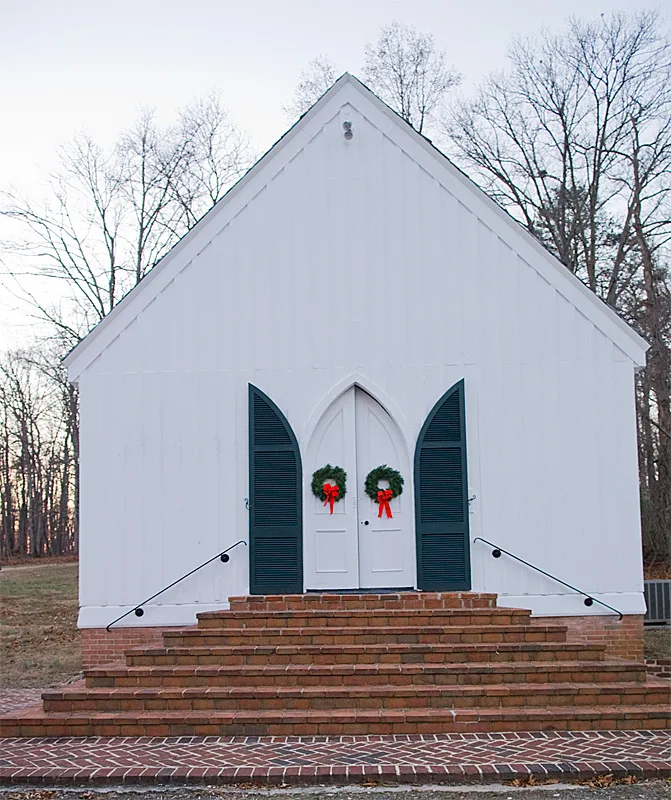
Built in 1835 on the Bremo plantation of General John Hartwell Cocke, this wood-frame chapel with board-and-batten siding was used for worship by enslaved people. It is the only known structure in Virginia built for that purpose. Cocke opposed slavery in principle, supported emigration of Black Americans to Africa, and believed a Christian had a duty to provide religious instruction to his slaves. After the Civil War the chapel fell into disuse. Between 1882 and 1884 it was moved to Bremo Bluff and altered, gaining its pointed-arch windows, and was consecrated as Grace Church in February 1884. When a new brick church was built in 1924, the chapel was moved again and became the parish hall. A slate roof, brick foundation, Gothic double doors and a later rear vestry survive. The chapel has served three functions: a place of worship for slaves, an Episcopal church, and a parish hall.
Significance in brief: The nomination argues it is the only known structure in Virginia used as a chapel for slaves. It reflects Cocke's deep concern with the morality of slavery and the religious life of enslaved people. It is also noted for its Gothic Revival architecture and its three successive uses.
Machine-generated summary. This summary was generated by a language model from the official nomination document and has not been reviewed line by line by an editor. It may contain errors. Check the source document before relying on any detail. Source: nomination document (PDF) · National Archives catalog entry. NRHP reference 80004189, listed March 17, 1980. Summary generated October 2026 (model claude-sonnet-5-5, prompt v1.0-2026-10-29, confidence high).
Key facts
| Address | N of Bremo Bluff, Bremo Bluff |
|---|---|
| County | Fluvanna County |
| Listed | March 17, 1980 |
| Reference number | 80004189 |
| Resource type | Building |
| Period of significance | 1800-1899 |
| Architect / builder | unknown, probably J. H. Cocke |
| Architectural style | Gothic Revival |
| Areas of significance | Architecture, Religion, Social History |
| Level of significance | State |
| Status (as stated in the nomination) | Occupied and in use as the parish hall of Grace Episcopal Church; condition listed as good, altered and moved. |
| Acreage | 1 |
| Coordinates | 37.71723, -78.29710 (NPS GIS) |
What listing means for this property
Religious properties are listed for their architectural or historical significance, not their religious use. Listing is honorary and does not restrict the congregation's use of the building. The federal rehabilitation credit is generally unavailable unless part of the building is income-producing; some state programmes and preservation grants do cover religious buildings. Federal funding or permits trigger Section 106 review.
General information, not legal or tax advice. Rules change; confirm with your State Historic Preservation Office or a qualified adviser.
Sources and further reading
- National Park Service, National Register of Historic Places database (snapshot May 2026), reference 80004189.
- Nomination form (PDF, National Archives) — catalog entry
- Wikipedia article (used for cross-checking only; text not reproduced here)
- Wikidata Q4960597
- This listing as JSON
Last updated October 2026. Found an error? See the editorial policy for how to report it.