New Baltimore Historic District
Also known as: Vdhr # 030-5166

Why it's listed
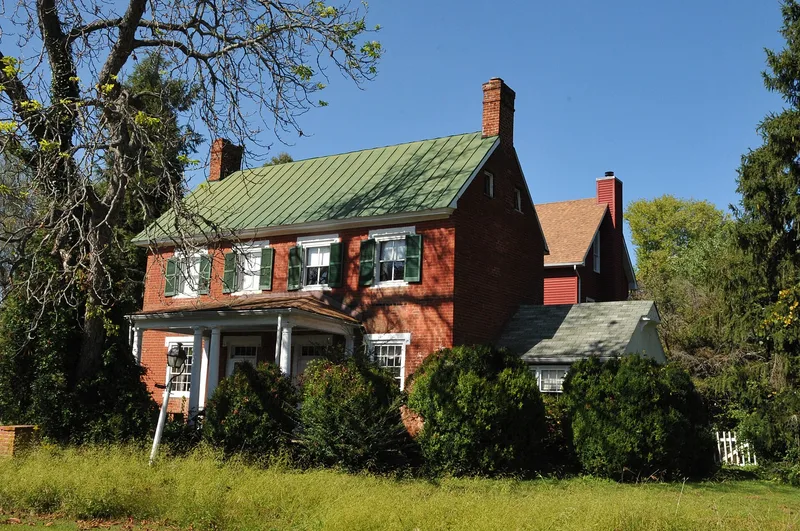
New Baltimore is a small crossroads village north of Warrenton, Virginia, that grew up around a mill and tavern where the old Alexandria Turnpike met two roads leading to Thoroughfare Gap. The historic district covers about 88 acres and includes dwellings, a former school, a former store, outbuildings and a one-lane concrete bridge. James Hampton's Tavern, built about 1823 in the Federal style, is the most prominent building, and Eastview, a Federal frame house with a log summer kitchen, reflects the local Hunton family. Many early homes are modest log or frame houses enlarged over time, alongside Victorian, Colonial Revival and Craftsman examples. The village was incorporated in 1822, hosted the Marquis de La Fayette in 1825 and was home to a respected academy. When US Route 29 bypassed it in the 1920s, the village's historic buildings and setting were largely preserved. It was recognized for the variety and integrity of its architecture from the 1820s to the mid-20th century.
Significance in brief: The district is argued to be significant under Criterion C as an unusually well-preserved 19th-century crossroads settlement with a varied collection of buildings from the 1820s to the mid-20th century. Its history is tied to the Hunton family, a visit by the Marquis de La Fayette in 1825, and a prestigious boys' academy. The 1920s bypass by US Route 29 preserved much of its character.
Machine-generated summary. This summary was generated by a language model from the official nomination document and has not been reviewed line by line by an editor. It may contain errors. Check the source document before relying on any detail. Source: nomination document (PDF) · National Archives catalog entry. NRHP reference 04000044, listed February 11, 2004. Summary generated October 2026 (model claude-sonnet-5-5, prompt v1.0-2026-10-29, confidence medium).
Key facts
| Address | Area including parts of Old Alexandria Turnpike, Mason Ln., Georgetown Rd., and Beverley's Mill Rd., New Baltimore |
|---|---|
| County | Fauquier County |
| Listed | February 11, 2004 |
| Reference number | 04000044 |
| Resource type | District |
| Period of significance | 1822-1953 |
| Architectural style | Federal, Colonial Revival, Bungalow/Craftsman, I-house |
| Criteria |
|
| Areas of significance | Architecture |
| Level of significance | Local |
| Status (as stated in the nomination) | Mostly in residential use today; the former tavern area, school and store have been adapted or converted, and a 1920s concrete slab bridge is still in use. |
| Acreage | 88 |
| Coordinates | 38.76891, -77.72219 (NPS GIS) |
What listing means for this property
This is a historic district. Buildings within its boundary are either contributing (they add to the district's significance) or non-contributing. Owners of contributing income-producing buildings can claim the 20% federal rehabilitation tax credit; homeowners should look at state credits. National Register districts impose no design review by themselves; a local historic district ordinance, if one exists, does (the difference explained).
General information, not legal or tax advice. Rules change; confirm with your State Historic Preservation Office or a qualified adviser.
Sources and further reading
- National Park Service, National Register of Historic Places database (snapshot May 2026), reference 04000044.
- Nomination form (PDF, National Archives) — catalog entry
- Wikipedia article (used for cross-checking only; text not reproduced here)
- Wikidata Q14712949
- This listing as JSON
Last updated October 2026. Found an error? See the editorial policy for how to report it.