Oak Lawn

Why it's listed
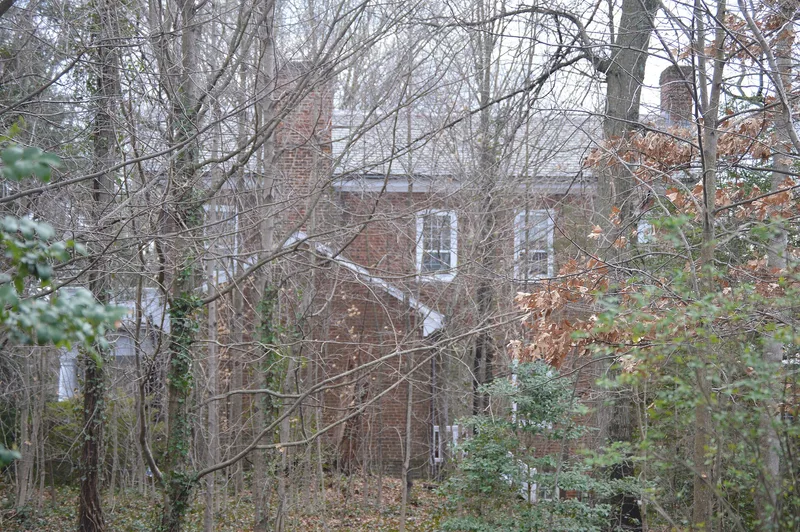
Oak Lawn is a brick house of 1822 on a hill at Cherry Avenue and Ninth Street in Charlottesville. Its two-story central block has a pedimented gable front and a one-story Tuscan-columned portico, and it is flanked by one-story, two-bay wings. The walls are laid in Flemish bond, and every room has a fireplace. The design follows the Randolph-Semple House in Williamsburg and reflects the Jeffersonian Classicism of the period. Workmen who had labored for Thomas Jefferson at the University of Virginia are believed to have built it, and later research credits James Dinsmore, a Scots-Irish carpenter, with the design. Col. Nimrod Bramham had the house built. In 1847 James Fife, a Baptist minister, farmer and businessman, bought the property and renamed it Oak Lawn. Fife's name came to identify the surrounding neighborhood. About five acres remain, with the house, a brick cook's house and two family cemeteries, and the grounds still feel rural despite the surrounding city.
Significance in brief: The house is a notable example of Jeffersonian Classicism, with the Randolph-Semple House in Williamsburg as its design prototype. It is believed to have been built by workmen employed by Thomas Jefferson at the University of Virginia, and later documentation attributes its design to James Dinsmore. It is also the earliest historic resource in the Fifeville-Castle Hill area and is tied to the Fife family, for whom the neighborhood is named.
Machine-generated summary. This summary was generated by a language model from the official nomination document and has not been reviewed line by line by an editor. It may contain errors. Check the source document before relying on any detail. Source: nomination document (PDF) · National Archives catalog entry. NRHP reference 73002204, listed May 25, 1973. Summary generated October 2026 (model claude-sonnet-5-5, prompt v1.0-2026-10-29, confidence high).
Key facts
| Address | Cherry Ave. and 9th St., Charlottesville (Independent City) |
|---|---|
| County | Charlottesville |
| Listed | May 25, 1973 |
| Reference number | 73002204 |
| Resource type | Building |
| Period of significance | 19th century |
| Architect / builder | James Dinsmore (believed designer and builder); built by workmen who worked for Thomas Jefferson at the University of Virginia |
| Architectural style | Jeffersonian Classicism / Jeffersonian Palladianism |
| Areas of significance | Architecture |
| Level of significance | State |
| Status (as stated in the nomination) | Described as structurally sound but in need of some repair in the original form; a private residence, occupied. |
| Acreage | 10 |
| Coordinates | 38.02818, -78.49600 (NPS GIS) |
What listing means for this property
National Register listing is honorary: it recognises significance and does not restrict what a private owner may do without federal money or permits. It unlocks the 20% federal rehabilitation tax credit for income-producing buildings, state credits in many states, and Section 106 review when federal agencies are involved. See what listing means in practice.
General information, not legal or tax advice. Rules change; confirm with your State Historic Preservation Office or a qualified adviser.
Sources and further reading
- National Park Service, National Register of Historic Places database (snapshot May 2026), reference 73002204.
- Nomination form (PDF, National Archives) — catalog entry
- Wikipedia article (used for cross-checking only; text not reproduced here)
- Wikidata Q15263197
- This listing as JSON
Last updated October 2026. Found an error? See the editorial policy for how to report it.