Fifeville and Tonsler Neighborhoods Historic District

Why it's listed
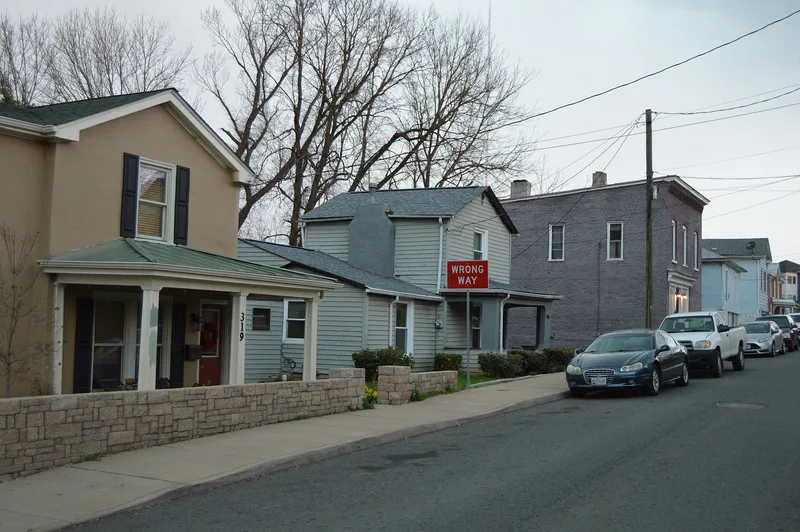
Fifeville and Tonsler are two adjoining neighborhoods covering 56 acres south of West Main Street in Charlottesville. Most of the buildings are two-story frame houses built between about 1890 and 1930, many with Victorian touches such as bracketed eaves, corbelled chimneys and sawn porch woodwork. The oldest resource is Oak Lawn, a brick house built in 1822 for Nimrod Bramham and attributed to master carpenter James Dinsmore. Its farmland was later subdivided into the 1888 lots that formed Fifeville. The eastern area grew more irregularly from small parcels carved out of early landholdings, and by the late 19th century it was home mainly to African-American professionals and workers, including builders such as John C. Coles. Brick builder Allen Hawkins and his relatives built several early houses there. The district is notable for its architectural consistency, the small share of modern intrusions, and its record of how two neighborhoods developed differently but came to look alike. Its period of significance runs from about 1822 to 1957.
Significance in brief: The district is argued to be significant for its architecture, its community planning and development, and its Black ethnic heritage. It retains a high degree of integrity, with vernacular house forms with Victorian detailing, and with the 1822 Oak Lawn estate as its earliest resource. The eastern area became a largely African-American community of workers, professionals and leaders, while the western area was a late-1880s subdivision of Oak Lawn farmland.
Machine-generated summary. This summary was generated by a language model from the official nomination document and has not been reviewed line by line by an editor. It may contain errors. Check the source document before relying on any detail. Source: nomination document (PDF) · National Archives catalog entry. NRHP reference 09000452, listed June 18, 2009. Summary generated October 2026 (model claude-sonnet-5-5, prompt v1.0-2026-10-29, confidence medium).
Key facts
| Address | Bounded by Cherry Ave, to the S., the railway to the N., 4th St., SW to the E., and Spring St., to the W., Charlottesville |
|---|---|
| County | Charlottesville |
| Listed | June 18, 2009 |
| Reference number | 09000452 |
| Resource type | Building |
| Period of significance | ca. 1822-1957 |
| Architect / builder | Allen Hawkins (builder, brickmason); James Hawkins (brickmason); John C. Coles (African-American builder); John Shelton (African-American carpenter); Alan Watson (African-American builder); Eston B. Updike (brickmason); Jacob H. Nalls (building contractor); James Dinsmore (master carpenter of Oak Lawn) |
| Architectural style | Federal; I-house; Late Victorian; Gothic Revival; Bungalow/Craftsman |
| Criteria |
|
| Areas of significance | Architecture, Black, Community Planning and Development |
| Level of significance | Local |
| Status (as stated in the nomination) | Remains a residential neighborhood with a church and a few commercial buildings; 264 contributing buildings, three contributing sites, and 70 non-contributing buildings and one non-contributing site. |
| Acreage | 56 |
| Coordinates | 38.02804, -78.48966 (NPS GIS) |
What listing means for this property
National Register listing is honorary: it recognises significance and does not restrict what a private owner may do without federal money or permits. It unlocks the 20% federal rehabilitation tax credit for income-producing buildings, state credits in many states, and Section 106 review when federal agencies are involved. See what listing means in practice.
General information, not legal or tax advice. Rules change; confirm with your State Historic Preservation Office or a qualified adviser.
Sources and further reading
- National Park Service, National Register of Historic Places database (snapshot May 2026), reference 09000452.
- Nomination form (PDF, National Archives) — catalog entry
- Wikipedia article (used for cross-checking only; text not reproduced here)
- Wikidata Q15217655
- This listing as JSON
Last updated October 2026. Found an error? See the editorial policy for how to report it.