Scottsville Historic District

Why it's listed
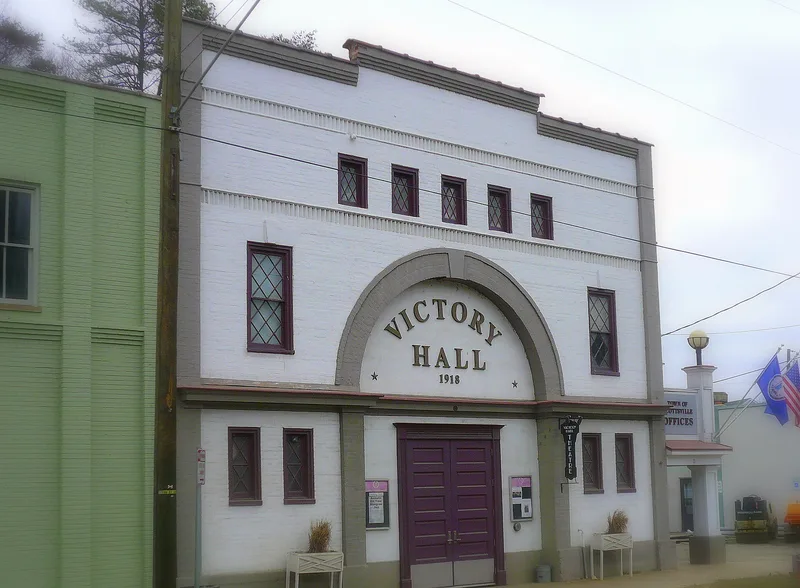
Scottsville is a river town on the north bank of the James River at Horseshoe Bend, mostly in Albemarle County with a small eastern section in Fluvanna County. The district covers the whole town, 115 acres, and contains roughly 51 to 53 buildings of historic or architectural interest. They range from early frame cottages and warehouses on Main Street to brick commercial rows on Valley Street and Greek Revival houses and churches on Harrison Street. The town began with Edward Scott's 1732 land patent and served briefly as Albemarle County's seat. It was a Revolutionary War supply depot, and it prospered as a flour market after the James River and Kanawha Canal opened through it in 1840. Sheridan's cavalry destroyed the canal section and many mills in 1865, and later the railroad took over the towpath. Floods in 1969 and 1972 and fires in 1976 caused damage, yet the town kept its nineteenth-century character, which is the basis for its listing.
Significance in brief: The nomination argues that Scottsville has kept its early character as a nineteenth-century river town despite prosperity, depression, war, floods and fire. It has a notable range of antebellum and postbellum commercial architecture, which is rare among Virginia towns, along with fine vernacular and sophisticated houses. The town was also an early county seat, a Revolutionary War supply depot, and a flour-trade center during the James River and Kanawha Canal era.
Machine-generated summary. This summary was generated by a language model from the official nomination document and has not been reviewed line by line by an editor. It may contain errors. Check the source document before relying on any detail. Source: nomination document (PDF) · National Archives catalog entry. NRHP reference 76002093, listed July 30, 1976. Summary generated October 2026 (model claude-sonnet-5-5, prompt v1.0-2026-10-29, confidence medium).
Key facts
| Address | VA 6, Scottsville |
|---|---|
| County | Albemarle County |
| Listed | July 30, 1976 |
| Reference number | 76002093 |
| Resource type | District |
| Architectural style | Mixed styles including Federal, Greek Revival, Gothic Revival, Italianate, Queen Anne, Edwardian and Georgian Revival |
| Areas of significance | Commerce, Transportation, Politics/Government, Architecture |
| Level of significance | State |
| Status (as stated in the nomination) | Condition is marked good. A February 1976 fire cleared an area at Valley and Main Streets and heavily damaged the Methodist Church. The Scottsville Flour Mill is still in operation. |
| Acreage | 115 |
| Within district | Southern Albemarle Rural Historic District |
| Coordinates | 37.79955, -78.49247 (NPS GIS) |
What listing means for this property
This is a historic district. Buildings within its boundary are either contributing (they add to the district's significance) or non-contributing. Owners of contributing income-producing buildings can claim the 20% federal rehabilitation tax credit; homeowners should look at state credits. National Register districts impose no design review by themselves; a local historic district ordinance, if one exists, does (the difference explained).
General information, not legal or tax advice. Rules change; confirm with your State Historic Preservation Office or a qualified adviser.
Sources and further reading
- National Park Service, National Register of Historic Places database (snapshot May 2026), reference 76002093.
- Nomination form (PDF, National Archives) — catalog entry
- Wikipedia article (used for cross-checking only; text not reproduced here)
- Wikidata Q14713182
- This listing as JSON
Last updated October 2026. Found an error? See the editorial policy for how to report it.