Tyler Grocery Company

Why it's listed
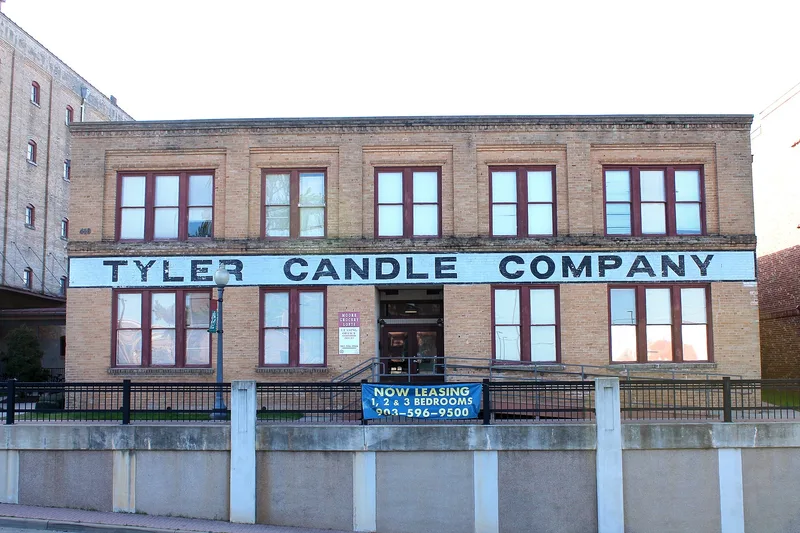
Near the north edge of downtown Tyler, a two-story buff brick warehouse faces North Broadway, two blocks north of the courthouse square. Thomas E. Swann, a local businessman, had it built between 1912 and 1917, and a long one-story red brick addition was added behind it between 1928 and 1938. The designer and contractor are unknown. Its symmetrical five-bay front, dentilated brick cornice, recessed entry and three-part windows reflect the Commercial Style, with interior posts and beams carrying the loads. A railroad siding once ran alongside, and tenants included a mattress company, wholesale grocers and a building-supply firm. The building was listed for its architecture and for its link to Tyler's agricultural, manufacturing and oil-based economy from 1912 to 1952. Few exterior changes have occurred, original windows and interior features remain, and rehabilitation continues for office and warehouse use.
Significance in brief: The building is argued to be significant locally for its architecture, as a modest example of the Chicago Commercial Style with interior load-bearing framing, and for its ties to Tyler's growth. That growth was driven by agriculture, manufacturing and oil, and the warehouse sat beside a railroad spur serving wholesale grocery and building-supply tenants. It is one of only two intact Commercial Style buildings of its type in Tyler.
Machine-generated summary. This summary was generated by a language model from the official nomination document and has not been reviewed line by line by an editor. It may contain errors. Check the source document before relying on any detail. Source: nomination document (PDF) · National Archives catalog entry. NRHP reference 02000993, listed September 14, 2002. Summary generated October 2026 (model claude-sonnet-5-5, prompt v1.0-2026-10-29, confidence high).
Key facts
| Address | 416 N. Broadway, Tyler |
|---|---|
| County | Smith County |
| Listed | September 14, 2002 |
| Reference number | 02000993 |
| Resource type | Building |
| Period of significance | 1912-1952 |
| Architect / builder | unknown |
| Architectural style | Late 19th and Early 20th Century American Movements: Commercial Style |
| Criteria |
|
| Areas of significance | Community Planning and Development, Architecture |
| Level of significance | Local |
| Status (as stated in the nomination) | Good condition with a high degree of integrity; roof and window repairs were made in 2000, and it is being rehabilitated for offices and a candle warehouse. The rear addition is in fair condition and undergoing interior rehabilitation for warehouse use. |
| Acreage | 0.9 |
| Within district | Tyler Downtown Historic District |
| Coordinates | 32.35420, -95.30131 (NPS GIS) |
What listing means for this property
For an income-producing building, listing (individually or as a contributing building in a district) is the gateway to the 20% federal rehabilitation tax credit on qualified rehabilitation costs, often stackable with state credits. Work claiming the credit must follow the Secretary of the Interior's Standards and be approved in advance.
Listing does not restrict a private owner acting without federal money or permits; where federal funding or licensing is involved, Section 106 review applies.
General information, not legal or tax advice. Rules change; confirm with your State Historic Preservation Office or a qualified adviser.
Sources and further reading
- National Park Service, National Register of Historic Places database (snapshot May 2026), reference 02000993.
- Nomination form (PDF, National Archives) — catalog entry
- Wikidata Q110002632
- This listing as JSON
Last updated October 2026. Found an error? See the editorial policy for how to report it.