Ximenes Chapel
Also known as: Chapel of the Miracles

Why it's listed
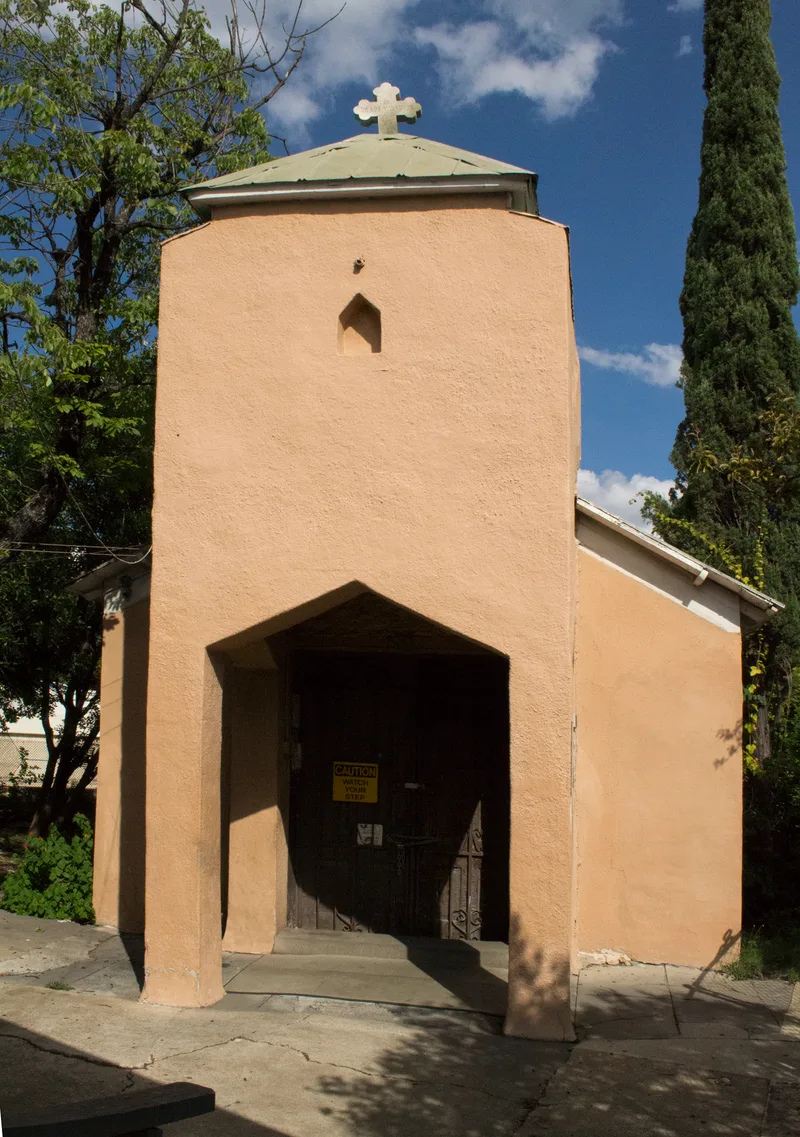
Set at 113 Ruiz Street in San Antonio, this small stone chapel measures about 26 by 16 feet and has a gabled tin roof, a square tower over a west-facing double door, and Gothic windows in the side walls. The tower, windows, restroom and probably the tile floor were added in a 1946 renovation. A cross on the tower is inscribed with the date 9 May 1813, but historical and archaeological evidence, including English pottery sherds, points to construction in the 1850s or 1860s. The chapel is all that remains of the homestead of Juan Ximenez, who served in the Texas Army and fought in the Storming of Bexar in December 1835. It is regarded as perhaps the only surviving San Antonio example of a family chapel in a building separate from the house. Inside hangs a Spanish Colonial crucifix, "El Senor," credited with miraculous cures. Though privately owned, the chapel is open to the public and remains important to the city's Mexican-American community. A nearby wooden building is excluded.
Significance in brief: The nomination presents it as the only known remaining detached family chapel of its type in San Antonio, and the last remnant of the homestead of Juan Ximenez, a veteran of the 1835 Storming of Bexar. It also holds a Spanish Colonial crucifix, "El Senor," credited with miracles, which makes it important to the city's Mexican-American community.
Machine-generated summary. This summary was generated by a language model from the official nomination document and has not been reviewed line by line by an editor. It may contain errors. Check the source document before relying on any detail. Source: nomination document (PDF) · National Archives catalog entry. NRHP reference 80004080, listed September 8, 1980. Summary generated October 2026 (model claude-sonnet-5-5, prompt v1.0-2026-10-29, confidence high).
Key facts
| Address | 113 Ruiz St., San Antonio |
|---|---|
| County | Bexar County |
| Listed | September 8, 1980 |
| Reference number | 80004080 |
| Resource type | Building |
| Period of significance | mid 1800s |
| Areas of significance | Exploration/Settlement, Politics/Government, Architecture, Religion |
| Level of significance | Local |
| Status (as stated in the nomination) | Privately owned but open to the public; described as in good condition and still drawing worshippers. The tower, Gothic windows, restroom and probably the tile floor date from a 1946 renovation. |
| Acreage | 0.9 |
| Coordinates | 29.43447, -98.50385 (NPS GIS) |
What listing means for this property
Religious properties are listed for their architectural or historical significance, not their religious use. Listing is honorary and does not restrict the congregation's use of the building. The federal rehabilitation credit is generally unavailable unless part of the building is income-producing; some state programmes and preservation grants do cover religious buildings. Federal funding or permits trigger Section 106 review.
General information, not legal or tax advice. Rules change; confirm with your State Historic Preservation Office or a qualified adviser.
Sources and further reading
- National Park Service, National Register of Historic Places database (snapshot May 2026), reference 80004080.
- Nomination form (PDF, National Archives) — catalog entry
- Wikipedia article (used for cross-checking only; text not reproduced here)
- Wikidata Q8044458
- This listing as JSON
Last updated October 2026. Found an error? See the editorial policy for how to report it.