West Overton Historic District

Why it's listed
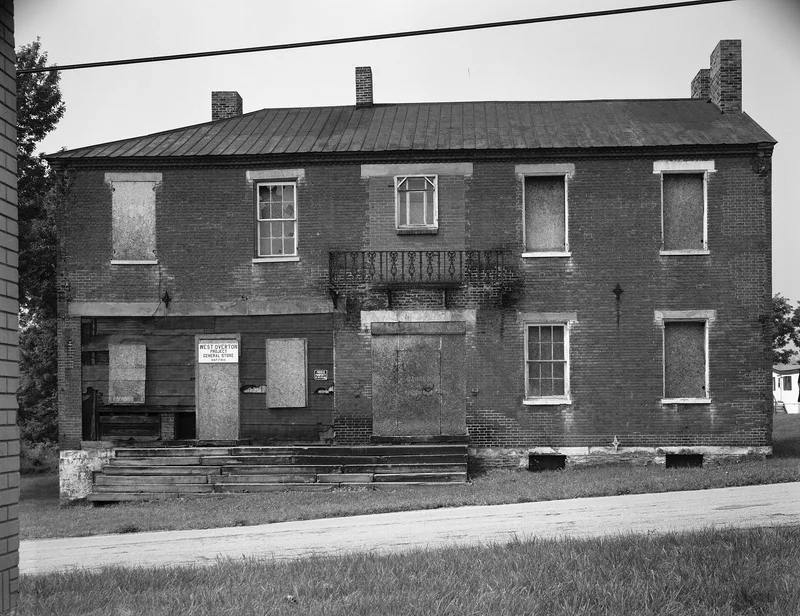
Along a single street in East Huntingdon Township, Westmoreland County, stands a cluster of brick houses, barns and mill buildings that once formed the village of West Overton. The Overholt family founded the settlement after purchasing a log distillery in 1810, and by 1859 their stone and brick distillery, flour mill and outbuildings had grown into a small industrial community. The Abraham Overholt Homestead dates from 1838 and the five-and-a-half-story mill from 1859, and the district contains about twenty buildings in deep red brick with sawtooth banding and golden fieldstone foundations. Henry Clay Frick, the coal and coke industrialist, was born in the springhouse of the homestead in 1849. The district is significant for its architecture, which remains largely intact from the mid-19th century, and for its association with the Overholt distilling business and the Frick family.
Significance in brief: The nomination argues that the district is an exceptional and largely intact example of mid-19th century western Pennsylvania vernacular architecture and of a rural industrial community. It links the site to the Overholt distilling business, one of the largest enterprises in the township at mid-century, and to Henry Clay Frick, who was born in the district in 1849. The village is also presented as a record of regional settlement and of the rye whiskey and coke industries.
Machine-generated summary. This summary was generated by a language model from the official nomination document and has not been reviewed line by line by an editor. It may contain errors. Check the source document before relying on any detail. Source: nomination document (PDF) · National Archives catalog entry. NRHP reference 85001572, listed July 18, 1985. Summary generated October 2026 (model claude-haiku-5-5, prompt v1.1-2026-10-29, confidence high).
Key facts
| Address | Frick Ave., East Huntingdon Township |
|---|---|
| County | Westmoreland County |
| Listed | July 18, 1985 |
| Reference number | 85001572 |
| Resource type | District |
| Period of significance | 1838-1859 |
| Architectural style | Vernacular Greek Revival |
| Criteria |
|
| Areas of significance | Industry, Architecture |
| Level of significance | State |
| Status (as stated in the nomination) | Most buildings are in use; the Overholt Homestead is restored and maintained by the historical society and the mill serves as a museum and library. |
| Acreage | 12 |
| Coordinates | 40.11557, -79.56643 (NPS GIS) |
What listing means for this property
This is a historic district. Buildings within its boundary are either contributing (they add to the district's significance) or non-contributing. Owners of contributing income-producing buildings can claim the 20% federal rehabilitation tax credit; homeowners should look at state credits. National Register districts impose no design review by themselves; a local historic district ordinance, if one exists, does (the difference explained).
General information, not legal or tax advice. Rules change; confirm with your State Historic Preservation Office or a qualified adviser.
Sources and further reading
- National Park Service, National Register of Historic Places database (snapshot May 2026), reference 85001572.
- Nomination form (PDF, National Archives) — catalog entry
- Wikipedia article (used for cross-checking only; text not reproduced here)
- Wikidata Q4019088
- This listing as JSON
Last updated October 2026. Found an error? See the editorial policy for how to report it.