Scottdale Historic District

Why it's listed
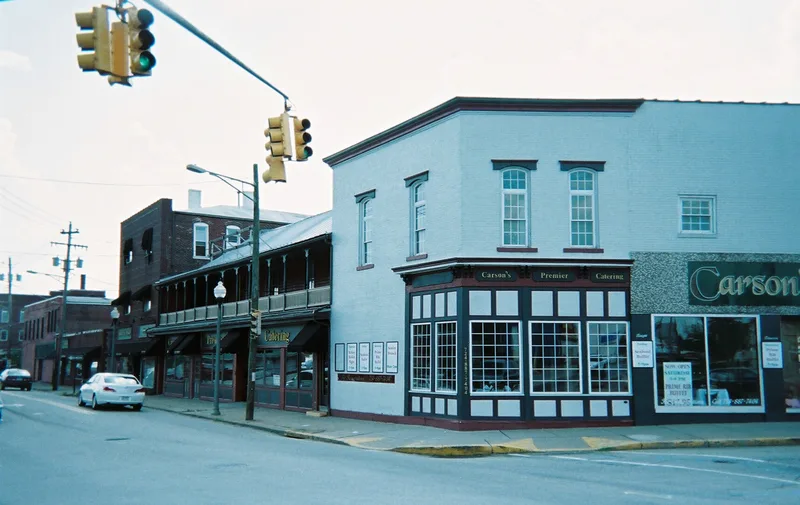
Scottdale is a borough in southern Westmoreland County, Pennsylvania, laid out in the 1870s on land once known as Fountain Mills. The historic district contains 243 contributing resources, mostly buildings tied to coke, iron and steel manufacturing and to the commercial life that grew around them after the South West Pennsylvania Railroad reached the town in 1873. Industrial complexes along Jacob's Creek include foundry and machine-shop buildings dating from about 1880 onward. Pittsburgh Street holds the main commercial buildings, among them the Central Hotel and the First National Bank. The residential areas include houses of industrial and business leaders, and an 1853 farmhouse is among the earliest surviving buildings. The district is significant for documenting how a small agricultural milling village became one of the largest manufacturing towns in the county.
Significance in brief: The nomination argues the district illustrates the industrial and commercial growth of Scottdale after the arrival of the railroad in 1873, including coke and iron and steel industries. It also cites the prosperous residential and commercial buildings and the range of architectural styles, including vernacular and high-style examples.
Machine-generated summary. This summary was generated by a language model from the official nomination document and has not been reviewed line by line by an editor. It may contain errors. Check the source document before relying on any detail. Source: nomination document (PDF) · National Archives catalog entry. NRHP reference 96000320, listed March 29, 1996. Summary generated October 2026 (model claude-haiku-5-5, prompt v1.1-2026-10-29, confidence medium).
Key facts
| Address | Roughly bounded by Walnut St., Constitution Way, Arthur Ave. and Jacob's Cr., Scottdale |
|---|---|
| County | Westmoreland County |
| Listed | March 29, 1996 |
| Reference number | 96000320 |
| Resource type | District |
| Period of significance | ca. 1853 - 1950 |
| Architect / builder | Fulton, J.C.; Zearly, S.J. |
| Architectural style | Queen Anne; Colonial Revival; Late Gothic Revival; Italianate; Renaissance Revival |
| Criteria |
|
| Areas of significance | Industry, Commerce, Architecture |
| Level of significance | Local |
| Status (as stated in the nomination) | Much of the district is in use; the commercial block on the north side of Pittsburgh Street was razed in the 1970s. |
| Acreage | 83 |
| Coordinates | 40.10213, -79.58931 (NPS GIS) |
What listing means for this property
This is a historic district. Buildings within its boundary are either contributing (they add to the district's significance) or non-contributing. Owners of contributing income-producing buildings can claim the 20% federal rehabilitation tax credit; homeowners should look at state credits. National Register districts impose no design review by themselves; a local historic district ordinance, if one exists, does (the difference explained).
General information, not legal or tax advice. Rules change; confirm with your State Historic Preservation Office or a qualified adviser.
Sources and further reading
- National Park Service, National Register of Historic Places database (snapshot May 2026), reference 96000320.
- Nomination form (PDF, National Archives) — catalog entry
- Wikipedia article (used for cross-checking only; text not reproduced here)
- Wikidata Q7437581
- This listing as JSON
Last updated October 2026. Found an error? See the editorial policy for how to report it.