Friends Hospital
Also known as: Friends' Asylum For The Relief of Persons Deprived Of Reason; Friend's Asylum For The Insane
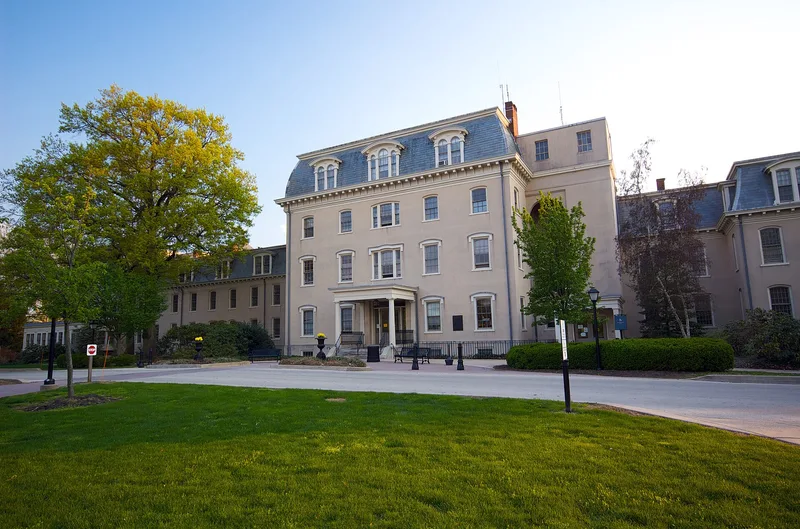

Why it's listed
Friends Hospital occupies a wooded and landscaped site of about 100 acres overlooking Tacony Creek in Frankford, Philadelphia. The institution opened in April 1817 as the Friends Asylum for the Relief of Persons Deprived of the Use of Their Reason, with a capacity for fifty patients. Its design drew on the York Retreat in England, modified by Thomas Scattergood to place patients' rooms on one side of the corridor for privacy, quiet, and light. Isaac and Ann Bonsall, the first superintendents, ran the asylum as a family, with staff and patients eating and working together. Patients took part in farming and horticulture, and the grounds later became known for their azalea plantings and the Garden Days event. The hospital is significant as the first private, nonprofit mental hospital in the United States and for its moral treatment methods, which influenced psychiatric care elsewhere.
Significance in brief: The document argues that the hospital was the first private, nonprofit, exclusively mental hospital in the United States and the oldest continuing such institution. Its Quaker-based 'moral treatment' approach, its site plan and design, and its use of horticulture in therapy became models for other American psychiatric facilities. It also employed women doctors and professional nurses early on.
Machine-generated summary. This summary was generated by a language model from the official nomination document and has not been reviewed line by line by an editor. It may contain errors. Check the source document before relying on any detail. Source: nomination document (PDF) · National Archives catalog entry. NRHP reference 99000629, listed January 20, 1999. Summary generated October 2026 (model claude-haiku-5-5, prompt v1.1-2026-10-29, confidence medium).
Key facts
| Address | 4641 Roosevelt Boulevard, Philadelphia |
|---|---|
| County | Philadelphia |
| Listed | January 20, 1999 |
| Reference number | 99000629 |
| Resource type | District |
| Period of significance | 1817 - 1911 |
| Architect / builder | Tuke, William, 1732-1822; Scattergood, William, 1748-1814; Hutton, Addison, 1834-1916 |
| Architectural style | Late Victorian: Second Empire; Late 19th and Early 20th Century Revivals: Colonial Revival |
| Criteria |
|
| Areas of significance | Health/Medicine, Social History |
| Level of significance | National |
| National Historic Landmark | Yes, designated January 20, 1999 |
| Status (as stated in the nomination) | In operation as a hospital; the grounds and buildings continue in therapeutic use. |
| Acreage | 100 |
| Coordinates | 40.02326, -75.10278 (NPS GIS) |
What listing means for this property
This is a historic district. Buildings within its boundary are either contributing (they add to the district's significance) or non-contributing. Owners of contributing income-producing buildings can claim the 20% federal rehabilitation tax credit; homeowners should look at state credits. National Register districts impose no design review by themselves; a local historic district ordinance, if one exists, does (the difference explained).
General information, not legal or tax advice. Rules change; confirm with your State Historic Preservation Office or a qualified adviser.
Sources and further reading
- National Park Service, National Register of Historic Places database (snapshot May 2026), reference 99000629.
- Nomination form (PDF, National Archives) — catalog entry
- Wikipedia article (used for cross-checking only; text not reproduced here)
- Wikidata Q5504177
- This listing as JSON
Last updated October 2026. Found an error? See the editorial policy for how to report it.