New Hamburg Historical Area

Why it's listed
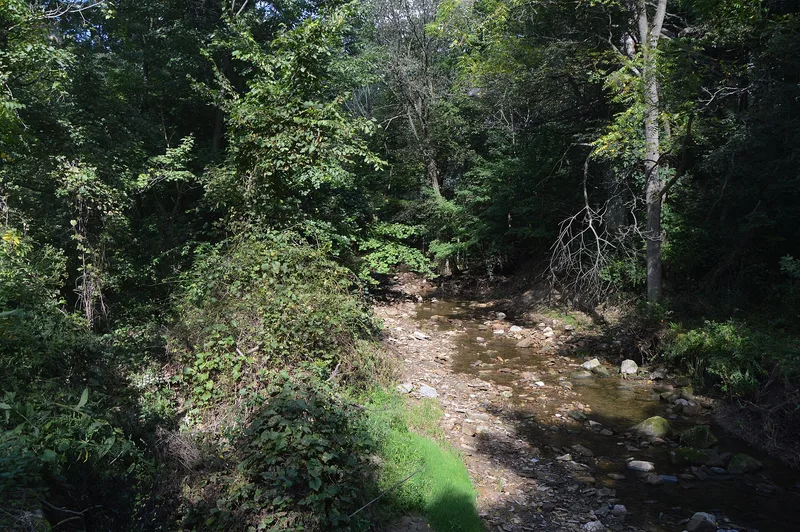
The New Hamburg Historical Area covers about 159 acres at the site of the former village of New Hamburg in Mercer County, Pennsylvania. The village grew along the Erie Extension Canal after its first store opened in 1840, and its residents shipped coal from the area to Erie as fuel for lake freighters. The Hamburg Iron Furnace, on the right bank of the Shenango River, was built by the Mills and Lowry Company in 1846. It was connected to the canal town by a railroad, and its bed, a canal loading bay, a grist mill's mill race, a canal lock site and the canal and towpath remain visible. Several canal-era building foundations have also been located, including the remains of a canal official's dwelling. The furnace and village are historically important as early iron production that preceded Western Pennsylvania's steel industry. The canal was abandoned on September 5, 1871, after an aqueduct collapsed and a railroad was built nearby, and the community declined.
Significance in brief: The nomination argues that Hamburg was the most important community in Delaware Township during the canal era and that its iron furnace was a forerunner of the large steel mills important to Western Pennsylvania's economy. The surviving remains of the furnace, railroad bed, mill race, canal lock and loading bay, and canal-era foundations document the village's industrial and transportation history.
Machine-generated summary. This summary was generated by a language model from the official nomination document and has not been reviewed line by line by an editor. It may contain errors. Check the source document before relying on any detail. Source: nomination document (PDF) · National Archives catalog entry. NRHP reference 74001794, listed December 2, 1974. Summary generated October 2026 (model claude-haiku-5-5, prompt v1.1-2026-10-29, confidence medium).
Key facts
| Address | 7 mi. S of Greenville off PA 58, Greenville |
|---|---|
| County | Mercer County |
| Listed | December 2, 1974 |
| Reference number | 74001794 |
| Resource type | District |
| Period of significance | 19th Century |
| Areas of significance | Industry, Transportation |
| Level of significance | Local |
| Status (as stated in the nomination) | Ruins; sites of historical significance were in ruins prior to construction of the Shenango River Lake Project; no major development planned. |
| Acreage | 159 |
| Coordinates | 41.32055, -80.33777 (NPS GIS) |
What listing means for this property
This is a historic district. Buildings within its boundary are either contributing (they add to the district's significance) or non-contributing. Owners of contributing income-producing buildings can claim the 20% federal rehabilitation tax credit; homeowners should look at state credits. National Register districts impose no design review by themselves; a local historic district ordinance, if one exists, does (the difference explained).
General information, not legal or tax advice. Rules change; confirm with your State Historic Preservation Office or a qualified adviser.
Sources and further reading
- National Park Service, National Register of Historic Places database (snapshot May 2026), reference 74001794.
- Nomination form (PDF, National Archives) — catalog entry
- Wikipedia article (used for cross-checking only; text not reproduced here)
- Wikidata Q15262054
- This listing as JSON
Last updated October 2026. Found an error? See the editorial policy for how to report it.