Dorneyville Crossroad Settlement
Also known as: King George Inn; John Dorney House; William Dorney House

Why it's listed
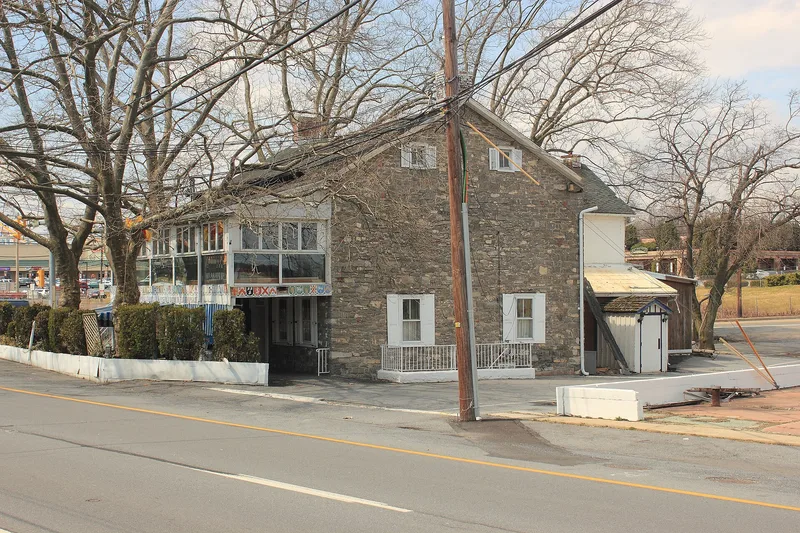
Positioned where two colonial roads meet in Allentown, the Dorney Crossroads Settlement is a cluster of stone buildings begun in the mid-1700s. The King George Inn, the most significant structure, was built in sections, with its original two-bay part dating to about 1755 and a three-bay addition of about 1790 on the east gable. Peter Dorney bought the Inn in 1796 and ran it as a tavern, adding a kitchen wing. Across the intersection, his sons John and William built two fieldstone Georgian-style houses in about 1825 and 1835. The Inn has been used as a tavern or inn since construction and is regarded as among the oldest inns in continuous use in Pennsylvania. The group is valued as an unusual surviving crossroads settlement tied to a major colonial road and to a single family's presence. The buildings have been altered over time, but they retain their form and stone construction.
Significance in brief: The nomination argues the group is an unusual surviving crossroads settlement tied to the King's Highway and the Penn-era road network. The Inn has operated as a tavern or inn since its construction and is described as one of the oldest inns in continuous use in the state. The buildings are presented as good examples of colonial and late Georgian architecture and as linked by the Dorney family.
Machine-generated summary. This summary was generated by a language model from the official nomination document and has not been reviewed line by line by an editor. It may contain errors. Check the source document before relying on any detail. Source: nomination document (PDF) · National Archives catalog entry. NRHP reference 77001172, listed December 7, 1977. Summary generated October 2026 (model claude-haiku-5-5, prompt v1.1-2026-10-29, confidence medium).
Key facts
| Address | S of Allentown at jct. of U.S. 222 and PA 29, Allentown |
|---|---|
| County | Lehigh County |
| Listed | December 7, 1977 |
| Reference number | 77001172 |
| Resource type | Building |
| Period of significance | 1700-1799 |
| Architectural style | Colonial and late Georgian (Georgian style houses) |
| Criteria |
|
| Areas of significance | Commerce, Architecture |
| Level of significance | Local |
| Status (as stated in the nomination) | Good state of repair; the Inn continues its original use as a tavern. The 18th-century house was demolished in a road building project. |
| Acreage | 3 |
| Coordinates | 40.57997, -75.52163 (NPS GIS) |
What listing means for this property
National Register listing is honorary: it recognises significance and does not restrict what a private owner may do without federal money or permits. It unlocks the 20% federal rehabilitation tax credit for income-producing buildings, state credits in many states, and Section 106 review when federal agencies are involved. See what listing means in practice.
General information, not legal or tax advice. Rules change; confirm with your State Historic Preservation Office or a qualified adviser.
Sources and further reading
- National Park Service, National Register of Historic Places database (snapshot May 2026), reference 77001172.
- Nomination form (PDF, National Archives) — catalog entry
- Wikipedia article (used for cross-checking only; text not reproduced here)
- Wikidata Q5298115
- This listing as JSON
Last updated October 2026. Found an error? See the editorial policy for how to report it.