Greensboro Historic District

Why it's listed
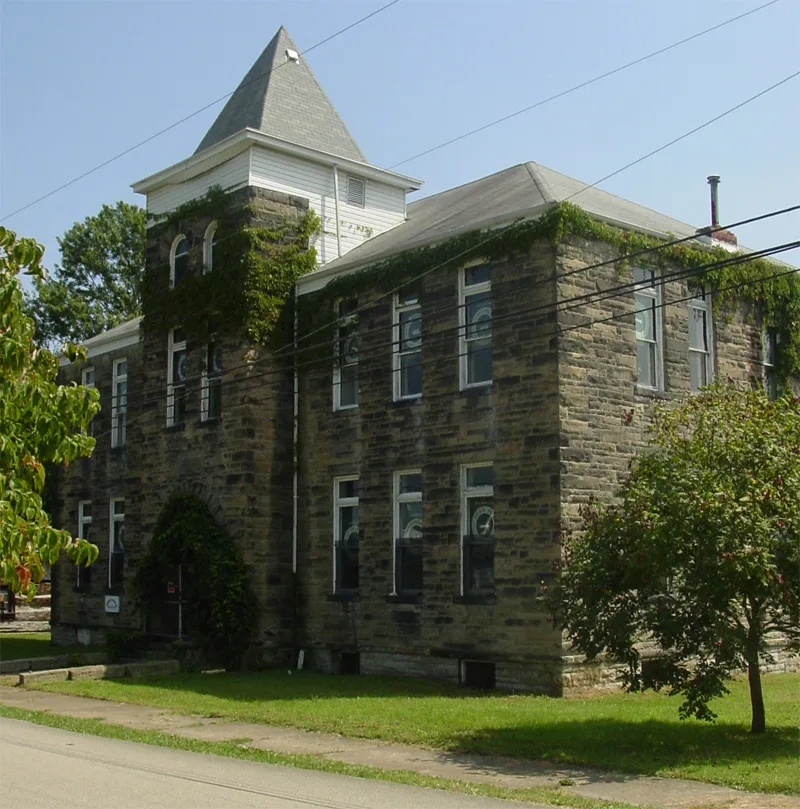
Greensboro sits on a bend of the Monongahela River in southeastern Greene County, Pennsylvania, on a grid of streets laid out in 1791 by Elias Stone. The district contains 36 buildings, one structure and one archaeological site, mostly frame houses with some log and brick buildings and one stone church. Early houses include two-thirds Georgian and two-room plan examples, while later buildings show Italianate, Queen Anne, Prairie and Bungalow styles. The town was a glassmaking and stoneware pottery centre in the nineteenth century, and its river trade grew after slackwater navigation reached the area in 1856. The Thomas Reppert Store and House, built in 1874, is among the most distinctive Italianate buildings in the district. The James Hamilton pottery site, a waste deposit from about fifty years of production, is significant for archaeological research. Greensboro was the district's main river port until the late nineteenth century.
Significance in brief: The district is significant in the areas of transportation, commerce, industry, architecture and historic archaeology. Its glass and stoneware pottery industries, its role as a river port on the Monongahela, and its surviving vernacular buildings from the early nineteenth century through the early twentieth century are the basis for listing. The James Hamilton pottery site is noted as likely to yield information about pottery production.
Machine-generated summary. This summary was generated by a language model from the official nomination document and has not been reviewed line by line by an editor. It may contain errors. Check the source document before relying on any detail. Source: nomination document (PDF) · National Archives catalog entry. NRHP reference 95000118, listed November 17, 1995. Summary generated October 2026 (model claude-haiku-5-5, prompt v1.1-2026-10-29, confidence medium).
Key facts
| Address | Roughly bounded by County, Second, Walnut, Front and Clear Sts. and the Monongahela R., Greensboro |
|---|---|
| County | Greene County |
| Listed | November 17, 1995 |
| Reference number | 95000118 |
| Resource type | District |
| Period of significance | 1791-c.1925 |
| Architect / builder | James Parreco (architect/builder), others unknown |
| Architectural style | Italianate; Queen Anne |
| Criteria |
|
| Areas of significance | Historic - Non-Aboriginal, Architecture, Transportation, Commerce, Industry |
| Level of significance | Local |
| Acreage | 14 |
| Coordinates | 39.79142, -79.91238 (NPS GIS) |
What listing means for this property
This is a historic district. Buildings within its boundary are either contributing (they add to the district's significance) or non-contributing. Owners of contributing income-producing buildings can claim the 20% federal rehabilitation tax credit; homeowners should look at state credits. National Register districts impose no design review by themselves; a local historic district ordinance, if one exists, does (the difference explained).
General information, not legal or tax advice. Rules change; confirm with your State Historic Preservation Office or a qualified adviser.
Sources and further reading
- National Park Service, National Register of Historic Places database (snapshot May 2026), reference 95000118.
- Nomination form (PDF, National Archives) — catalog entry
- Wikidata Q110816460
- This listing as JSON
Last updated October 2026. Found an error? See the editorial policy for how to report it.