Thornton Village Historic District

Why it's listed
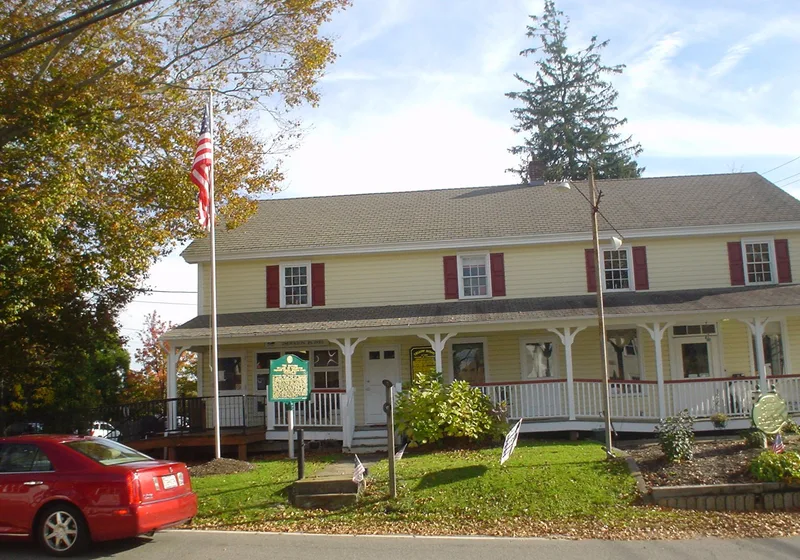
Centered on a T-shaped crossroads in western Thornbury Township, Delaware County, Pennsylvania, the Thornton Village Historic District holds fifteen buildings, thirteen of them contributing, built mostly between 1790 and 1855. The anchor is the Yellow House, a two-story Penn Plan dwelling begun about 1750 as an inn on the Great Road. It later served as a general store, cloth manufactory and post office. The village grew around it, with a blacksmith shop, residences and stables clustered along Glen Mills Road. The post office was established there in 1829 and has operated in the building since 1878, and it is regarded as one of the oldest post offices in its original location in the United States. The district is also associated with the Battle of the Brandywine in 1777, when fleeing American troops passed the Yellow House. Its surviving buildings preserve a rural village layout that was little changed after 1860, when the village was bypassed by main roads and railroads.
Significance in brief: The district is significant for its architecture as a late-18th to late-19th century rural village. Its buildings reflect colonial, Federal, Gothic Revival and Italianate traditions and retain an intact village setting. The Yellow House, which has held the Thornton post office since 1878, is regarded as one of the oldest post offices in its original location in the United States.
Machine-generated summary. This summary was generated by a language model from the official nomination document and has not been reviewed line by line by an editor. It may contain errors. Check the source document before relying on any detail. Source: nomination document (PDF) · National Archives catalog entry. NRHP reference 06000745, listed November 14, 2006. Summary generated October 2026 (model claude-haiku-5-5, prompt v1.1-2026-10-29, confidence medium).
Key facts
| Address | Centered on Thornton and Glen Mills Rds., Thornbury |
|---|---|
| County | Delaware County |
| Listed | November 14, 2006 |
| Reference number | 06000745 |
| Resource type | District |
| Period of significance | C. 1750-c. 1890 |
| Architectural style | Colonial, Federal, Gothic Revival, Italianate |
| Criteria |
|
| Areas of significance | Architecture |
| Level of significance | Local |
| Acreage | 12 |
| Coordinates | 39.91053, -75.53142 (NPS GIS) |
What listing means for this property
This is a historic district. Buildings within its boundary are either contributing (they add to the district's significance) or non-contributing. Owners of contributing income-producing buildings can claim the 20% federal rehabilitation tax credit; homeowners should look at state credits. National Register districts impose no design review by themselves; a local historic district ordinance, if one exists, does (the difference explained).
General information, not legal or tax advice. Rules change; confirm with your State Historic Preservation Office or a qualified adviser.
Sources and further reading
- National Park Service, National Register of Historic Places database (snapshot May 2026), reference 06000745.
- Nomination form (PDF, National Archives) — catalog entry
- Wikipedia article (used for cross-checking only; text not reproduced here)
- Wikidata Q7796563
- This listing as JSON
Last updated October 2026. Found an error? See the editorial policy for how to report it.