Philipsburg Historic District

Why it's listed
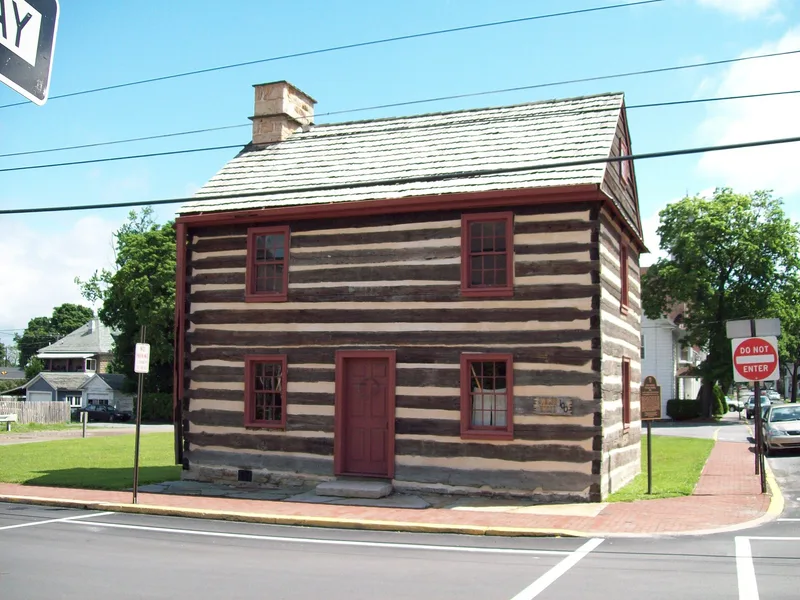
Philipsburg's historic district covers about a third of the borough and includes 255 buildings and two town parks at the junction of East Presqueisle and Centre Streets. Its architecture ranges from the 1807 John Henry Simler House, the town's oldest surviving residence, to vernacular working-class housing and high-style Colonial Revival and Queen Anne homes built for industrial and banking families. The district is significant for its role as a commercial center for lumber, coal, clay and mining industries after the arrival of railroads in 1864 and 1885. Its buildings, including 1813 Hardman Philips House and several Italianate brick commercial blocks, illustrate local building practices from the early nineteenth to early twentieth centuries. Most contributing buildings retain original fenestration, porches and decorative details, and the district contains a concentration of period architecture and commerce in western Centre County.
Significance in brief: The nomination argues the district is significant under Criterion A as a local commercial and industrial center for lumber, bituminous coal, railroad, refractory clay and mining industries, and under Criterion C as a strong local example of architectural styles and construction from the early nineteenth through early twentieth centuries. It states that 228 buildings, or 89%, are contributing.
Machine-generated summary. This summary was generated by a language model from the official nomination document and has not been reviewed line by line by an editor. It may contain errors. Check the source document before relying on any detail. Source: nomination document (PDF) · National Archives catalog entry. NRHP reference 99000881, listed July 22, 1999. Summary generated October 2026 (model claude-haiku-5-5, prompt v1.1-2026-10-29, confidence medium).
Key facts
| Address | Roughly bounded by East Presqueisle St., Hillcrest Dr., Oak, Railroad, Spruce and Laurel Sts., Philipsburg |
|---|---|
| County | Centre County |
| Listed | July 22, 1999 |
| Reference number | 99000881 |
| Resource type | District |
| Period of significance | 1807-1948 |
| Architectural style | Colonial Revival, Queen Anne, Italianate, Late Gothic Revival |
| Criteria |
|
| Areas of significance | Commerce, Architecture |
| Level of significance | Local |
| Acreage | 99.9 |
| Coordinates | 40.89339, -78.21793 (NPS GIS) |
What listing means for this property
This is a historic district. Buildings within its boundary are either contributing (they add to the district's significance) or non-contributing. Owners of contributing income-producing buildings can claim the 20% federal rehabilitation tax credit; homeowners should look at state credits. National Register districts impose no design review by themselves; a local historic district ordinance, if one exists, does (the difference explained).
General information, not legal or tax advice. Rules change; confirm with your State Historic Preservation Office or a qualified adviser.
Sources and further reading
- National Park Service, National Register of Historic Places database (snapshot May 2026), reference 99000881.
- Nomination form (PDF, National Archives) — catalog entry
- Wikipedia article (used for cross-checking only; text not reproduced here)
- Wikidata Q7185541
- This listing as JSON
Last updated October 2026. Found an error? See the editorial policy for how to report it.