Unit III, Dayton Project
Also known as: Bonebrake Theological Seminary; Union Biblical Seminary

Why it's listed
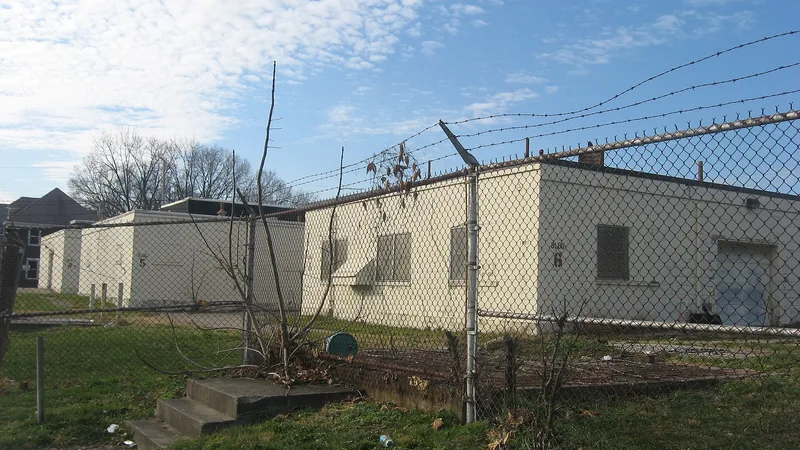
At 1601 West First Street in west Dayton, six plain concrete-block buildings recall a secret chapter of World War II. The 1.38-acre site began as a United Brethren seminary, where an 1879 Romanesque building, designed by Luther Peters, trained ministers until 1923. The Dayton Board of Education later bought it and used it as a teacher training school and then for storage. In 1943 the Monsanto Company took over the property as Unit III of the Dayton Project, part of the Manhattan Project, where researchers refined polonium. Monsanto repaired the seminary building and in 1944 added one-story reinforced concrete-block buildings for laboratories, a machine shop, a laundry and decontamination facility, a boiler house, and offices. The property returned to the school board in 1948, and the seminary building was demolished after 1955. The surviving buildings, a guardhouse and a perimeter fence keep their hurried wartime look, and some interior features survive. The site was listed for its role in early atomic weapons research, and it also reflects the history of the seminary and Bishop Milton Wright.
Significance in brief: The site is significant under Criterion A for its link to the 1942-1946 Manhattan Project and atomic weapons development, since Monsanto used it for polonium research and refinement. The six surviving buildings keep their quickly built wartime exterior character. The site also has religious history as the home of the United Brethren seminary, with ties to Bishop Milton Wright, father of the Wright brothers.
Machine-generated summary. This summary was generated by a language model from the official nomination document and has not been reviewed line by line by an editor. It may contain errors. Check the source document before relying on any detail. Source: nomination document (PDF) · National Archives catalog entry. NRHP reference 06000480, listed June 7, 2006. Summary generated October 2026 (model claude-sonnet-5-5, prompt v1.0-2026-10-29, confidence high).
Key facts
| Address | 1601 W. First St., Dayton |
|---|---|
| County | Montgomery County |
| Listed | June 7, 2006 |
| Reference number | 06000480 |
| Resource type | Building |
| Period of significance | 1943-1948 |
| Architect / builder | Luther Peters (architect of the 1879 seminary building, since demolished); Monsanto Company built the 1944 buildings |
| Architectural style | No Style |
| Criteria |
|
| Areas of significance | Science, Military |
| Level of significance | State |
| Status (as stated in the nomination) | Six contributing buildings and one non-contributing shed remained in 2005; the 1879 seminary building was razed after 1955. Current use is listed as education (warehouse). |
| Acreage | 1.4 |
| Coordinates | 39.75698, -84.22178 (NPS GIS) |
What listing means for this property
National Register listing is honorary: it recognises significance and does not restrict what a private owner may do without federal money or permits. It unlocks the 20% federal rehabilitation tax credit for income-producing buildings, state credits in many states, and Section 106 review when federal agencies are involved. See what listing means in practice.
General information, not legal or tax advice. Rules change; confirm with your State Historic Preservation Office or a qualified adviser.
Sources and further reading
- National Park Service, National Register of Historic Places database (snapshot May 2026), reference 06000480.
- Nomination form (PDF, National Archives) — catalog entry
- Wikidata Q138610280
- This listing as JSON
Last updated October 2026. Found an error? See the editorial policy for how to report it.