Dayton Motor Car Company Historic District

Why it's listed
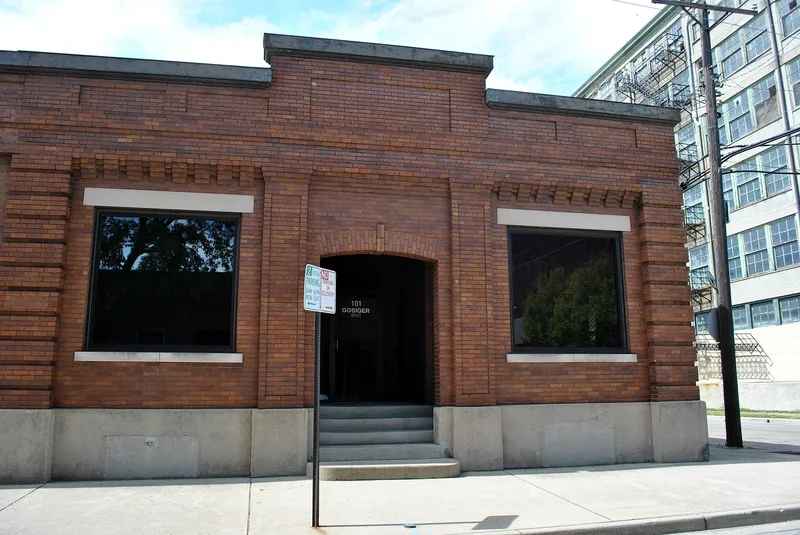
Twelve industrial buildings tucked behind the East Third Street railroad viaduct in Dayton make up this district. Seven brick structures from the 1870s to 1890s belong to the Stoddard Manufacturing Company, which made harvesters, grain drills, seeders, hay rakes and harrows. Two seven-story reinforced concrete factories followed soon after automobile production began in 1903, along with a 1913 storage building, a 1910 foundry and a 1925 building with brick facing. Each building served a distinct purpose, so sizes and styles vary and none is architecturally outstanding. The site mattered because the company was Dayton's largest farm implement maker and then became the city's first automobile manufacturer, producing complete cars until 1912. Its location between early hydraulic races, beside the Miami Canal and the railroad, favored industry. After the plant was sold by 1929, smaller firms used the buildings for factories and warehousing, and the exteriors remain largely unaltered. One concrete factory, building #1, stands empty.
Significance in brief: The district marks the site of Dayton's largest farm implement company between 1875 and 1900, which helped Dayton rank among Ohio's top farm machinery producers. It later became the city's first automobile manufacturing company, showing how implement makers converted to car production. The site's canal and railroad location also reflects Dayton's industrial growth.
Machine-generated summary. This summary was generated by a language model from the official nomination document and has not been reviewed line by line by an editor. It may contain errors. Check the source document before relying on any detail. Source: nomination document (PDF) · National Archives catalog entry. NRHP reference 84003785, listed May 31, 1984. Summary generated October 2026 (model claude-sonnet-5-5, prompt v1.0-2026-10-29, confidence high).
Key facts
| Address | 15, 101,123-5 Bainbridge; 9-111 and 122-124 McDonough, Dayton |
|---|---|
| County | Montgomery County |
| Listed | May 31, 1984 |
| Reference number | 84003785 |
| Resource type | District |
| Period of significance | 1873-1925 |
| Criteria |
|
| Areas of significance | Industry, Architecture |
| Level of significance | Local |
| Status (as stated in the nomination) | Mostly occupied by small manufacturing and warehouse firms; exteriors are relatively unchanged. Building #1 is empty and deteriorating but structurally sound. Condition is rated fair. |
| Acreage | 12 |
| Coordinates | 39.75994, -84.17988 (NPS GIS) |
What listing means for this property
This is a historic district. Buildings within its boundary are either contributing (they add to the district's significance) or non-contributing. Owners of contributing income-producing buildings can claim the 20% federal rehabilitation tax credit; homeowners should look at state credits. National Register districts impose no design review by themselves; a local historic district ordinance, if one exists, does (the difference explained).
General information, not legal or tax advice. Rules change; confirm with your State Historic Preservation Office or a qualified adviser.
Sources and further reading
- National Park Service, National Register of Historic Places database (snapshot May 2026), reference 84003785.
- Nomination form (PDF, National Archives) — catalog entry
- Wikipedia article (used for cross-checking only; text not reproduced here)
- Wikidata Q34825593
- This listing as JSON
Last updated October 2026. Found an error? See the editorial policy for how to report it.