Whitewater Shaker Settlement
Why it's listed
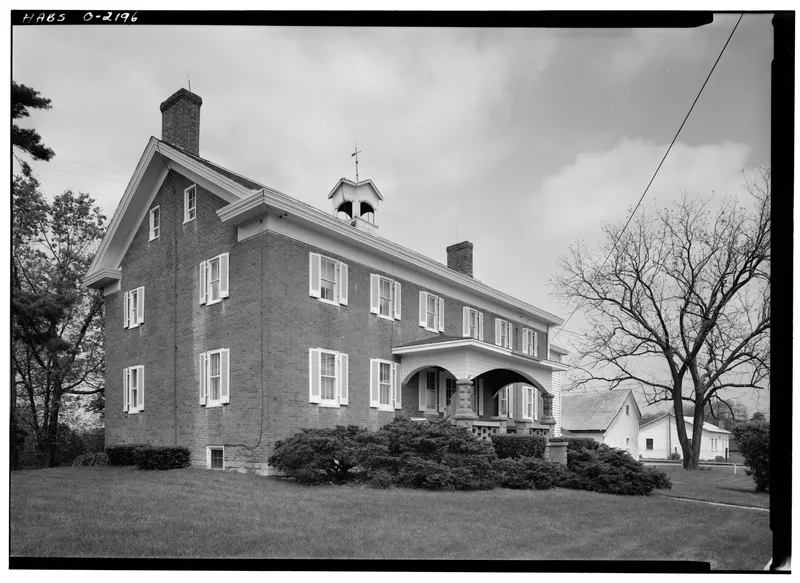
Whitewater Shaker Settlement is a group of farm and community buildings along Oxford Road near New Haven, in Hamilton County, Ohio. Shakers founded it in 1825 on the Dry Fork of the Whitewater River, starting with about 18 people, 40 acres and log buildings. Over time the community grew to more than 1,400 acres and was divided into North, Center and South Families, each with its own buildings. Residents sold garden seeds, brooms and mats, and raised fine livestock. Surviving structures include an 1827 brick meeting house, a brick dwelling house of 1832-33, a trustees' office of 1855, a broom shop of 1876, barns and smaller outbuildings. Of roughly 28 Shaker structures left in Ohio, those at Whitewater are described as the best in condition and architectural merit. The meeting house is the only original Shaker religious building remaining in the state. The Shakers owned the farm through the first decade of the 20th century.
Significance in brief: The nomination argues it is the best-preserved of Ohio's Shaker sites, with the best condition and architectural merit among about 28 surviving Shaker structures in the state. An authority quoted in the form calls it the best collection of Shaker buildings in private hands in America. Its meeting house is the only original Shaker religious structure left in Ohio.
Machine-generated summary. This summary was generated by a language model from the official nomination document and has not been reviewed line by line by an editor. It may contain errors. Check the source document before relying on any detail. Source: nomination document (PDF) · National Archives catalog entry. NRHP reference 74001518, listed January 21, 1974. Summary generated October 2026 (model claude-sonnet-5-5, prompt v1.0-2026-10-29, confidence medium).
Key facts
| Address | 11813, 11347, 11081 Oxford Rd., New Haven |
|---|---|
| County | Hamilton County |
| Listed | January 21, 1974 |
| Reference number | 74001518 |
| Resource type | District |
| Period of significance | 1825 through 1st decade of 20th century |
| Areas of significance | Architecture, Social History |
| Level of significance | National |
| Status (as stated in the nomination) | Condition listed as fair and altered, on its original site. Buildings remain in private ownership and are in agricultural and residential use, including grain storage in the meeting house and an apartment upstairs. |
| Acreage | 384 |
| Coordinates | 39.29300, -84.74240 (NPS GIS) |
What listing means for this property
This is a historic district. Buildings within its boundary are either contributing (they add to the district's significance) or non-contributing. Owners of contributing income-producing buildings can claim the 20% federal rehabilitation tax credit; homeowners should look at state credits. National Register districts impose no design review by themselves; a local historic district ordinance, if one exists, does (the difference explained).
General information, not legal or tax advice. Rules change; confirm with your State Historic Preservation Office or a qualified adviser.
Sources and further reading
- National Park Service, National Register of Historic Places database (snapshot May 2026), reference 74001518.
- Nomination form (PDF, National Archives) — catalog entry
- Wikipedia article (used for cross-checking only; text not reproduced here)
- Wikidata Q14716944
- This listing as JSON
Last updated October 2026. Found an error? See the editorial policy for how to report it.