Ellington-Ellis Farm
Ellington-Ellis Farm is a building in Clayton, Johnston County, North Carolina, listed on the National Register of Historic Places on July 21, 1983 (reference number 83001892). The National Park Service records its significance in Architecture and Agriculture at the local level.
Facts from the NPS National Register database (); nomination summary October 2026. Last updated . Sources for each fact.

The pin is a point inside the NPS boundary polygon, not a surveyed location.
Why it's listed
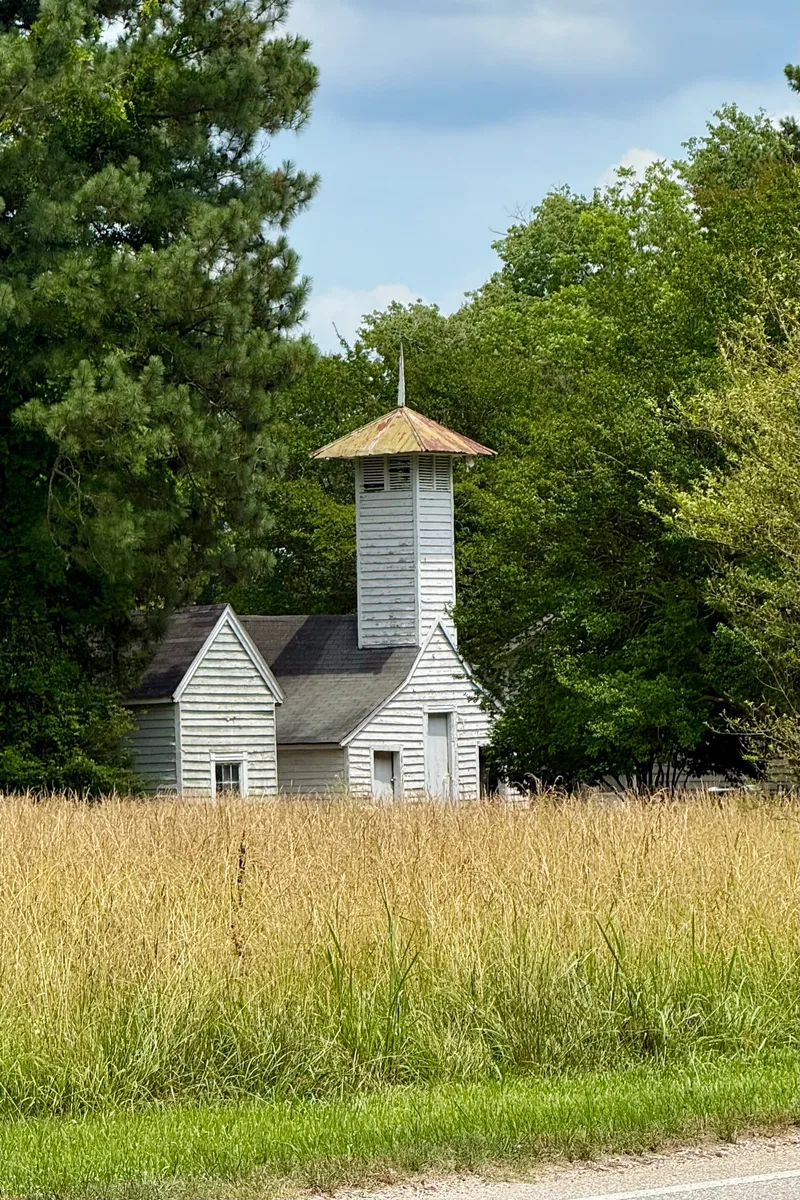
Built in the mid-to-late 1830s for planter John F. Ellington, this farm near Clayton centers on a two-story, T-plan Greek Revival house. In the mid-1850s Ellington turned the house to face the newly built North Carolina Railroad, adding a Victorian porch and enlarging the base of the T. Three antebellum outbuildings survive: a smokehouse topped by a 22-foot belltower considered unique in North Carolina, a four-seat ladies' privy, and a small playhouse. Together they are described as the finest such group in Johnston County. The farm later passed to Joseph C. Ellington, a Civil War officer, State Librarian and state senator, and in 1886 to Charles Penny Ellis, a progressive farmer who ran the area's largest cotton gin, a grist mill and a sawmill. His cotton and cantaloupe crops and his early investment in electric lines reflect the farm's long role in local agriculture. About 58 acres remain, with a washhouse, barn, tobacco barn, tenant houses and a probable Black cemetery.
Significance in brief: The house is an early and important example of Greek Revival architecture in Johnston County, with modest Victorian changes from a mid-1850s remodeling. Its smokehouse with a 22-foot belltower, ladies' privy and playhouse form the finest group of antebellum outbuildings in the county. The farm is also tied to three prominent men and to the county's agricultural history, including a large cotton gin, from the 1830s to the 1950s.
Machine-generated summary. This summary was generated by a language model from the official nomination document and has not been reviewed line by line by an editor. It may contain errors. Check the source document before relying on any detail. Source: nomination document (PDF) · National Archives catalog entry. NRHP reference 83001892, listed July 21, 1983. Summary generated October 2026 (model claude-sonnet-5-5, prompt v1.0-2026-10-29, confidence high).
Key facts
| Official database NPS National Register database, ref. 83001892 , checked | |
|---|---|
| Address | SR 1004, Clayton |
| County | Johnston County |
| Listed | July 21, 1983 |
| Reference number | 83001892 |
| Resource type | Building |
| Areas of significance | Architecture, Agriculture |
| Level of significance | Local |
| National Historic Landmark | No |
| Acreage | 57.8 |
| Official document, machine-extracted Nomination form (National Archives) , checked | |
| Period of significance | 1800-1899, 1900- |
| Architect / builder | Unknown |
| Architectural style | Greek Revival |
| Criteria |
|
| Status (as stated in the nomination) | Occupied and still in agricultural and private residential use, remaining in Ellis family ownership; some outbuildings, such as the old tenant house, are abandoned and deteriorated, and several others are lost. |
| Official dataset NPS cultural-resource GIS (NRHP locations) | |
| Coordinates | 35.67232, -78.47908 |
What listing means for this property
National Register listing is honorary for a privately owned home: it does not by itself restrict what an owner may do with their own money, and it does not require public access. Restrictions come from local landmark or historic-district ordinances, which are separate (how they differ).
Owner-occupied houses are not eligible for the 20% federal rehabilitation tax credit, which applies to income-producing buildings, but many states offer credits for homeowners. Listing also opens the door to preservation easements and to buying a plaque. Start with what listing means for homeowners, renovating a listed house and selling one.
General information, not legal or tax advice. Rules change; confirm with your State Historic Preservation Office or a qualified adviser.
Questions about Ellington-Ellis Farm
When was Ellington-Ellis Farm added to the National Register of Historic Places?
Ellington-Ellis Farm was listed on July 21, 1983. Its National Register reference number is 83001892.
Is Ellington-Ellis Farm a National Historic Landmark?
No. The National Park Service database (snapshot of May 2026) lists Ellington-Ellis Farm on the National Register but does not record it as a National Historic Landmark.
Where is Ellington-Ellis Farm?
SR 1004, Clayton, Johnston County, North Carolina; coordinates 35.67232, -78.47908.
Why is Ellington-Ellis Farm historically significant?
According to a machine-generated summary of its nomination form: The house is an early and important example of Greek Revival architecture in Johnston County, with modest Victorian changes from a mid-1850s remodeling. Its smokehouse with a 22-foot belltower, ladies' privy and playhouse form the finest group of antebellum outbuildings in the county. The farm is also tied to three prominent men and to the county's agricultural history, including a large cotton gin, from the 1830s to the 1950s. Check the nomination document before relying on any detail.
Who designed or built Ellington-Ellis Farm?
The nomination form names Unknown as architect or builder (extracted by machine from the nomination; check the source document).
Where can I read the original nomination for Ellington-Ellis Farm?
The nomination form is a public record held by the National Archives: nomination document (PDF).
Sources and further reading
- National Park Service, National Register of Historic Places database (snapshot May 2026), reference 83001892.
- Nomination form (PDF, National Archives) — catalog entry
- Wikipedia article (used for cross-checking only; text not reproduced here)
- Wikidata Q19461573
- This listing as JSON
Last updated November 2026. Found an error? See the editorial policy for how to report it.