Murfreesboro Historic District
Also known as: See Also:Freeman House; Melrose; Myrick House; Rea, William, St

Why it's listed
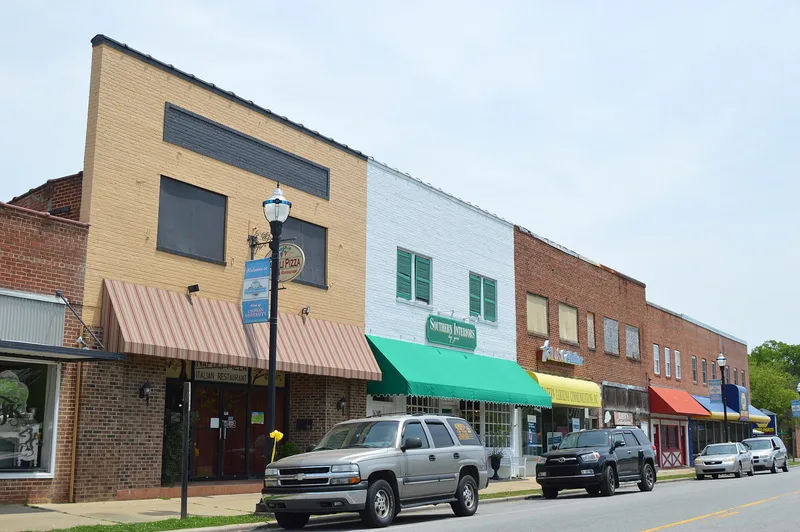
Murfreesboro Historic District covers the central part of a small river town in northeastern North Carolina, set on a hill above the Meherrin River. William Murfree acquired the land in 1747, the landing was designated a King's Landing in 1755, and the town was created in 1787. It served briefly as a transatlantic port before declining, then regained prominence through plantation agriculture after the War of 1812. More than forty buildings from before the Civil War survive, clustered on Main, Broad and nearby streets. Examples include the brick William Rea Store of about 1790, one of the oldest commercial buildings in the state, the John Wheeler House, Melrose, the Hertford Academy, and the frame Rose Bower and Isaac Pipkin House with Greek Revival features. The Hertford Academy later housed the school that became Chowan College. The district was recognized for its concentration of early buildings and its connection to prominent figures of the period.
Significance in brief: The district holds one of the largest groupings of early nineteenth-century structures for a town of its size in North Carolina. It reflects Murfreesboro's role as a river port and as a business center for area plantations. Several buildings are tied to notable figures such as John Hill Wheeler and the origins of Chowan College.
Machine-generated summary. This summary was generated by a language model from the official nomination document and has not been reviewed line by line by an editor. It may contain errors. Check the source document before relying on any detail. Source: nomination document (PDF) · National Archives catalog entry. NRHP reference 71000593, listed August 26, 1971. Summary generated October 2026 (model claude-sonnet-5-5, prompt v1.0-2026-10-29, confidence medium).
Key facts
| Address | Roughly bounded by Broad, 4th, Vance, and Winder Sts., Murfreesboro |
|---|---|
| County | Hertford County |
| Listed | August 26, 1971 |
| Reference number | 71000593 |
| Resource type | District |
| Architectural style | Federal and Greek Revival buildings, mostly brick and frame |
| Areas of significance | Commerce, Politics/Government, Architecture |
| Level of significance | State |
| Status (as stated in the nomination) | Condition is marked good and altered; the district is occupied and in mixed public and private use. |
| Acreage | 100 |
| Coordinates | 36.44292, -77.10053 (NPS GIS) |
What listing means for this property
This is a historic district. Buildings within its boundary are either contributing (they add to the district's significance) or non-contributing. Owners of contributing income-producing buildings can claim the 20% federal rehabilitation tax credit; homeowners should look at state credits. National Register districts impose no design review by themselves; a local historic district ordinance, if one exists, does (the difference explained).
General information, not legal or tax advice. Rules change; confirm with your State Historic Preservation Office or a qualified adviser.
Sources and further reading
- National Park Service, National Register of Historic Places database (snapshot May 2026), reference 71000593.
- Nomination form (PDF, National Archives) — catalog entry
- Wikipedia article (used for cross-checking only; text not reproduced here)
- Wikidata Q22061039
- This listing as JSON
Last updated October 2026. Found an error? See the editorial policy for how to report it.