Person's Ordinary

Why it's listed
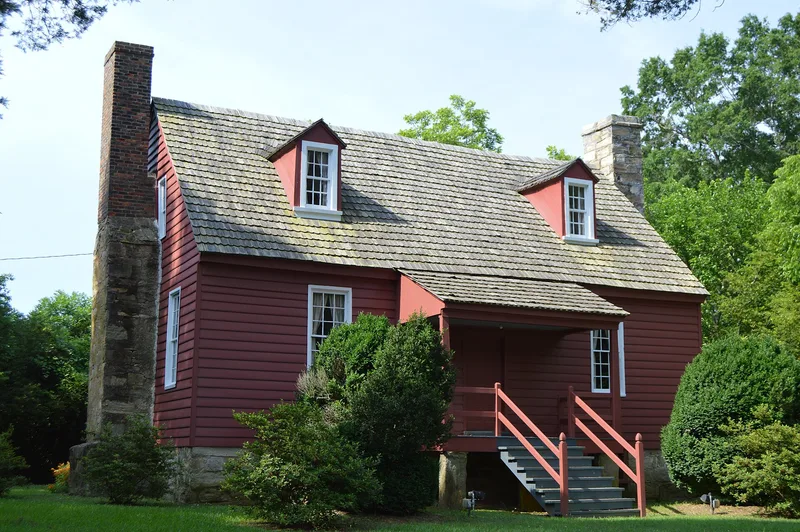
Person's Ordinary is a one-and-one-half-story frame building in Littleton, North Carolina, that began as a roadside tavern. Its eastern portion, with a large stone chimney serving corner fireplaces, was probably built before the American Revolution. About 1800 a western section with a second stone chimney was added, along with Federal-style interior alterations. Inside, a modified Quaker plan, wainscoting and mantels of transitional Georgian-Federal design survive. The inn belonged to Thomas Person, a wealthy landowner who led the state's Radical faction, opposed centralized government, and helped win the charter of the University of North Carolina. It appeared on a 1770 map and served as the last coach stop between Hillsborough and Halifax. After Person's death in 1800 it passed to his adopted nephew William Person Little, who kept the tavern into the 1830s; the village took the name Littleton from the Little family. Later owners included the Mosby family and the local school trustees. Restoration work was carried out by the Littleton Woman's Club.
Significance in brief: The building is a simple, typical example of the inns that served stagecoach travelers in eighteenth-century North Carolina. It is also tied to Thomas Person, a leading political figure from 1760 to 1790 and a champion of the state's Radical, populist faction. Its modest, vernacular character fits the kind of travelers it served.
Machine-generated summary. This summary was generated by a language model from the official nomination document and has not been reviewed line by line by an editor. It may contain errors. Check the source document before relying on any detail. Source: nomination document (PDF) · National Archives catalog entry. NRHP reference 73001379, listed April 24, 1973. Summary generated October 2026 (model claude-sonnet-5-5, prompt v1.0-2026-10-29, confidence high).
Key facts
| Address | SR 1001, Littleton |
|---|---|
| County | Halifax County |
| Listed | April 24, 1973 |
| Reference number | 73001379 |
| Resource type | Building |
| Period of significance | 18th Century |
| Architectural style | Modified Quaker plan with transitional Georgian-Federal interior detail |
| Areas of significance | Politics/Government, Architecture |
| Level of significance | State |
| Status (as stated in the nomination) | Restored in the 1950s and again recently by the Littleton Woman's Club; condition listed as excellent, and it is used as a museum. The county line later moved, placing it in Halifax County. |
| Acreage | 0.9 |
| Coordinates | 36.43125, -77.91472 (NPS GIS) |
What listing means for this property
National Register listing is honorary: it recognises significance and does not restrict what a private owner may do without federal money or permits. It unlocks the 20% federal rehabilitation tax credit for income-producing buildings, state credits in many states, and Section 106 review when federal agencies are involved. See what listing means in practice.
General information, not legal or tax advice. Rules change; confirm with your State Historic Preservation Office or a qualified adviser.
Sources and further reading
- National Park Service, National Register of Historic Places database (snapshot May 2026), reference 73001379.
- Nomination form (PDF, National Archives) — catalog entry
- Wikipedia article (used for cross-checking only; text not reproduced here)
- Wikidata Q19987519
- This listing as JSON
Last updated October 2026. Found an error? See the editorial policy for how to report it.