Bethabara Historic District

Why it's listed
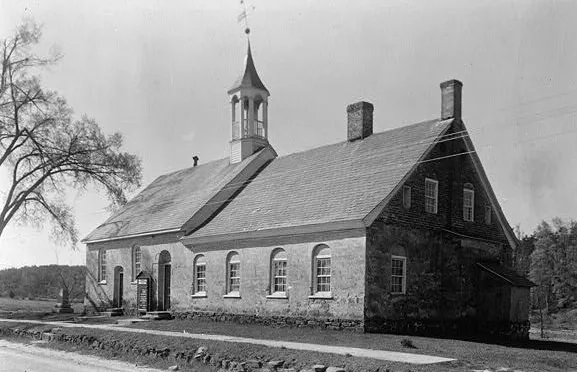
Bethabara, north of Winston-Salem, was founded in 1753 as the first Moravian settlement in North Carolina. Its name means "House of Passage," and it was meant from the start to be temporary, serving as a base for building the town of Salem. Most residents moved there in 1772, and the ruins of many buildings lay under a cultivated field for about a century and a half. The district now works largely as an archeological site. Since 1964, foundations of about two dozen structures, several wells and the postmolds of an 1756 palisade have been excavated, and a modern palisade marks the original line. Three Moravian buildings survive: the 1782 Potter's House, the 1788 Gemeinhaus and the 1803 Brewer's House. They show Pennsylvania-influenced design with fieldstone foundations and plain interiors. God's Acre, the cemetery with the earliest Moravian burials in the state, lies on a hill above the village. The land is leased as a public historic park.
Significance in brief: Bethabara was the first Moravian settlement in North Carolina and the base from which the Moravians built Salem and populated the Wachovia tract. The three surviving buildings (Gemeinhaus, Potter's House, Brewer's House) are important examples of Pennsylvania-influenced Moravian architecture. The excavated foundations, palisade postmolds and cemetery also hold archeological and community-planning value.
Machine-generated summary. This summary was generated by a language model from the official nomination document and has not been reviewed line by line by an editor. It may contain errors. Check the source document before relying on any detail. Source: nomination document (PDF) · National Archives catalog entry. NRHP reference 78001948, listed November 15, 1978. Summary generated October 2026 (model claude-sonnet-5-5, prompt v1.0-2026-10-29, confidence medium).
Key facts
| Address | N of Winston-Salem on NC 67, Winston-Salem |
|---|---|
| County | Forsyth County |
| Listed | November 15, 1978 |
| Reference number | 78001948 |
| Resource type | District |
| Architectural style | Moravian architecture influenced by Pennsylvania German building practices (Pennsylvania Continental plan) |
| Areas of significance | Community Planning and Development, Historic - Non-Aboriginal, Exploration/Settlement, Architecture, Religion, Social History |
| Level of significance | National |
| National Historic Landmark | Yes, designated January 20, 1999 |
| Status (as stated in the nomination) | Land is owned by the Moravian Church and leased by the City of Winston-Salem and Forsyth County as a historic park; the three early Moravian structures and archeological sites are open to the public, the Pou Log House is undergoing some restoration, and two houses are rental property. |
| Acreage | 41 |
| Coordinates | 36.15453, -80.29824 (NPS GIS) |
What listing means for this property
This is a historic district. Buildings within its boundary are either contributing (they add to the district's significance) or non-contributing. Owners of contributing income-producing buildings can claim the 20% federal rehabilitation tax credit; homeowners should look at state credits. National Register districts impose no design review by themselves; a local historic district ordinance, if one exists, does (the difference explained).
General information, not legal or tax advice. Rules change; confirm with your State Historic Preservation Office or a qualified adviser.
Sources and further reading
- National Park Service, National Register of Historic Places database (snapshot May 2026), reference 78001948.
- Nomination form (PDF, National Archives) — catalog entry
- Wikipedia article (used for cross-checking only; text not reproduced here)
- Wikidata Q4897671
- This listing as JSON
Last updated October 2026. Found an error? See the editorial policy for how to report it.