Lattimore, John, House

Why it's listed
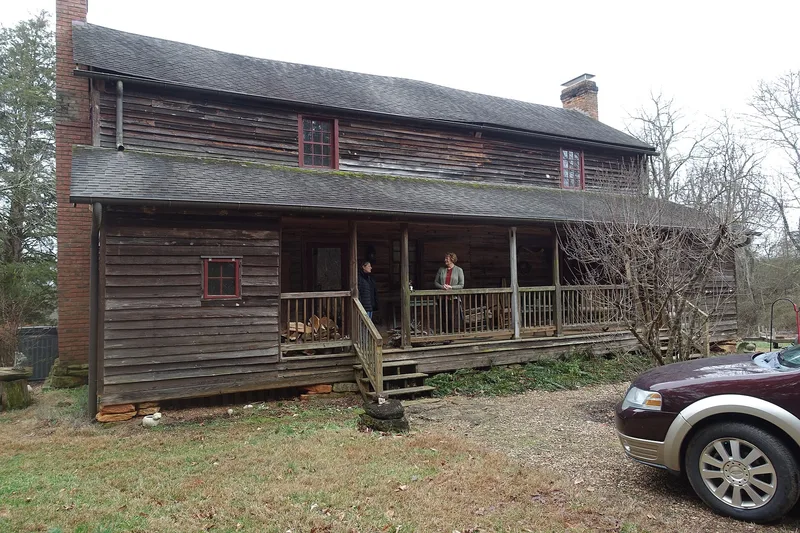
Set on a quiet rural road in northwest Cleveland County, this farmhouse grew in stages from a one-room, half-dovetailed log dwelling into a weatherboarded house with a frame addition, a full-length front porch with enclosed ends, and rear shed rooms. The log core is probably early nineteenth century, and the frame portion dates to the 1820s or 1830s. John Lattimore, known as Big John, lived there for about fifty years and enlarged it as his family grew to at least eleven children. He became a moderately wealthy planter, growing grain, cotton and tobacco, though the Civil War cost him much of his wealth and labor. The house stayed in the Lattimore family, and a family cemetery lies nearby. It was listed for its link to the agrarian society of the western Piedmont, its family associations, its largely unaltered form, and its archaeological potential. Weathering has taken a toll, but the owners have stabilized the structure.
Significance in brief: The house typifies the substantial but unpretentious dwelling of an average antebellum planter in the western North Carolina Piedmont. It remained in one locally prominent farming family throughout its existence and is described as one of the least altered early nineteenth century houses in the region. The surrounding land may also hold archaeological information about the early farmstead.
Machine-generated summary. This summary was generated by a language model from the official nomination document and has not been reviewed line by line by an editor. It may contain errors. Check the source document before relying on any detail. Source: nomination document (PDF) · National Archives catalog entry. NRHP reference 82003445, listed August 26, 1982. Summary generated October 2026 (model claude-sonnet-5-5, prompt v1.0-2026-10-29, confidence high).
Key facts
| Address | NW of Polkville on SR 1372, Polkville |
|---|---|
| County | Cleveland County |
| Listed | August 26, 1982 |
| Reference number | 82003445 |
| Resource type | Building |
| Period of significance | Early nineteenth century (1800-1899) |
| Architectural style | Vernacular, with simple Federal style details |
| Criteria |
|
| Areas of significance | Agriculture, Architecture |
| Level of significance | Local |
| Status (as stated in the nomination) | Badly weathered and deteriorated, but stabilized by the family; described as having stood vacant for many years. |
| Acreage | 65 |
| Coordinates | 35.44531, -81.66565 (NPS GIS) |
What listing means for this property
National Register listing is honorary for a privately owned home: it does not by itself restrict what an owner may do with their own money, and it does not require public access. Restrictions come from local landmark or historic-district ordinances, which are separate (how they differ).
Owner-occupied houses are not eligible for the 20% federal rehabilitation tax credit, which applies to income-producing buildings, but many states offer credits for homeowners. Listing also opens the door to preservation easements and to buying a plaque. Start with what listing means for homeowners, renovating a listed house and selling one.
Noted as vacant in the nomination. Nomination documents can be decades old; current status may differ. If you are considering buying an empty listed property, read the due-diligence checklist.
General information, not legal or tax advice. Rules change; confirm with your State Historic Preservation Office or a qualified adviser.
Sources and further reading
- National Park Service, National Register of Historic Places database (snapshot May 2026), reference 82003445.
- Nomination form (PDF, National Archives) — catalog entry
- Wikipedia article (used for cross-checking only; text not reproduced here)
- Wikidata Q18153446
- This listing as JSON
Last updated October 2026. Found an error? See the editorial policy for how to report it.