Harshaw Chapel and Cemetery

Why it's listed
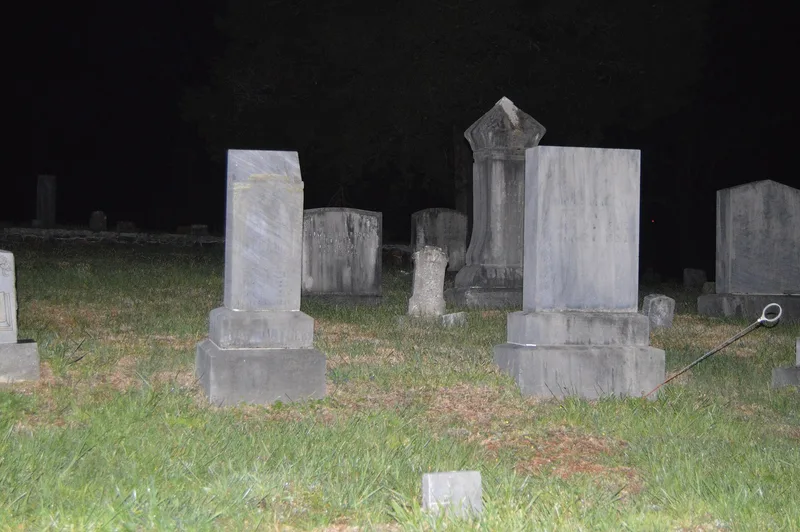
Harshaw Chapel is a small brick church in Murphy, North Carolina, set on a shaded knoll within the Murphy Methodist Cemetery. Built of handmade brick in a simple temple form with a gable roof, it was given to the town's first Methodist congregation by early settler Joshua Harshaw and dedicated on May 1, 1869. Harshaw had donated the site and burial ground in 1844. The congregation moved to a larger church in the 1920s, and the chapel saw little use afterward. In 1965 it was deeded to a local Daughters of the American Revolution chapter, which rehabilitated it, including a new cedar shake roof and a rebuilt belfry. It is the oldest church in Cherokee County and the county's only surviving mid-nineteenth century brick building. The cemetery holds graves of prominent early residents, including Murphy's first lawyer and first hotel founder, and the stone of Abram Enloe, tied to a folk tradition about Abraham Lincoln's parentage.
Significance in brief: It is the oldest church building in Cherokee County and the oldest relatively intact structure in Murphy. It is also the county's only surviving mid-nineteenth century brick structure. The cemetery holds the graves of many prominent early citizens, the county's largest collection of early marked stones, and a collection of Victorian grave markers.
Machine-generated summary. This summary was generated by a language model from the official nomination document and has not been reviewed line by line by an editor. It may contain errors. Check the source document before relying on any detail. Source: nomination document (PDF) · National Archives catalog entry. NRHP reference 84001979, listed April 5, 1984. Summary generated October 2026 (model claude-sonnet-5-5, prompt v1.0-2026-10-29, confidence high).
Key facts
| Address | Church and Central Sts., Murphy |
|---|---|
| County | Cherokee County |
| Listed | April 5, 1984 |
| Reference number | 84001979 |
| Resource type | District |
| Period of significance | Ca. 1869 |
| Architect / builder | James Warner Cooper (contractor) |
| Architectural style | Vernacular Greek Revival |
| Criteria |
|
| Areas of significance | Architecture |
| Level of significance | Local |
| Status (as stated in the nomination) | Rehabilitated after 1965 and now used occasionally for special services; condition listed as fair, with an altered belfry. |
| Acreage | 0.5 |
| Coordinates | 35.08528, -84.03346 (NPS GIS) |
What listing means for this property
This is a historic district. Buildings within its boundary are either contributing (they add to the district's significance) or non-contributing. Owners of contributing income-producing buildings can claim the 20% federal rehabilitation tax credit; homeowners should look at state credits. National Register districts impose no design review by themselves; a local historic district ordinance, if one exists, does (the difference explained).
General information, not legal or tax advice. Rules change; confirm with your State Historic Preservation Office or a qualified adviser.
Sources and further reading
- National Park Service, National Register of Historic Places database (snapshot May 2026), reference 84001979.
- Nomination form (PDF, National Archives) — catalog entry
- Wikipedia article (used for cross-checking only; text not reproduced here)
- Wikidata Q5673870
- This listing as JSON
Last updated October 2026. Found an error? See the editorial policy for how to report it.