West Asheville End of Car Line Historic District

Why it's listed
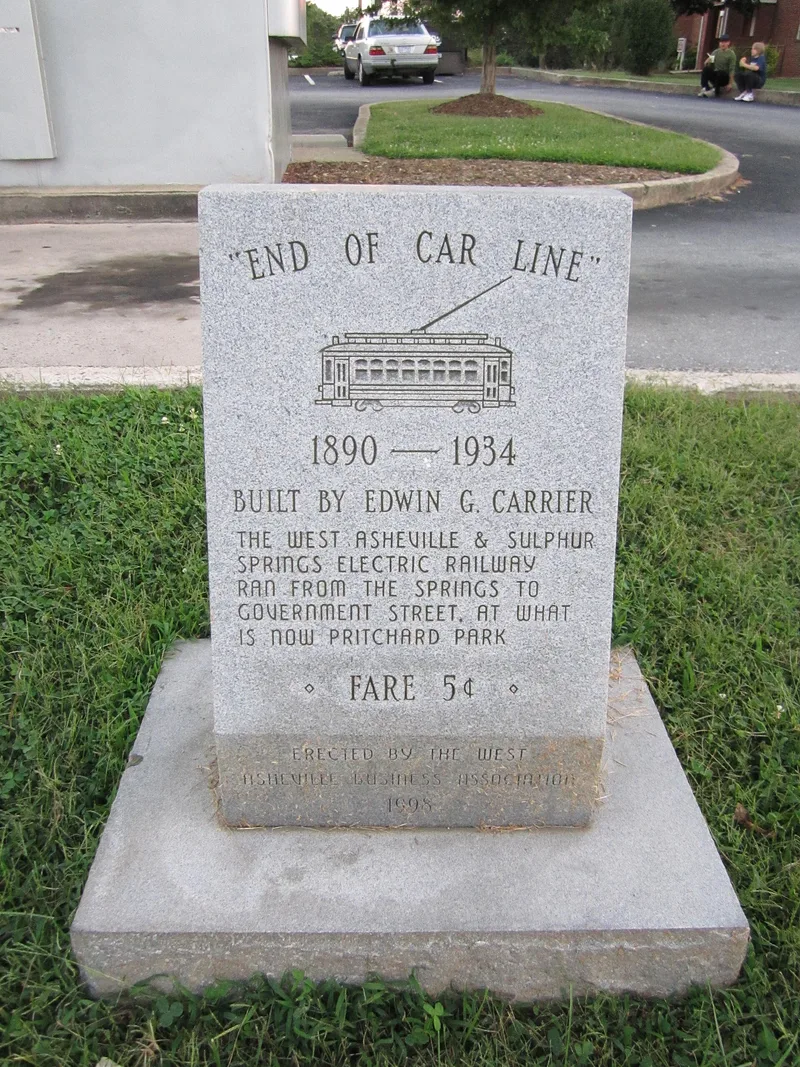
Along the 700 and 800 blocks of Haywood Road in West Asheville, a nearly continuous row of one- and two-story brick and concrete block storefronts marks the place where the streetcar line from downtown Asheville once turned around at Brevard Road. Streetcars ran to this point from 1911 until 1934. The district holds twenty-four contributing and two non-contributing resources, most built between 1916 and the mid-1930s. Notable buildings include the 1937 Art Deco Isis Theater, the cottage-like Pure Oil Station, the 1917 Wells Building, and a Craftsman bungalow. Early tenants included grocers, barbers, cleaners, drug stores and department stores, among them May's Market, which operated from 1928 to 1978. West Asheville was annexed by Asheville in 1917, and the following years of growth shaped Haywood Road's appearance. Together with the nearby West Asheville-Aycock School district, this stretch preserves a rare group of historic commercial buildings amid later infill.
Significance in brief: The district is a rare concentration of historic commercial buildings on Haywood Road, the main spine of West Asheville. It sits at the end of the streetcar line that served West Asheville from 1911 to 1934, and its buildings reflect the commercial growth that followed annexation by Asheville in 1917.
Machine-generated summary. This summary was generated by a language model from the official nomination document and has not been reviewed line by line by an editor. It may contain errors. Check the source document before relying on any detail. Source: nomination document (PDF) · National Archives catalog entry. NRHP reference 06000691, listed August 9, 2006. Summary generated October 2026 (model claude-sonnet-5-5, prompt v1.0-2026-10-29, confidence medium).
Key facts
| Address | Both sides of Haywood Rd. from 715 to 814 and 7-9 Brevard Rd., Asheville |
|---|---|
| County | Buncombe County |
| Listed | August 9, 2006 |
| Reference number | 06000691 |
| Resource type | District |
| Architectural style | Commercial Style; Bungalow/Craftsman; Modern Movement/Art Deco |
| Areas of significance | Commerce, Community Planning and Development, Architecture |
| Level of significance | Local |
| Status (as stated in the nomination) | Most buildings are still in commercial use as shops and restaurants; the former Isis Theater has been used as a restaurant and one building is listed as work in progress. |
| Acreage | 12 |
| Coordinates | 35.57803, -82.59393 (NPS GIS) |
What listing means for this property
This is a historic district. Buildings within its boundary are either contributing (they add to the district's significance) or non-contributing. Owners of contributing income-producing buildings can claim the 20% federal rehabilitation tax credit; homeowners should look at state credits. National Register districts impose no design review by themselves; a local historic district ordinance, if one exists, does (the difference explained).
General information, not legal or tax advice. Rules change; confirm with your State Historic Preservation Office or a qualified adviser.
Sources and further reading
- National Park Service, National Register of Historic Places database (snapshot May 2026), reference 06000691.
- Nomination form (PDF, National Archives) — catalog entry
- Wikipedia article (used for cross-checking only; text not reproduced here)
- Wikidata Q18159206
- This listing as JSON
Last updated October 2026. Found an error? See the editorial policy for how to report it.