Municipal Golf Course
Also known as: Buncombe County Golf Course
Municipal Golf Course is a historic district in Asheville, Buncombe County, North Carolina, listed on the National Register of Historic Places on April 20, 2005 (reference number 05000318). The National Park Service records its significance in Landscape Architecture, Entertainment/Recreation and Black at the local level.
Facts from the NPS National Register database (); nomination summary October 2026. Last updated . Sources for each fact.

The pin is a point inside the NPS boundary polygon, not a surveyed location.
Why it's listed
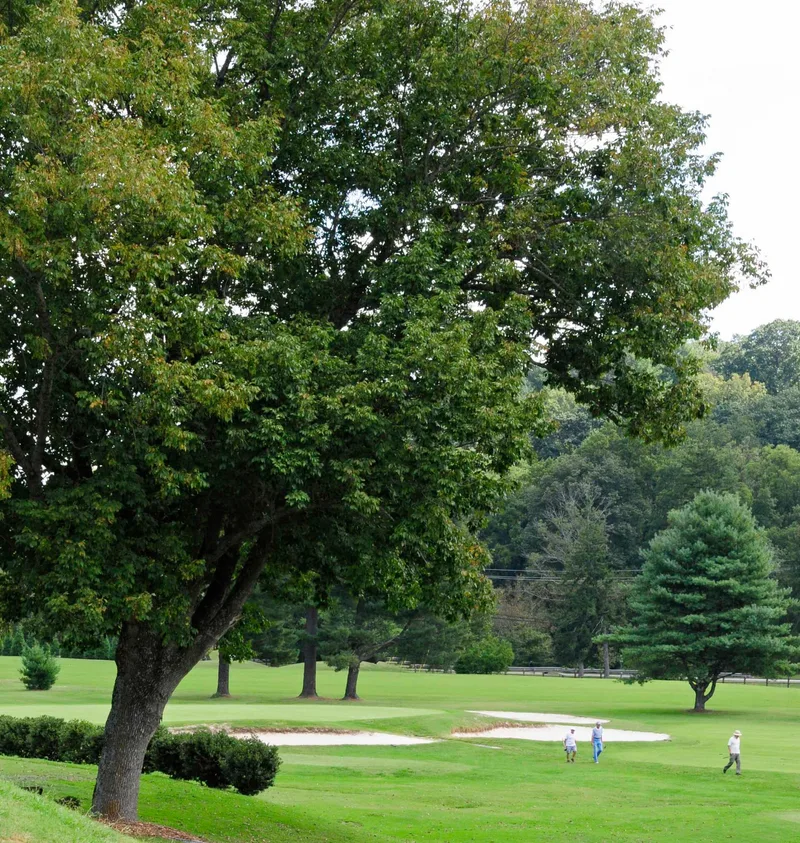
Municipal Golf Course, known locally as the "Muni," is an eighteen-hole public course in Asheville designed by Donald Ross in 1925 and opened on May 21, 1927. It sits beside the Swannanoa River and the Beverly Hills neighborhood. The flat front nine lies in a floodplain, while the hilly back nine winds among houses, a pairing considered unusual even among Ross designs. Ross originally planned the two nines in reverse order, and the numbering was switched when the course was built. Small changes include new tees, relocated bunkers, and filled-in water hazards, but the overall layout is intact. The pink granite clubhouse by architect Christopher Gadsden Sayre was damaged by a 1956 fire and rebuilt with a flat roof. The course was the first municipal course in North Carolina, and the first in the state to integrate, with full integration beginning in 1954. It remained the region's only public course through 1956.
Significance in brief: The course is locally significant as an intact Donald Ross design that combines a flat front nine with a rugged back nine. It was the first municipal golf course in North Carolina, public from its start with affordable fees. It was also the first municipal course in the state to be racially integrated, with full integration beginning in 1954.
Machine-generated summary. This summary was generated by a language model from the official nomination document and has not been reviewed line by line by an editor. It may contain errors. Check the source document before relying on any detail. Source: nomination document (PDF) · National Archives catalog entry. NRHP reference 05000318, listed April 20, 2005. Summary generated October 2026 (model claude-sonnet-5-5, prompt v1.0-2026-10-29, confidence high).
Key facts
| Official database NPS National Register database, ref. 05000318 , checked | |
|---|---|
| Address | 226 Fairway Dr., Asheville |
| County | Buncombe County |
| Listed | April 20, 2005 |
| Reference number | 05000318 |
| Resource type | District |
| Areas of significance | Landscape Architecture, Entertainment/Recreation, Black |
| Level of significance | Local |
| National Historic Landmark | No |
| Acreage | 129 |
| Official document, machine-extracted Nomination form (National Archives) , checked | |
| Period of significance | 1927-1956 |
| Architect / builder | Ross, Donald, landscape architect; Sayre, Christopher Gadsen, architect; Beeler and Company (general contractor for the clubhouse) |
| Architectural style | Other: golf course (clubhouse originally Tudor Revival) |
| Criteria |
|
| Status (as stated in the nomination) | Still used as a golf course. The clubhouse was altered after a 1956 fire destroyed its upper story, but retains integrity on the main level. Later buildings and houses within the boundary are non-contributing. |
| Official dataset NPS cultural-resource GIS (NRHP locations) | |
| Coordinates | 35.58141, -82.50025 |
What listing means for this property
This is a historic district. Buildings within its boundary are either contributing (they add to the district's significance) or non-contributing. Owners of contributing income-producing buildings can claim the 20% federal rehabilitation tax credit; homeowners should look at state credits. National Register districts impose no design review by themselves; a local historic district ordinance, if one exists, does (the difference explained).
General information, not legal or tax advice. Rules change; confirm with your State Historic Preservation Office or a qualified adviser.
Questions about Municipal Golf Course
When was Municipal Golf Course added to the National Register of Historic Places?
Municipal Golf Course was listed on April 20, 2005. Its National Register reference number is 05000318.
Is Municipal Golf Course a National Historic Landmark?
No. The National Park Service database (snapshot of May 2026) lists Municipal Golf Course on the National Register but does not record it as a National Historic Landmark.
Where is Municipal Golf Course?
226 Fairway Dr., Asheville, Buncombe County, North Carolina; coordinates 35.58141, -82.50025.
Why is Municipal Golf Course historically significant?
According to a machine-generated summary of its nomination form: The course is locally significant as an intact Donald Ross design that combines a flat front nine with a rugged back nine. It was the first municipal golf course in North Carolina, public from its start with affordable fees. It was also the first municipal course in the state to be racially integrated, with full integration beginning in 1954. Check the nomination document before relying on any detail.
Who designed or built Municipal Golf Course?
The nomination form names Ross, Donald, landscape architect; Sayre, Christopher Gadsen, architect; Beeler and Company (general contractor for the clubhouse) as architect or builder (extracted by machine from the nomination; check the source document).
Where can I read the original nomination for Municipal Golf Course?
The nomination form is a public record held by the National Archives: nomination document (PDF).
Sources and further reading
- National Park Service, National Register of Historic Places database (snapshot May 2026), reference 05000318.
- Nomination form (PDF, National Archives) — catalog entry
- Wikipedia article (used for cross-checking only; text not reproduced here)
- Wikidata Q18154805
- This listing as JSON
Last updated November 2026. Found an error? See the editorial policy for how to report it.