Ten Mile River Baptist Church
Also known as: Tusten Baptist Church

Why it's listed
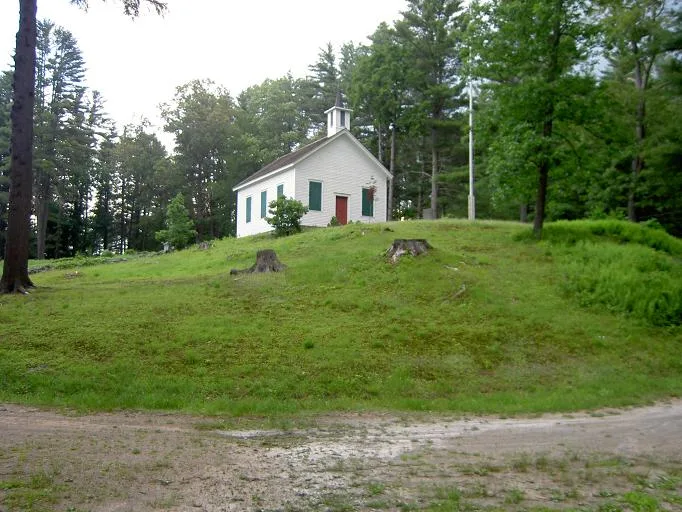
Built in 1856, this small clapboard church sits on a wooded hill near the Ten Mile River, about four miles south of Narrowsburg. It is a vernacular meetinghouse with Greek Revival touches in its rectangular form and twelve-over-twelve windows. Inside are plank pews, a balcony above the vestibule, a cast iron wood stove and a paneled pulpit from 1864. A cemetery with about 100 burials, dry-laid stone walls and a nineteenth century privy complete the property. The church is tied to Tusten, a river community that thrived on lumbering and bluestone quarrying before declining in the early twentieth century. Baptists organized the congregation in 1840 and met in homes until the building was completed. Services are believed to have ended around 1920, yet the church changed very little. It is considered one of the finest examples of its type in the region. A local association has maintained it since 1969 and reconstructed the bell tower in 1995.
Significance in brief: The church is argued to represent the lost nineteenth century river community of Tusten (Criterion A). It is also a rare, largely unaltered example of a vernacular mid-nineteenth century Protestant meetinghouse with Greek Revival references (Criterion C). The cemetery, stone walls and privy contribute to its setting.
Machine-generated summary. This summary was generated by a language model from the official nomination document and has not been reviewed line by line by an editor. It may contain errors. Check the source document before relying on any detail. Source: nomination document (PDF) · National Archives catalog entry. NRHP reference 97000422, listed May 9, 1997. Summary generated October 2026 (model claude-sonnet-5-5, prompt v1.0-2026-10-29, confidence high).
Key facts
| Address | NY 97, jct. with Cochecton Trnpk., Tusten |
|---|---|
| County | Sullivan County |
| Listed | May 9, 1997 |
| Reference number | 97000422 |
| Resource type | Building |
| Period of significance | ca. 1840 - ca. 1920 |
| Architectural style | Mid-19th Century / Greek Revival (vernacular meetinghouse) |
| Criteria |
|
| Areas of significance | Exploration/Settlement, Architecture |
| Level of significance | Local |
| Status (as stated in the nomination) | Services are believed to have stopped around 1920, but the church was maintained. The Tusten Settlement Association has cared for it since 1969, rebuilt the belfry and spire in 1995, and makes it available for special services. |
| Acreage | 6 |
| Coordinates | 41.56015, -75.01619 (NPS GIS) |
What listing means for this property
Religious properties are listed for their architectural or historical significance, not their religious use. Listing is honorary and does not restrict the congregation's use of the building. The federal rehabilitation credit is generally unavailable unless part of the building is income-producing; some state programmes and preservation grants do cover religious buildings. Federal funding or permits trigger Section 106 review.
General information, not legal or tax advice. Rules change; confirm with your State Historic Preservation Office or a qualified adviser.
Sources and further reading
- National Park Service, National Register of Historic Places database (snapshot May 2026), reference 97000422.
- Nomination form (PDF, National Archives) — catalog entry
- Wikipedia article (used for cross-checking only; text not reproduced here)
- Wikidata Q7699249
- This listing as JSON
Last updated October 2026. Found an error? See the editorial policy for how to report it.