Lansingburgh Academy
Also known as: Whipple School Annex

Why it's listed
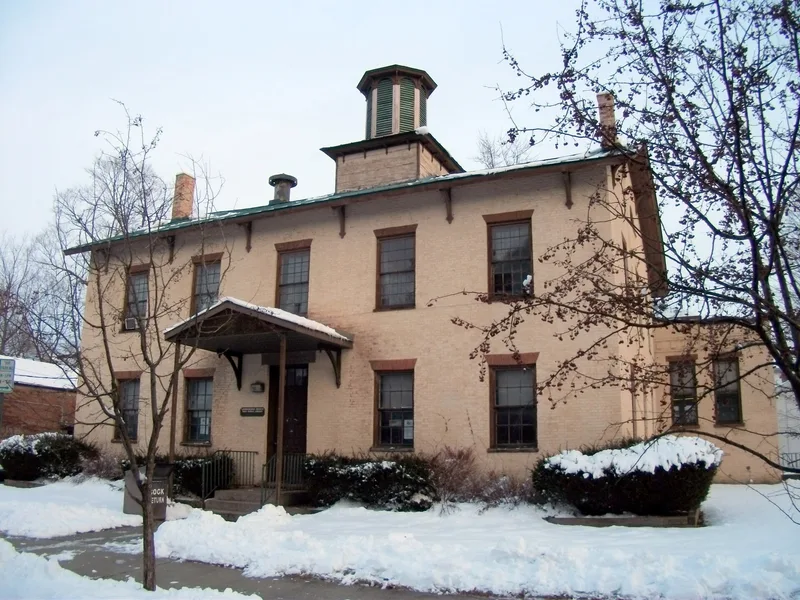
Lansingburgh Academy is a two-and-a-half-story brick school at 4th and 114th Streets in north Troy, about three blocks from the Hudson River. The main building dates to 1820 and is plain and symmetrical, with a gabled roof, a five-bay front, fanlights in the gable ends and a two-stage cupola. A one-story gymnasium, designed by architect Edward W. Loth, was attached at the rear in 1902. The interior remains largely intact, with a central hall on each floor, beaded-board wainscot, six-panel doors and an attic with mortise-and-tenon framing. The academy was incorporated in 1796 and first used a wooden building. Its principals included Samuel Blatchford, later the first president of Rensselaer Polytechnic Institute, and Herman Melville studied there in 1838. In 1901 the building became the first Lansingburgh High School, and later served as a vocational school, elementary school and library. Its survival as a continuously used Federal-period academy led to its listing.
Significance in brief: The nomination calls the building a remarkably intact example of a once-common Federal academy that is disappearing from New York. It is unusual for an urban building to remain in continuous use for 150 years while keeping much of its original fabric. It also housed a school that gave quality education to Lansingburgh residents in the 19th and 20th centuries.
Machine-generated summary. This summary was generated by a language model from the official nomination document and has not been reviewed line by line by an editor. It may contain errors. Check the source document before relying on any detail. Source: nomination document (PDF) · National Archives catalog entry. NRHP reference 76001267, listed October 14, 1976. Summary generated October 2026 (model claude-sonnet-5-5, prompt v1.0-2026-10-29, confidence high).
Key facts
| Address | 4th and 114th Sts., Troy |
|---|---|
| County | Rensselaer County |
| Listed | October 14, 1976 |
| Reference number | 76001267 |
| Resource type | Building |
| Period of significance | 1820 |
| Architect / builder | Edward W. Loth, architect of the 1902 gymnasium addition |
| Architectural style | Federal |
| Areas of significance | Education, Architecture |
| Level of significance | Local |
| Status (as stated in the nomination) | Occupied and in educational use at the time of nomination; owned by the school district, with plans to renovate it for further community use. |
| Acreage | 0.9 |
| Within district | Central Lansingburgh Historic District |
| Coordinates | 42.77297, -73.67578 (NPS GIS) |
What listing means for this property
For a publicly owned building or structure, listing mainly matters when federal funds, permits or licences are involved: projects then go through Section 106 review so effects on the property are considered. Listing also strengthens applications for preservation grants and, for leased income-producing uses, can enable the federal rehabilitation tax credit.
General information, not legal or tax advice. Rules change; confirm with your State Historic Preservation Office or a qualified adviser.
Sources and further reading
- National Park Service, National Register of Historic Places database (snapshot May 2026), reference 76001267.
- Nomination form (PDF, National Archives) — catalog entry
- Wikipedia article (used for cross-checking only; text not reproduced here)
- Wikidata Q6487495
- This listing as JSON
Last updated October 2026. Found an error? See the editorial policy for how to report it.