Matton Shipyard

Why it's listed
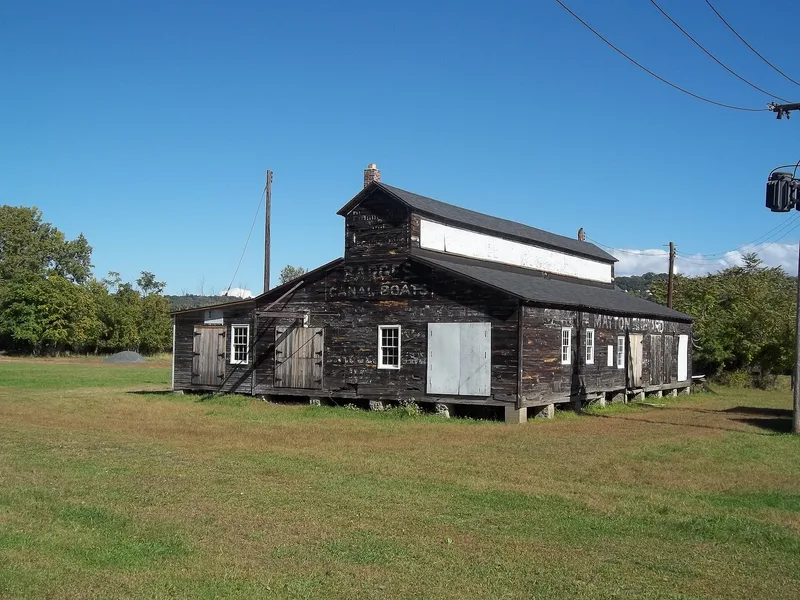
Matton Shipyard occupies about four acres near the northern tip of Van Schaick Island in Cohoes, close to where the Hudson and Mohawk Rivers meet. John E. Matton bought the land in June 1916 to take advantage of the new Barge Canal, and the yard built and repaired canal boats and tugs. It began with seven buildings, a dock, a track-mounted crane and a floating dry dock. During World War I it held a contract for fourteen wooden barges. It grew in the 1930s, built its first all-steel boat in 1938, and expanded again in World War II, when a security fence was added. Eight buildings survive, including the office and the carpenter shop with its monitor roof and clerestory windows, along with launching ramps, a dock and mooring camels. Its significance rests on commerce, maritime history, transportation and manufacturing between 1916 and 1959.
Significance in brief: The nomination argues the site is significant for its role in commerce, maritime history, transportation and manufacturing connected to the Barge Canal. It retains buildings and features from the original 1916 yard and from its World War II expansion, with almost no later infill. It is recognized as significant at the statewide level.
Machine-generated summary. This summary was generated by a language model from the official nomination document and has not been reviewed line by line by an editor. It may contain errors. Check the source document before relying on any detail. Source: nomination document (PDF) · National Archives catalog entry. NRHP reference 09000553, listed July 24, 2009. Summary generated October 2026 (model claude-sonnet-5-5, prompt v1.0-2026-10-29, confidence medium).
Key facts
| Address | Delaware Ave., Cohoes |
|---|---|
| County | Albany County |
| Listed | July 24, 2009 |
| Reference number | 09000553 |
| Resource type | District |
| Period of significance | 1916-1959 |
| Architectural style | Other: Industrial |
| Criteria |
|
| Areas of significance | Commerce, Maritime History, Transportation, Industry |
| Level of significance | State |
| Status (as stated in the nomination) | Eight buildings, several contributing features and archaeological resources survive; several other buildings are lost or in ruins, including a warehouse and molding loft that collapsed in 1993. |
| Acreage | 4.1 |
| Within district | Peebles (Peobles) Island |
| Coordinates | 42.78099, -73.68008 (NPS GIS) |
What listing means for this property
This is a historic district. Buildings within its boundary are either contributing (they add to the district's significance) or non-contributing. Owners of contributing income-producing buildings can claim the 20% federal rehabilitation tax credit; homeowners should look at state credits. National Register districts impose no design review by themselves; a local historic district ordinance, if one exists, does (the difference explained).
General information, not legal or tax advice. Rules change; confirm with your State Historic Preservation Office or a qualified adviser.
Sources and further reading
- National Park Service, National Register of Historic Places database (snapshot May 2026), reference 09000553.
- Nomination form (PDF, National Archives) — catalog entry
- Wikipedia article (used for cross-checking only; text not reproduced here)
- Wikidata Q6791856
- This listing as JSON
Last updated October 2026. Found an error? See the editorial policy for how to report it.