Williams, Johann, Farm
Also known as: Arthur Williams Farm

Why it's listed
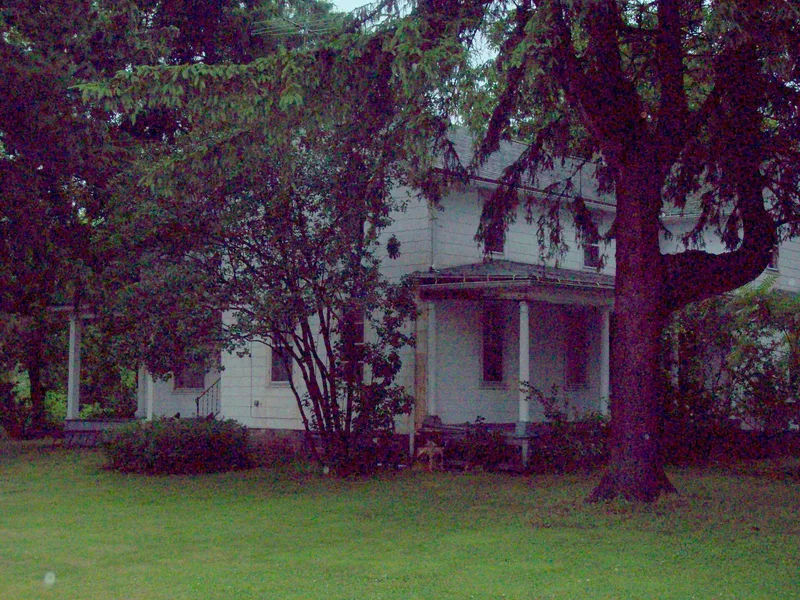
This ten-acre farmstead on Cayuga Drive in Niagara Falls includes a two-story frame farmhouse, two barns, a chicken coop, a corn crib and a tool shed. The house began in the 1840s as a small half-timbered dwelling built by William Roggow, a German immigrant, and was bought by Johann Williams, a lay leader of the New Bergholtz Lutheran settlement founded in 1833 by families seeking religious freedom. Later generations added a dining room, kitchen and second story in the late 1800s, and a living room, kitchen and second story in 1906. Electricity arrived in 1927, and a bathroom was added in 1970. Oak cut on the property supplied the floors, woodwork and staircases. The older barn dates from the 1840s and the newer, with its ventilation cupola, from the 1850s or 1860s. The farm has stayed in one family for four generations and is the last remaining farm within the city limits of Niagara Falls.
Significance in brief: The nomination presents it as the last remaining farm within the city limits of Niagara Falls and as one of the last farm complexes from the early settlement of the German community of New Bergholtz. The farmhouse has stayed in the same family for four generations. Its half-timbered core and later additions illustrate a Germanic building tradition and 19th-century vernacular farm design.
Machine-generated summary. This summary was generated by a language model from the official nomination document and has not been reviewed line by line by an editor. It may contain errors. Check the source document before relying on any detail. Source: nomination document (PDF) · National Archives catalog entry. NRHP reference 80002730, listed January 10, 1980. Summary generated October 2026 (model claude-sonnet-5-5, prompt v1.0-2026-10-29, confidence high).
Key facts
| Address | 10831 Cayuga Dr., Niagara Falls |
|---|---|
| County | Niagara County |
| Listed | January 10, 1980 |
| Reference number | 80002730 |
| Resource type | Building |
| Period of significance | 1840-50 |
| Architect / builder | Unknown |
| Areas of significance | Architecture, Religion, Agriculture |
| Level of significance | Local |
| Status (as stated in the nomination) | Occupied as a private residence by a descendant of Johann Williams; the surrounding farmland is worked by lessees. |
| Acreage | 10 |
| Coordinates | 43.09166, -78.94295 (NPS GIS) |
What listing means for this property
National Register listing is honorary for a privately owned home: it does not by itself restrict what an owner may do with their own money, and it does not require public access. Restrictions come from local landmark or historic-district ordinances, which are separate (how they differ).
Owner-occupied houses are not eligible for the 20% federal rehabilitation tax credit, which applies to income-producing buildings, but many states offer credits for homeowners. Listing also opens the door to preservation easements and to buying a plaque. Start with what listing means for homeowners, renovating a listed house and selling one.
General information, not legal or tax advice. Rules change; confirm with your State Historic Preservation Office or a qualified adviser.
Sources and further reading
- National Park Service, National Register of Historic Places database (snapshot May 2026), reference 80002730.
- Nomination form (PDF, National Archives) — catalog entry
- Wikipedia article (used for cross-checking only; text not reproduced here)
- Wikidata Q6216309
- This listing as JSON
Last updated October 2026. Found an error? See the editorial policy for how to report it.