McKay, Claude, Residence
Also known as: McKay,Claude,Apartment; YMCA Building
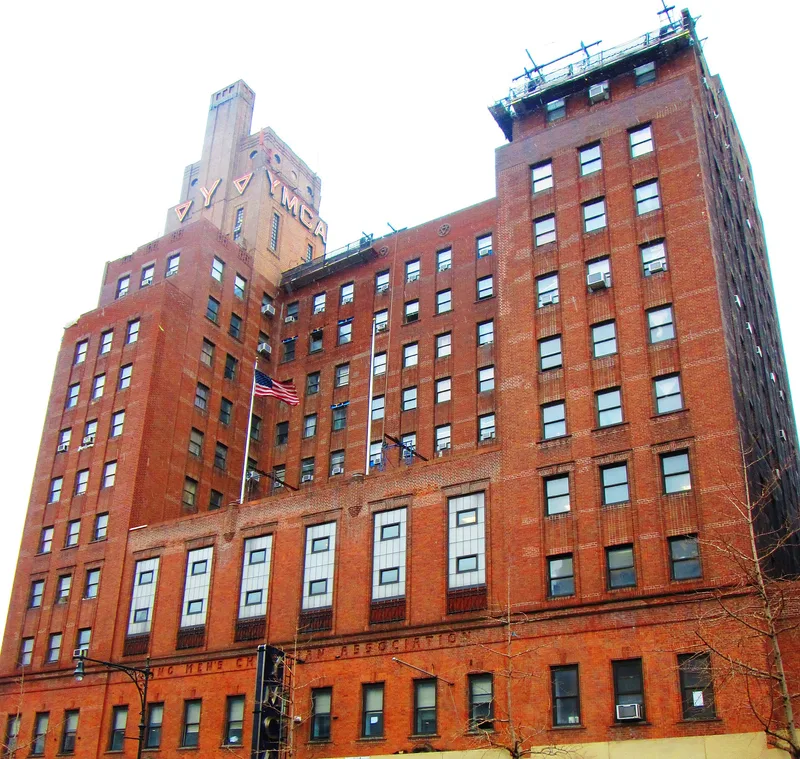

Why it's listed
Built in 1931-32 as the Harlem Branch of the YMCA, this 14-story dark red brick building at 180 West 135th Street includes residential space on its upper floors. Its north facade steps back above the fourth, ninth and eleventh floors, and a tower and smoke stack rise on the east side. Inside are offices, conference rooms, a chapel, a dining room and a Little Theatre. During the 1940s and 1950s it also served as a hotel for artists, show people and other visitors to Harlem. The building is remembered chiefly as the residence of Claude McKay, who lived here in the early to mid-1940s. Born in Jamaica in 1890, McKay wrote the sonnet "If We Must Die" in 1919, a work many credit with starting the Harlem Renaissance. His novel Home to Harlem became the first best-seller by an Afro-American. He died in Chicago in 1948.
Significance in brief: The nomination argues the building is significant for its association with Claude McKay, poet, novelist and lecturer, who is credited with launching the Harlem Renaissance with his 1919 poem "If We Must Die." McKay also wrote Home to Harlem, the first best-seller by an Afro-American author. The building itself served as a hub of the Harlem community.
Machine-generated summary. This summary was generated by a language model from the official nomination document and has not been reviewed line by line by an editor. It may contain errors. Check the source document before relying on any detail. Source: nomination document (PDF) · National Archives catalog entry. NRHP reference 76002143, listed December 8, 1976. Summary generated October 2026 (model claude-sonnet-5-5, prompt v1.0-2026-10-29, confidence medium).
Key facts
| Address | 180 W. 135th St., New York |
|---|---|
| County | Manhattan |
| Listed | December 8, 1976 |
| Reference number | 76002143 |
| Resource type | Building |
| Period of significance | Residency (1942-1946) |
| Areas of significance | Black, Literature, Social History |
| Level of significance | National |
| National Historic Landmark | Yes, designated December 8, 1976 |
| Status (as stated in the nomination) | The building is occupied and still serves its basic YMCA function, with the only visible exterior alteration being the glass entrance doors. |
| Acreage | 9.9 |
| Coordinates | 40.81471, -73.94300 (NPS GIS) |
What listing means for this property
National Register listing is honorary for a privately owned home: it does not by itself restrict what an owner may do with their own money, and it does not require public access. Restrictions come from local landmark or historic-district ordinances, which are separate (how they differ).
Owner-occupied houses are not eligible for the 20% federal rehabilitation tax credit, which applies to income-producing buildings, but many states offer credits for homeowners. Listing also opens the door to preservation easements and to buying a plaque. Start with what listing means for homeowners, renovating a listed house and selling one.
General information, not legal or tax advice. Rules change; confirm with your State Historic Preservation Office or a qualified adviser.
Sources and further reading
- National Park Service, National Register of Historic Places database (snapshot May 2026), reference 76002143.
- Nomination form (PDF, National Archives) — catalog entry
- Wikipedia article (used for cross-checking only; text not reproduced here)
- Wikidata Q5128957
- This listing as JSON
Last updated October 2026. Found an error? See the editorial policy for how to report it.