Vassar, Matthew, Estate
Also known as: Springside

Why it's listed
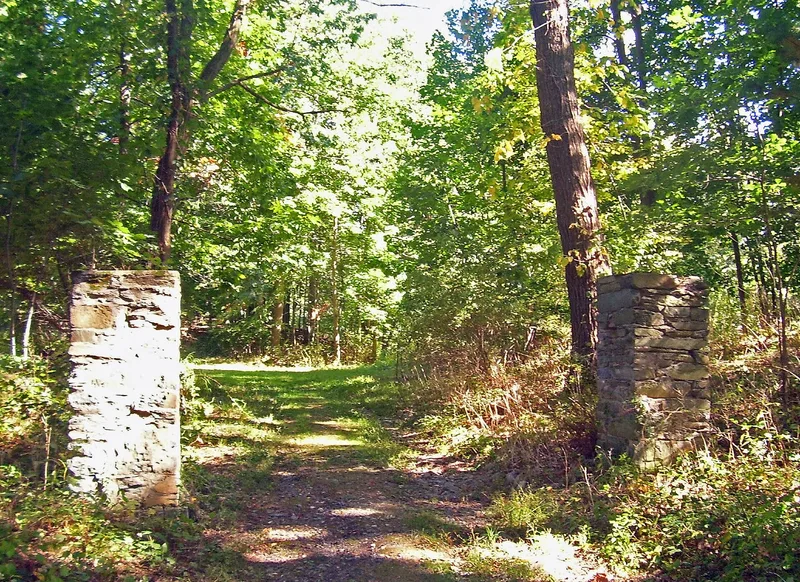
Springside, on Academy Street in Poughkeepsie, was the country seat of Matthew Vassar, founder of Vassar College. He bought 43 acres in 1850 and hired Andrew Jackson Downing to design the grounds. Vassar lived in the Gothic Revival board-and-batten cottage from 1852 until his death in 1868. A planned large villa was never built. About 26.5 acres of the estate remain, with meandering drives, knolls and vistas in the romantic-picturesque manner. A board-and-batten gatehouse near the entrance combines Italianate and Gothic Revival details and is attributed to Downing. The estate is considered the only surviving substantially unaltered landscape designed by Downing, and the cottage is the only building definitely known to be his. Several outbuildings, ornamental sculpture and other garden features have vanished, and the barn and carriage house burned in 1969. At the time of the report the cottage was badly neglected and partly torn down, so its survival was in doubt.
Significance in brief: The nomination argues that the grounds are the only surviving substantially unaltered example of landscape architecture by Andrew Jackson Downing, the "father of American landscape architecture." The cottage is the only building definitely designed by Downing himself. The estate is also tied to Matthew Vassar, benefactor of Vassar College.
Machine-generated summary. This summary was generated by a language model from the official nomination document and has not been reviewed line by line by an editor. It may contain errors. Check the source document before relying on any detail. Source: nomination document (PDF) · National Archives catalog entry. NRHP reference 69000141, listed August 11, 1969. Summary generated October 2026 (model claude-sonnet-5-5, prompt v1.0-2026-10-29, confidence medium).
Key facts
| Address | Academy and Livingston Sts., Poughkeepsie |
|---|---|
| County | Dutchess County |
| Listed | August 11, 1969 |
| Reference number | 69000141 |
| Resource type | Building |
| Period of significance | 1850 |
| Architect / builder | Andrew Jackson Downing |
| Architectural style | Gothic Revival cottage with Italianate and Gothic Revival gatehouse; romantic-picturesque landscape |
| Areas of significance | Landscape Architecture, Architecture |
| Level of significance | National |
| National Historic Landmark | Yes, designated August 11, 1969 |
| Status (as stated in the nomination) | The cottage was in precarious condition, neglected and partly dismantled, and the barn and carriage house burned in August 1969. The gatehouse was occupied and in sound condition. |
| Acreage | 26.5 |
| Coordinates | 41.68902, -73.92700 (NPS GIS) |
What listing means for this property
National Register listing is honorary for a privately owned home: it does not by itself restrict what an owner may do with their own money, and it does not require public access. Restrictions come from local landmark or historic-district ordinances, which are separate (how they differ).
Owner-occupied houses are not eligible for the 20% federal rehabilitation tax credit, which applies to income-producing buildings, but many states offer credits for homeowners. Listing also opens the door to preservation easements and to buying a plaque. Start with what listing means for homeowners, renovating a listed house and selling one.
General information, not legal or tax advice. Rules change; confirm with your State Historic Preservation Office or a qualified adviser.
Sources and further reading
- National Park Service, National Register of Historic Places database (snapshot May 2026), reference 69000141.
- Nomination form (PDF, National Archives) — catalog entry
- Wikipedia article (used for cross-checking only; text not reproduced here)
- Wikidata Q7581178
- This listing as JSON
Last updated October 2026. Found an error? See the editorial policy for how to report it.