Rapp Road Community Historic District

Why it's listed
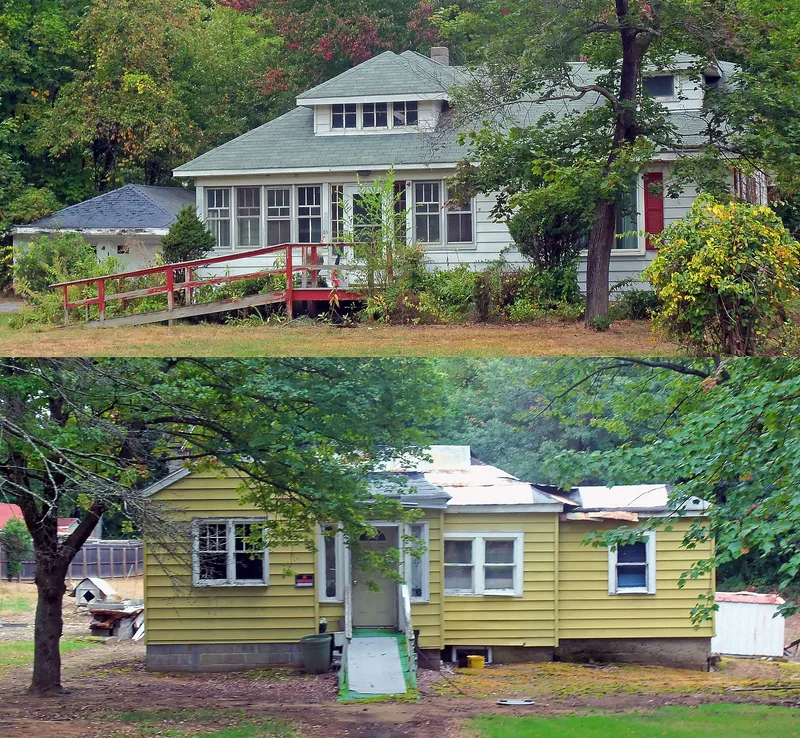
Rapp Road Community Historic District occupies a narrow lane on the southwestern edge of Albany, along the Guilderland border. It grew from a tract bought in 1930 by Rev. Louis Parson, pastor of the First Church of God and Christ, who sold irregular lots to church members, many recruited from Mississippi and other Southern states. Families such as the Owens, Woodards, McCanns and Johnsons built modest wood-frame bungalow and ranch-style houses themselves, often working in stages as money and wartime materials allowed. Later state construction of the Washington Avenue Extension removed or relocated some homes. Today the district holds 21 contributing resources, mostly single-story houses, with a few garages, sheds and driveway features, plus two modern noncontributing homes. It was listed for its role as a rare, intact chain-migration community of the Great Migration, where residents preserved Southern rural customs across generations, and for its association with Parson.
Significance in brief: The district is a rare, still-intact rural African American chain-migration community tied to the Great Migration from the South, notably Mississippi. It is significant for social history and community development, and for its link to Rev. Louis W. Parson, who recruited most of its families from the South.
Machine-generated summary. This summary was generated by a language model from the official nomination document and has not been reviewed line by line by an editor. It may contain errors. Check the source document before relying on any detail. Source: nomination document (PDF) · National Archives catalog entry. NRHP reference 02001620, listed December 27, 2002. Summary generated October 2026 (model claude-sonnet-5-5, prompt v1.0-2026-10-29, confidence medium).
Key facts
| Address | Rapp Rd., Albany |
|---|---|
| County | Albany County |
| Listed | December 27, 2002 |
| Reference number | 02001620 |
| Resource type | District |
| Period of significance | 1930-1952 |
| Architectural style | Late 19th and Early 20th Century American Movements: Craftsman/Bungalow |
| Criteria |
|
| Areas of significance | Social History, Community Planning and Development, Black |
| Level of significance | State |
| Status (as stated in the nomination) | Largely residential and still in single-dwelling use; most homes are occupied by original families' descendants, while one house (8 Rapp Road) is noted as vacant and several lots are empty or contain demolished homes. |
| Acreage | 14 |
| Coordinates | 42.69578, -73.85307 (NPS GIS) |
What listing means for this property
This is a historic district. Buildings within its boundary are either contributing (they add to the district's significance) or non-contributing. Owners of contributing income-producing buildings can claim the 20% federal rehabilitation tax credit; homeowners should look at state credits. National Register districts impose no design review by themselves; a local historic district ordinance, if one exists, does (the difference explained).
General information, not legal or tax advice. Rules change; confirm with your State Historic Preservation Office or a qualified adviser.
Sources and further reading
- National Park Service, National Register of Historic Places database (snapshot May 2026), reference 02001620.
- Nomination form (PDF, National Archives) — catalog entry
- Wikipedia article (used for cross-checking only; text not reproduced here)
- Wikidata Q7294297
- This listing as JSON
Last updated October 2026. Found an error? See the editorial policy for how to report it.