Oakes, J. J., House

Why it's listed
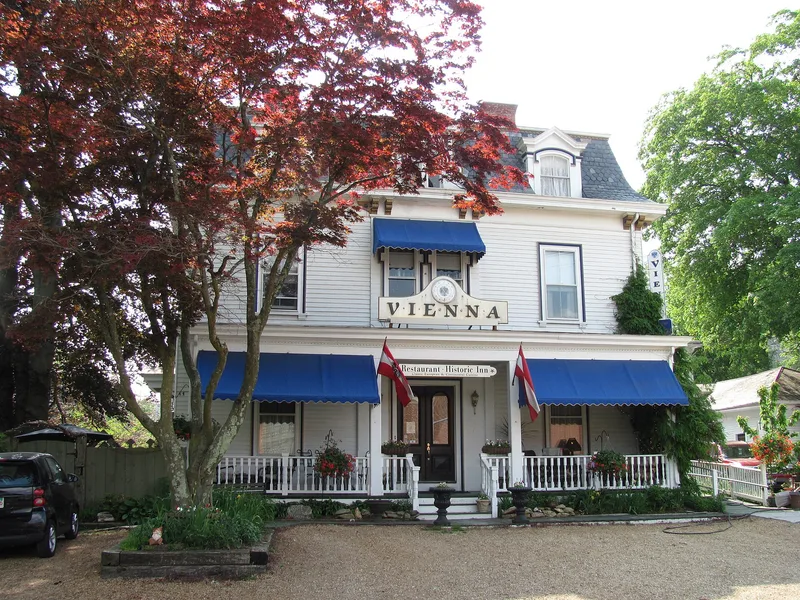
This clapboard house at 14 South Street in Southbridge was built between about 1855 and 1870 and combines Italianate and Second Empire styling. It sits at an intersection with a spacious triangular front lawn. Its Italianate features include a horizontal emphasis, a three-bay facade, projecting cornice window caps, bracketed eaves and a massive porch with arch motifs. A concave slate mansard roof with dormer windows provides the Second Empire element. It is one of only two large Second Empire houses left in town; the other is the Calvin D. Paige House on Main Street. The land was once part of an earlier Oakes family property. The house was the home of James Jacob Oakes, born in Southbridge in 1832, who ran a dry goods and clothing store on Main and Hamilton Streets. This part of South Street was sparsely settled before 1870, then grew into a neighborhood of successful businessmen and old Southbridge families. The house is valued for its link to that development and for its design. It remains a residence in good condition.
Significance in brief: The house is tied to the town's mid-19th-century real estate development and has a stylish Italianate and Second Empire design. It is one of only two large, substantial Second Empire houses remaining in Southbridge. It meets criteria A and C and retains its integrity.
Machine-generated summary. This summary was generated by a language model from the official nomination document and has not been reviewed line by line by an editor. It may contain errors. Check the source document before relying on any detail. Source: nomination document (PDF) · National Archives catalog entry. NRHP reference 89000534, listed June 22, 1989. Summary generated October 2026 (model claude-sonnet-5-5, prompt v1.0-2026-10-29, confidence medium).
Key facts
| Address | 14 South St., Southbridge |
|---|---|
| County | Worcester County |
| Listed | June 22, 1989 |
| Reference number | 89000534 |
| Resource type | Building |
| Architectural style | Italianate/Second Empire |
| Criteria |
|
| Areas of significance | Industry, Architecture |
| Level of significance | Local |
| Status (as stated in the nomination) | Residential use, condition described as good, with no major alterations and no outbuildings. |
| Acreage | 1 |
| Coordinates | 42.07768, -72.03843 (NPS GIS) |
What listing means for this property
National Register listing is honorary for a privately owned home: it does not by itself restrict what an owner may do with their own money, and it does not require public access. Restrictions come from local landmark or historic-district ordinances, which are separate (how they differ).
Owner-occupied houses are not eligible for the 20% federal rehabilitation tax credit, which applies to income-producing buildings, but many states offer credits for homeowners. Listing also opens the door to preservation easements and to buying a plaque. Start with what listing means for homeowners, renovating a listed house and selling one.
General information, not legal or tax advice. Rules change; confirm with your State Historic Preservation Office or a qualified adviser.
Sources and further reading
- National Park Service, National Register of Historic Places database (snapshot May 2026), reference 89000534.
- Nomination form (PDF, National Archives) — catalog entry
- Wikipedia article (used for cross-checking only; text not reproduced here)
- Wikidata Q6104163
- This listing as JSON
Last updated October 2026. Found an error? See the editorial policy for how to report it.