Northside Village Historic District
Also known as: See Also:Rider Tavern

Why it's listed
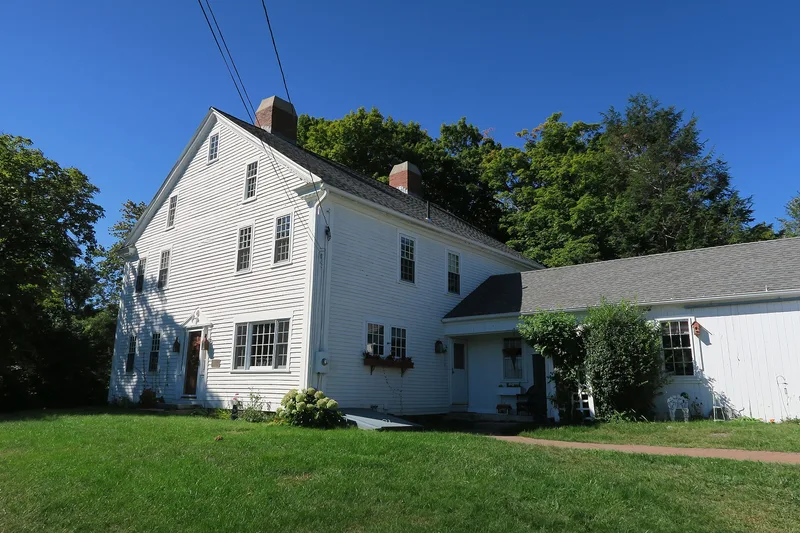
Northside Village is a 70-acre rural district in northern Charlton, strung along the old Stafford and Worcester Turnpike and two side roads. It holds 13 buildings and four archaeological or former building sites. Most buildings are houses from the 18th and early 19th centuries, with two 20th-century exceptions. The oldest is the 1735 Jonothan Wheelock House; Wheelock began the village tanning industry and kept a distillery and tavern. The three-story Rider Tavern, begun in 1797, dominated village life with its ballroom and rooftop garden, and hosted the Marquis de Lafayette. The Waters-Morton House was the boyhood home of Dr. William T. G. Morton, who demonstrated ether anesthesia in 1846. Other sites mark a distillery, a tannery, a one-room school and a store and post office. The 1848 Greek Revival Northside School stands where a Baptist meetinghouse once stood, and its belfry holds a bell cast in 1719 for a Boston church. The district shows how a farming settlement grew into a trading village.
Significance in brief: The district is argued to be significant as an example of village development from agricultural beginnings to mercantile prosperity. It is also important for its associations with well-known local citizens, including tavern keepers, a builder, and Dr. William T. G. Morton, who introduced ether as a surgical anesthetic.
Machine-generated summary. This summary was generated by a language model from the official nomination document and has not been reviewed line by line by an editor. It may contain errors. Check the source document before relying on any detail. Source: nomination document (PDF) · National Archives catalog entry. NRHP reference 77000195, listed October 5, 1977. Summary generated October 2026 (model claude-sonnet-5-5, prompt v1.0-2026-10-29, confidence medium).
Key facts
| Address | Stafford St., Northside and Cemetery Rds., Charlton |
|---|---|
| County | Worcester County |
| Listed | October 5, 1977 |
| Reference number | 77000195 |
| Resource type | District |
| Architect / builder | John A. Haven, housewright or builder, to whom several village buildings after 1796 are attributed; Asa Bacon (Hayward-Bacon House); Israel Waters (Mary Waters House) |
| Architectural style | Predominantly Federal-era vernacular frame houses; Northside School is the only Greek Revival structure |
| Areas of significance | Industry, Commerce, Health/Medicine, Architecture |
| Level of significance | Local |
| Status (as stated in the nomination) | Northside Schoolhouse was used for school from 1848 to 1950, later served as an American Legion post, and is now vacant; the distillery, tannery, Red Schoolhouse and Rider Store sites survive only as sites. |
| Acreage | 70.1 |
| Coordinates | 42.16487, -71.95618 (NPS GIS) |
What listing means for this property
This is a historic district. Buildings within its boundary are either contributing (they add to the district's significance) or non-contributing. Owners of contributing income-producing buildings can claim the 20% federal rehabilitation tax credit; homeowners should look at state credits. National Register districts impose no design review by themselves; a local historic district ordinance, if one exists, does (the difference explained).
General information, not legal or tax advice. Rules change; confirm with your State Historic Preservation Office or a qualified adviser.
Sources and further reading
- National Park Service, National Register of Historic Places database (snapshot May 2026), reference 77000195.
- Nomination form (PDF, National Archives) — catalog entry
- Wikipedia article (used for cross-checking only; text not reproduced here)
- Wikidata Q7059761
- This listing as JSON
Last updated October 2026. Found an error? See the editorial policy for how to report it.