Adams, John, Birthplace

Why it's listed
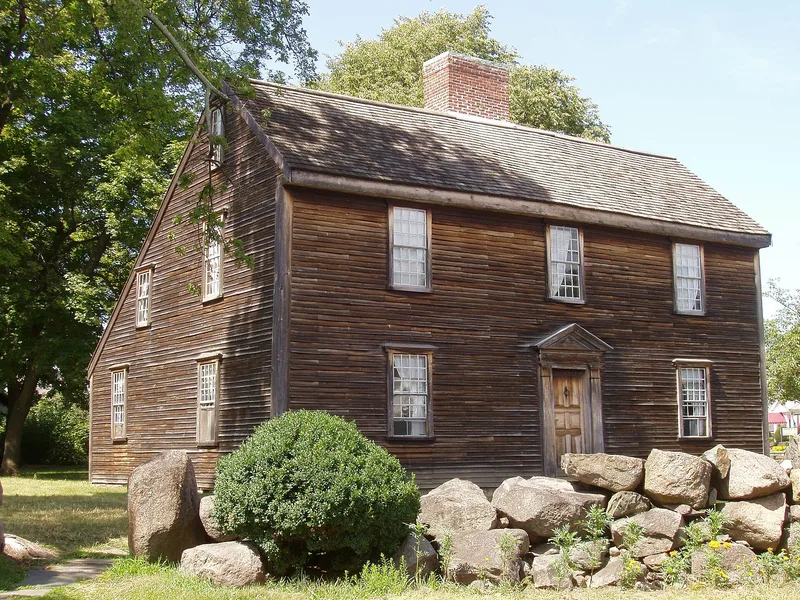
This saltbox farmhouse at 133 Franklin Street in Quincy, Massachusetts, was the birthplace and boyhood home of John Adams, born in its east chamber in 1735. A dated brick found at the southeast corner of the foundation points to construction in 1681, though the house may incorporate parts of an earlier building from about 1650. Deacon John Adams bought the house and some seven acres in 1720, and the rear leanto was already in place by then. John Adams later became a signer of the Declaration of Independence, principal author of the Massachusetts Constitution, first Vice-President and second President. The house remained with the Adams family until 1940, when it was deeded to the City of Quincy. Restoration work began in 1896 under the Adams Chapter, Daughters of the Revolution, and the Quincy Historical Society has administered it since 1950. It sits beside the John Quincy Adams Birthplace, within open land once part of the Adams farm.
Significance in brief: It was the birthplace and boyhood home of John Adams, signer of the Declaration of Independence, principal author of the Massachusetts Constitution, first Vice-President and second President of the United States. It stayed in the Adams family until 1940. It was designated a National Historic Landmark under the theme of political and military affairs.
Machine-generated summary. This summary was generated by a language model from the official nomination document and has not been reviewed line by line by an editor. It may contain errors. Check the source document before relying on any detail. Source: nomination document (PDF) · National Archives catalog entry. NRHP reference 66000129, listed October 15, 1966. Summary generated October 2026 (model claude-sonnet-5-5, prompt v1.0-2026-10-29, confidence high).
Key facts
| Address | 133 Franklin St., Quincy |
|---|---|
| County | Norfolk County |
| Listed | October 15, 1966 |
| Reference number | 66000129 |
| Resource type | Building |
| Period of significance | 1735-1764 |
| Architect / builder | not known |
| Architectural style | Saltbox (typical New England saltbox design) |
| Areas of significance | Politics/Government |
| Level of significance | National |
| National Historic Landmark | Yes, designated December 19, 1960 |
| Status (as stated in the nomination) | Owned by the City of Quincy and administered by the Quincy Historical Society as a museum open to the public seasonally; described as in excellent condition in the 1971 form. |
| Acreage | 0.7 |
| Coordinates | 42.23933, -71.00359 (NPS GIS) |
What listing means for this property
National Register listing is honorary: it recognises significance and does not restrict what a private owner may do without federal money or permits. It unlocks the 20% federal rehabilitation tax credit for income-producing buildings, state credits in many states, and Section 106 review when federal agencies are involved. See what listing means in practice.
General information, not legal or tax advice. Rules change; confirm with your State Historic Preservation Office or a qualified adviser.
Sources and further reading
- National Park Service, National Register of Historic Places database (snapshot May 2026), reference 66000129.
- Nomination form (PDF, National Archives) — catalog entry
- Wikipedia article (used for cross-checking only; text not reproduced here)
- Wikidata Q6218202
- This listing as JSON
Last updated October 2026. Found an error? See the editorial policy for how to report it.