Waltham Gas Light Company

Why it's listed
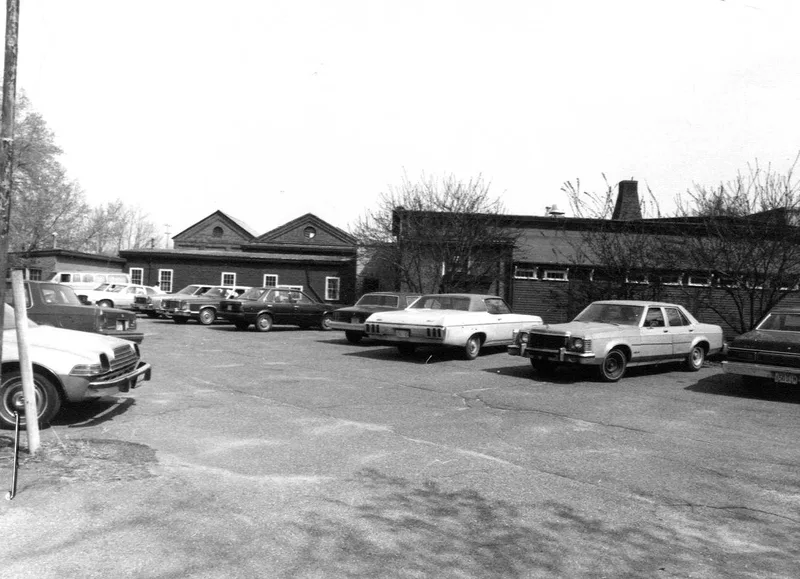
Located at 2 Cooper Street beside the Charles River in Waltham, this rambling industrial complex began as a gas works. The Waltham Gas Light Company was incorporated in 1853 and first supplied gas to customers in October 1854. The oldest buildings are a pair of brick gable-roofed structures with round gable windows and recessed brick panels. A long south wall from about 1854 to 1874 has corbeled brickwork, pilasters and segmental window openings, many still holding original 12/12 wood sash. An electric light plant was added in 1886, and by 1887 four large gasometers stood on the site. The company ceased operations in 1909, when its gas business went to the Newton and Watertown Gas Company and its electric business to Boston Edison. The plant was later sold to the Waltham Bag and Paper Company, which still made paper bags there in 1984. It was listed as the oldest industrial complex on Waltham's South Side and for its evolving small-scale plant.
Significance in brief: The nomination argues it is the oldest utilitarian/industrial complex on Waltham's South Side. The company, incorporated in 1853, kept pace with the city's growth, and its directors included prominent 19th-century citizens. The plant is also an example of a small-scale industrial works that evolved from the mid-19th to the early 20th century.
Machine-generated summary. This summary was generated by a language model from the official nomination document and has not been reviewed line by line by an editor. It may contain errors. Check the source document before relying on any detail. Source: nomination document (PDF) · National Archives catalog entry. NRHP reference 89001506, listed September 28, 1989. Summary generated October 2026 (model claude-sonnet-5-5, prompt v1.0-2026-10-29, confidence medium).
Key facts
| Address | 2 Cooper St., Waltham |
|---|---|
| County | Middlesex County |
| Listed | September 28, 1989 |
| Reference number | 89001506 |
| Resource type | Building |
| Period of significance | 1853-early 1900s |
| Architect / builder | R.P. Davis (credited with construction of the company's buildings) |
| Architectural style | Utilitarian |
| Criteria |
|
| Areas of significance | Industry, Community Planning and Development, Architecture |
| Level of significance | Local |
| Status (as stated in the nomination) | General condition good; the plant continues to manufacture paper bags as of 1984, and the form lists its present use as industrial. |
| Acreage | 3 |
| Coordinates | 42.37201, -71.23323 (NPS GIS) |
What listing means for this property
For an income-producing building, listing (individually or as a contributing building in a district) is the gateway to the 20% federal rehabilitation tax credit on qualified rehabilitation costs, often stackable with state credits. Work claiming the credit must follow the Secretary of the Interior's Standards and be approved in advance.
Listing does not restrict a private owner acting without federal money or permits; where federal funding or licensing is involved, Section 106 review applies.
General information, not legal or tax advice. Rules change; confirm with your State Historic Preservation Office or a qualified adviser.
Sources and further reading
- National Park Service, National Register of Historic Places database (snapshot May 2026), reference 89001506.
- Nomination form (PDF, National Archives) — catalog entry
- Wikipedia article (used for cross-checking only; text not reproduced here)
- Wikidata Q14715973
- This listing as JSON
Last updated October 2026. Found an error? See the editorial policy for how to report it.