Rea-Proctor Homestead

Why it's listed
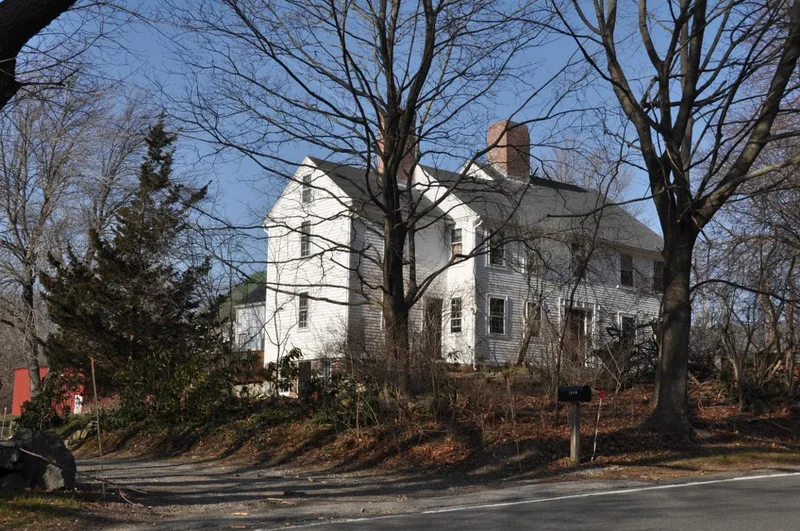
Set on a 1.4-acre homestead lot on Conant Street in Danvers, this farmhouse grew in phases from a half-house said to date from 1692. The Rea family enlarged it by 1731, Captain Isaac Rea improved the interior around 1800, and a west wing and rear ell were added in the 1800s. Panelling, wainscoting and Indian shutters survive, and the house has no heating ducts and only minimal electrical and plumbing work. Joshua Rea, Sr. defended neighbors accused of witchcraft in 1692. In 1804 the farm passed to Timothy Pickering, a former cabinet officer and U.S. Senator, who is described as central to the Essex Junto's plans for New England secession. He also kept detailed records of agricultural experiments here. Daniel Proctor bought the farm in 1812, and his descendants have farmed it since. Foundations of a barn and other outbuildings, along with family papers, give researchers material to study a New England farm over three centuries.
Significance in brief: The nomination ties the farm to two events of national significance: the 1692 Salem Village witchcraft delusion and the c. 1804 Essex Junto plot, in which Timothy Pickering and other Federalists hoped to organize New England and New York to secede from the Union. It is also significant as a site of continuous agricultural activity, including Pickering's documented early 19th-century agricultural experiments. The house shows architectural evolution over time, and the site offers archaeological potential.
Machine-generated summary. This summary was generated by a language model from the official nomination document and has not been reviewed line by line by an editor. It may contain errors. Check the source document before relying on any detail. Source: nomination document (PDF) · National Archives catalog entry. NRHP reference 82001915, listed June 2, 1982. Summary generated October 2026 (model claude-sonnet-5-5, prompt v1.0-2026-10-29, confidence high).
Key facts
| Address | 180 Conant Farm, Danvers |
|---|---|
| County | Essex County |
| Listed | June 2, 1982 |
| Reference number | 82001915 |
| Resource type | Building |
| Architect / builder | Unknown (built by tradition in 1692 by Joshua Rea, Sr. and his son John Rea) |
| Criteria |
|
| Areas of significance | Historic - Non-Aboriginal, Politics/Government, Architecture, Agriculture |
| Level of significance | National |
| Status (as stated in the nomination) | The form lists the property as occupied and unaltered, in fair condition. It is used as a summer residence and for agriculture, and needs substantial stabilization. Only a 3-stall carriage shed remains of the outbuildings. |
| Acreage | 1.4 |
| Coordinates | 42.57047, -70.91421 (NPS GIS) |
What listing means for this property
National Register listing is honorary for a privately owned home: it does not by itself restrict what an owner may do with their own money, and it does not require public access. Restrictions come from local landmark or historic-district ordinances, which are separate (how they differ).
Owner-occupied houses are not eligible for the 20% federal rehabilitation tax credit, which applies to income-producing buildings, but many states offer credits for homeowners. Listing also opens the door to preservation easements and to buying a plaque. Start with what listing means for homeowners, renovating a listed house and selling one.
General information, not legal or tax advice. Rules change; confirm with your State Historic Preservation Office or a qualified adviser.
Sources and further reading
- National Park Service, National Register of Historic Places database (snapshot May 2026), reference 82001915.
- Nomination form (PDF, National Archives) — catalog entry
- Wikipedia article (used for cross-checking only; text not reproduced here)
- Wikidata Q7300140
- This listing as JSON
Last updated October 2026. Found an error? See the editorial policy for how to report it.