Hixville Village Historic District

Why it's listed
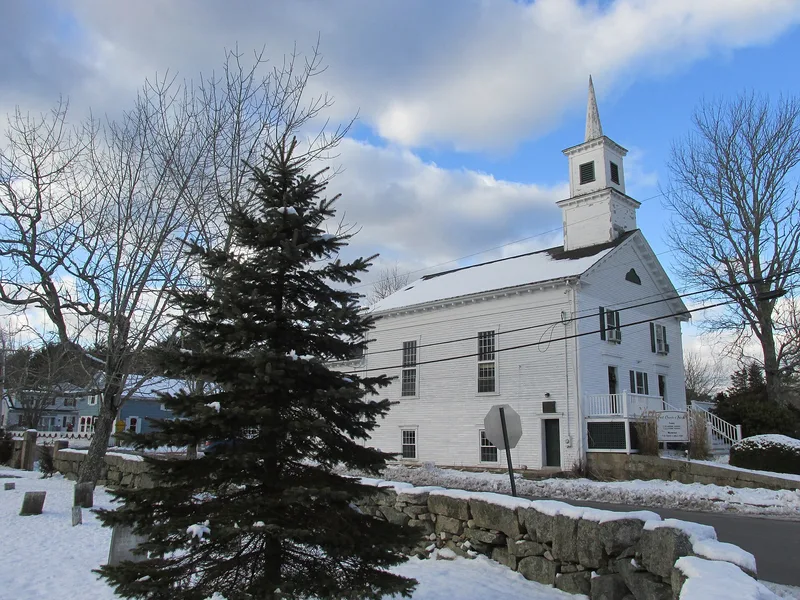
Hixville is a small crossroads village in northern Dartmouth, Massachusetts, covering about three acres around the meeting of Hixville Road and Old Fall River Road. Its core is the Hixville Christian Church, a Greek Revival building of 1853 on the site of Baptist meetinghouses raised in 1785 and 1811. Nearby are a cemetery from about 1820 with roughly 130 graves, a Greek Revival former store at 783 Old Fall River Road, the Federal-style Clothier Pierce House of about 1810, and the Colonel Jacob Collins Inn of about 1800. The village grew from the church, then from stagecoach traffic between New Bedford and Fall River beginning in 1826, and later from a local railroad stop serving farmers. It never boomed like the coastal parts of old Dartmouth, and that quiet history left its nineteenth-century character largely intact. The district was recognized for its local importance in community development and architecture, and for its likely archaeological remains from earlier meetinghouses and a burned tavern.
Significance in brief: The nomination presents Hixville as an intact nineteenth-century rural crossroads village, unusual in North Dartmouth. It grew around a Baptist meetinghouse founded in 1785, then gained commerce from the New Bedford-Fall River stagecoach line and later a local railroad stop. It is described as a representative of a vanishing community type in southeastern Massachusetts, with good potential for archaeological remains.
Machine-generated summary. This summary was generated by a language model from the official nomination document and has not been reviewed line by line by an editor. It may contain errors. Check the source document before relying on any detail. Source: nomination document (PDF) · National Archives catalog entry. NRHP reference 91000698, listed June 17, 1991. Summary generated October 2026 (model claude-sonnet-5-5, prompt v1.0-2026-10-29, confidence medium).
Key facts
| Address | Jct. of Old Fall River, Hixville and N. Hixville Rds., Dartmouth |
|---|---|
| County | Bristol County |
| Listed | June 17, 1991 |
| Reference number | 91000698 |
| Resource type | District |
| Period of significance | 1785-1900 |
| Architectural style | Early Republic/Federal; Mid-19th Century/Greek Revival |
| Criteria |
|
| Areas of significance | Agriculture, Architecture |
| Level of significance | Local |
| Status (as stated in the nomination) | The church remains active and the buildings are in residential or church use. Some, such as the Collins Inn, have vinyl siding and replaced windows. The site of the burned Lee tavern has been vacant since the mid-twentieth century. |
| Acreage | 3.2 |
| Coordinates | 41.68196, -71.03118 (NPS GIS) |
What listing means for this property
This is a historic district. Buildings within its boundary are either contributing (they add to the district's significance) or non-contributing. Owners of contributing income-producing buildings can claim the 20% federal rehabilitation tax credit; homeowners should look at state credits. National Register districts impose no design review by themselves; a local historic district ordinance, if one exists, does (the difference explained).
General information, not legal or tax advice. Rules change; confirm with your State Historic Preservation Office or a qualified adviser.
Sources and further reading
- National Park Service, National Register of Historic Places database (snapshot May 2026), reference 91000698.
- Nomination form (PDF, National Archives) — catalog entry
- Wikipedia article (used for cross-checking only; text not reproduced here)
- Wikidata Q5872903
- This listing as JSON
Last updated October 2026. Found an error? See the editorial policy for how to report it.