Macktown Historic District

Why it's listed
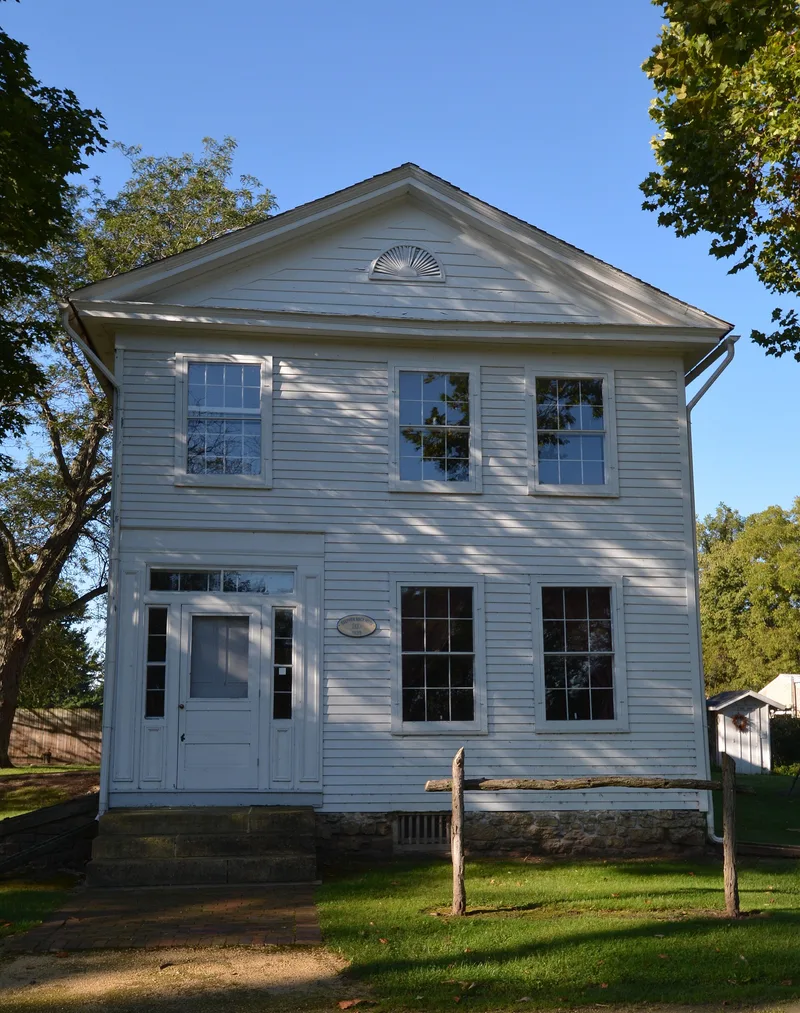
Macktown was an early river settlement on a high bluff above the Rock and Pecatonica Rivers near Rockton, Illinois. Founded by trader Stephen Mack, it once included a store, a tavern, a school, a furniture shop and log cabins, but only two buildings survive: the Stephen Mack House, a two-story Greek Revival frame house built in 1839 on a limestone foundation, and the limestone Whitman Trading Post, established in 1846. The district covers the townsite where building locations have been identified. Macktown matters because it was among the first settlements in northern Illinois and southern Wisconsin and a stopping place on the Galena Trail, a major route from Chicago to the lead mining region. Wagon ruts still lead toward the old ferry crossing, and Mack built the area's first Rock River bridge in 1843. Many founders of Rockford and other communities lived here, and the site may hold archaeological potential.
Significance in brief: Macktown was one of the first settlements in northern Illinois and southern Wisconsin and an important stopping place on the Galena Trail. Stephen Mack helped form Winnebago County in 1836 and built the first bridge across the Rock River in the area in 1843. The Mack House is architecturally notable as a Greek Revival frame house, believed to be one of the first painted frame houses west of Chicago.
Machine-generated summary. This summary was generated by a language model from the official nomination document and has not been reviewed line by line by an editor. It may contain errors. Check the source document before relying on any detail. Source: nomination document (PDF) · National Archives catalog entry. NRHP reference 78001201, listed January 5, 1978. Summary generated October 2026 (model claude-sonnet-5-5, prompt v1.0-2026-10-29, confidence medium).
Key facts
| Address | W of Rockton on Pecatonica River, Rockton |
|---|---|
| County | Winnebago County |
| Listed | January 5, 1978 |
| Reference number | 78001201 |
| Resource type | District |
| Period of significance | 1800-1899 |
| Architectural style | Greek Revival (Stephen Mack House) |
| Areas of significance | Commerce, Transportation, Exploration/Settlement, Architecture |
| Level of significance | State |
| Status (as stated in the nomination) | Publicly owned by Winnebago County and used as a park and museum; condition listed as good, with unrestricted access. |
| Acreage | 35 |
| Coordinates | 42.45016, -89.08820 (NPS GIS) |
What listing means for this property
This is a historic district. Buildings within its boundary are either contributing (they add to the district's significance) or non-contributing. Owners of contributing income-producing buildings can claim the 20% federal rehabilitation tax credit; homeowners should look at state credits. National Register districts impose no design review by themselves; a local historic district ordinance, if one exists, does (the difference explained).
General information, not legal or tax advice. Rules change; confirm with your State Historic Preservation Office or a qualified adviser.
Sources and further reading
- National Park Service, National Register of Historic Places database (snapshot May 2026), reference 78001201.
- Nomination form (PDF, National Archives) — catalog entry
- Wikipedia article (used for cross-checking only; text not reproduced here)
- Wikidata Q28147903
- This listing as JSON
Last updated October 2026. Found an error? See the editorial policy for how to report it.