Joliet Steel Works
Also known as: Joliet Works of the Union Coal, Iron and Transportation Comp

Why it's listed
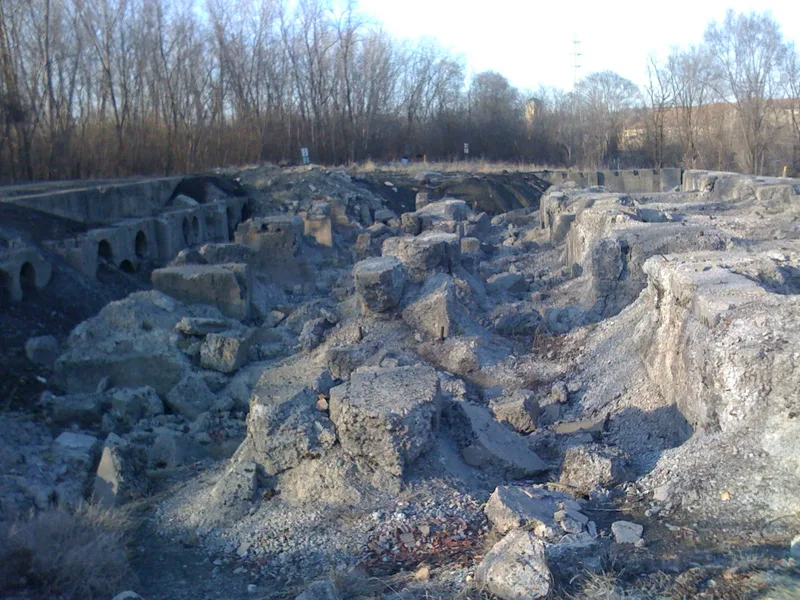
This industrial district occupies the oldest surviving part of the Joliet Steel Works, north of downtown Joliet between Collins Avenue and the Illinois & Michigan Canal. Nineteen buildings remain in the core area, seventeen of them contributing. They are built of local Joliet limestone and red brick, usually one to two and a half stories tall, rectangular, and topped with gabled roofs, some with monitor skylights. Examples include the Main Office, Roll Shop, Electric Shop, Machine Shop, Furnace Building and Blacksmith Shop, several of which appear in an 1873 lithograph of the works. Later buildings from the early 1900s add to the group. The works grew from this core and went through several corporate owners. By 1898 it contained Bessemer converters, a rail mill, wire-rod mills and a merchant mill. The district is recognized for its role in the Midwestern steel industry between 1869 and 1932. Alterations have been modest, and the plant has continued in industrial use.
Significance in brief: The district is the historic core of a steel plant that operated under several owners and typified the Midwestern iron and steel rail industry of the 1870s and 1880s. It is significant locally under Criterion A in the area of Industry. The older limestone and brick buildings keep their original character and physical features from the period of significance.
Machine-generated summary. This summary was generated by a language model from the official nomination document and has not been reviewed line by line by an editor. It may contain errors. Check the source document before relying on any detail. Source: nomination document (PDF) · National Archives catalog entry. NRHP reference 91000088, listed February 28, 1991. Summary generated October 2026 (model claude-sonnet-5-5, prompt v1.0-2026-10-29, confidence high).
Key facts
| Address | 927 Collins St., Joliet |
|---|---|
| County | Will County |
| Listed | February 28, 1991 |
| Reference number | 91000088 |
| Resource type | District |
| Period of significance | 1869 - 1932 |
| Architect / builder | Unknown |
| Architectural style | Other: Industrial vernacular |
| Criteria |
|
| Areas of significance | Industry |
| Level of significance | Local |
| Status (as stated in the nomination) | Still part of a functioning steel plant, continuing the historic industrial use; alterations are mainly brick infill of windows and small additions. |
| Acreage | 16 |
| Coordinates | 41.54094, -88.07546 (NPS GIS) |
What listing means for this property
This is a historic district. Buildings within its boundary are either contributing (they add to the district's significance) or non-contributing. Owners of contributing income-producing buildings can claim the 20% federal rehabilitation tax credit; homeowners should look at state credits. National Register districts impose no design review by themselves; a local historic district ordinance, if one exists, does (the difference explained).
General information, not legal or tax advice. Rules change; confirm with your State Historic Preservation Office or a qualified adviser.
Sources and further reading
- National Park Service, National Register of Historic Places database (snapshot May 2026), reference 91000088.
- Nomination form (PDF, National Archives) — catalog entry
- Wikipedia article (used for cross-checking only; text not reproduced here)
- Wikidata Q14687689
- This listing as JSON
Last updated October 2026. Found an error? See the editorial policy for how to report it.