Cambre House and Farm

Why it's listed
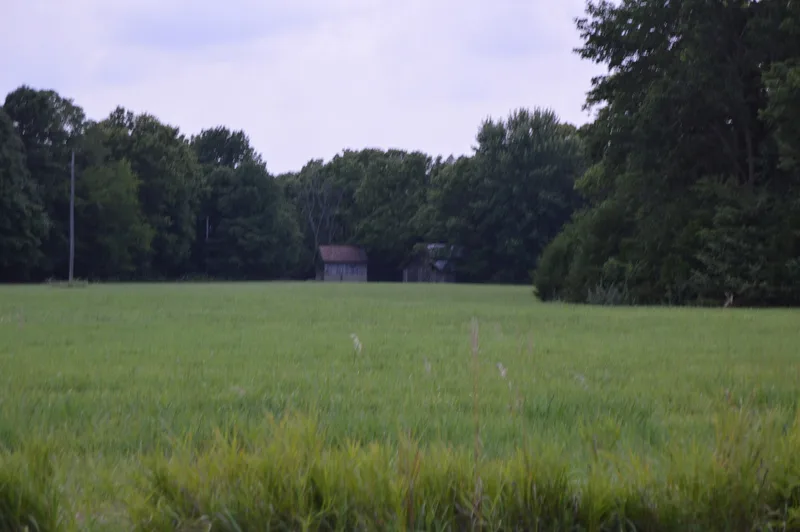
Overlooking the Mississippi River southwest of Niota, this Hancock County farmstead centers on a house built in 1867 by Adolphe Cambre, a French immigrant and carpenter associated with the Icarian communal movement. The house is described as an anglicized Creole type, with a two-story front, an inset porch originally enclosed against the northern climate, and extra-wide front doors. Cambre made the interior panelling, doors, trim, cabinetwork and mantel by hand, and much of it survives, including original blue-milk paint in the stairwell. Changes since 1867 include a new roof and the removal of a partition in a former rental room. Outbuildings, mostly dating from about 1900 to 1930, include a barn, garage, shed, henhouse and pumphouse-cistern fed from Mormon Springs. The property matters as the last Icarian-associated building in Illinois to retain its integrity, and as an expression of French identity along the river. Cambre's family kept it until 1979.
Significance in brief: The nomination argues the house is the last Icarian-associated construction in Illinois that retains architectural integrity, linking themes of communitarianism and French ethnicity in the state's mid-nineteenth-century history. It is described as an anglicized Creole house type. The long tenure of the builder's family kept the house and its handmade interior largely intact.
Machine-generated summary. This summary was generated by a language model from the official nomination document and has not been reviewed line by line by an editor. It may contain errors. Check the source document before relying on any detail. Source: nomination document (PDF) · National Archives catalog entry. NRHP reference 84000308, listed November 13, 1984. Summary generated October 2026 (model claude-sonnet-5-5, prompt v1.0-2026-10-29, confidence medium).
Key facts
| Address | SW of Niota, Niota |
|---|---|
| County | Hancock County |
| Listed | November 13, 1984 |
| Reference number | 84000308 |
| Resource type | Building |
| Period of significance | 1800-1899 |
| Architect / builder | Adolphe Cambre |
| Architectural style | Anglicized Creole house |
| Areas of significance | European |
| Level of significance | State |
| Status (as stated in the nomination) | The form marks the property as both occupied and unoccupied. The house is described as having excellent interior woodwork, most outbuildings are in good condition, and the henhouse is deteriorated. |
| Acreage | 7.1 |
| Coordinates | 40.59407, -91.34332 (NPS GIS) |
What listing means for this property
National Register listing is honorary for a privately owned home: it does not by itself restrict what an owner may do with their own money, and it does not require public access. Restrictions come from local landmark or historic-district ordinances, which are separate (how they differ).
Owner-occupied houses are not eligible for the 20% federal rehabilitation tax credit, which applies to income-producing buildings, but many states offer credits for homeowners. Listing also opens the door to preservation easements and to buying a plaque. Start with what listing means for homeowners, renovating a listed house and selling one.
General information, not legal or tax advice. Rules change; confirm with your State Historic Preservation Office or a qualified adviser.
Sources and further reading
- National Park Service, National Register of Historic Places database (snapshot May 2026), reference 84000308.
- Nomination form (PDF, National Archives) — catalog entry
- Wikipedia article (used for cross-checking only; text not reproduced here)
- Wikidata Q21197496
- This listing as JSON
Last updated October 2026. Found an error? See the editorial policy for how to report it.