Biograph Theater Building

Why it's listed
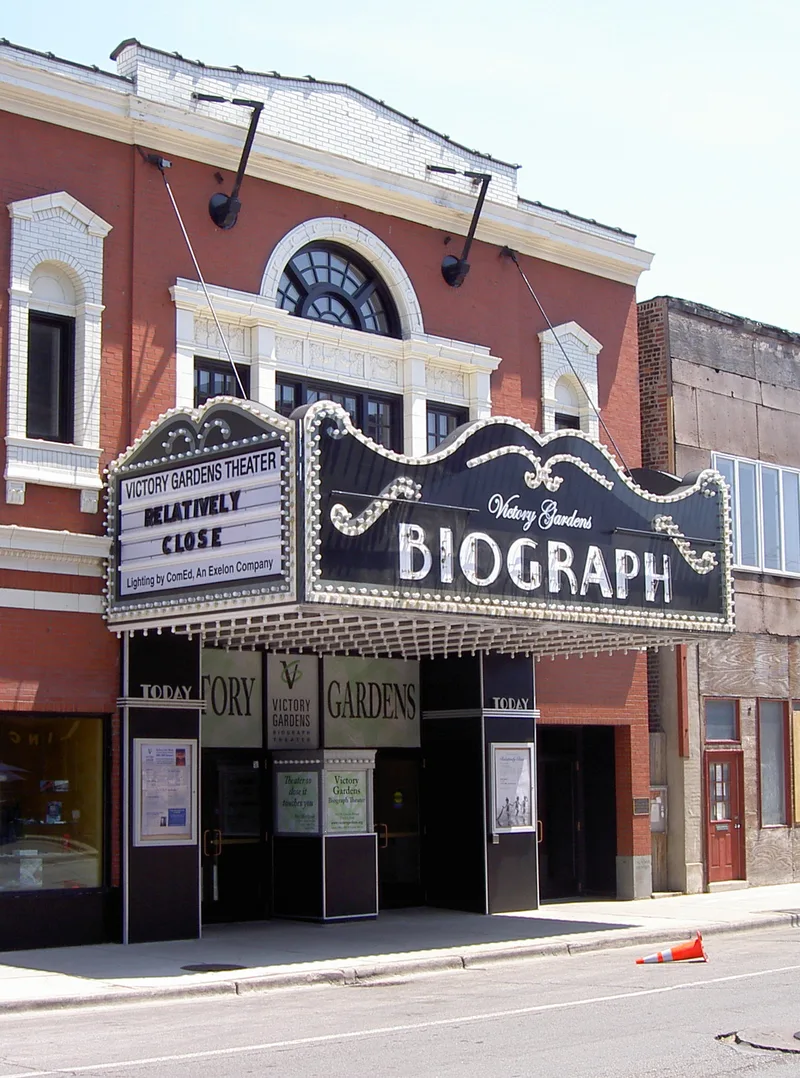
Built in 1915 on North Lincoln Avenue in Chicago, the Biograph Theater is a two-story brick building that combines ground-floor shops with an auditorium designed specifically for motion pictures. Architect Samuel N. Crowen gave it a neo-classical exterior, with palladian windows above the marquee and white terra-cotta pilasters and belt course. The entrance was remodeled in an Art Deco style around 1930, and the terrazzo floor and cove lighting from that work survive, as do the original seat frames and the steel-trussed, column-free auditorium. As an early purpose-built movie house, it reflects a time when the new medium was still seen as a risky investment, so commercial space was included. Its lasting fame comes from July 22, 1934, when bank robber John Dillinger left a showing of Manhattan Melodrama and was shot by FBI agents led by Melvin Purvis in the alley south of the entrance. The site remains a visitor draw tied to Chicago's criminal lore.
Significance in brief: It is an early example of a building designed specifically for showing motion pictures, combining a theater with storefronts. Its main claim to fame is that John Dillinger was shot by FBI agents in the alley beside it on July 22, 1934, after attending a film there. The form ties this event to Chicago's history of criminal notoriety.
Machine-generated summary. This summary was generated by a language model from the official nomination document and has not been reviewed line by line by an editor. It may contain errors. Check the source document before relying on any detail. Source: nomination document (PDF) · National Archives catalog entry. NRHP reference 84000934, listed May 17, 1984. Summary generated October 2026 (model claude-sonnet-5-5, prompt v1.0-2026-10-29, confidence medium).
Key facts
| Address | 2433 N. Lincoln Ave., Chicago |
|---|---|
| County | Cook County |
| Listed | May 17, 1984 |
| Reference number | 84000934 |
| Resource type | Building |
| Period of significance | 1900- |
| Architect / builder | Samuel N. Crowen |
| Architectural style | Neo-classical exterior with Art Deco entrance remodeling from the late 1920s or early 1930s |
| Areas of significance | Performing Arts, Social History |
| Level of significance | State |
| Status (as stated in the nomination) | Occupied and in use as a theater; condition rated good and altered, with the original marquee largely intact. |
| Acreage | 0.4 |
| Coordinates | 41.92639, -87.64927 (NPS GIS) |
What listing means for this property
For an income-producing building, listing (individually or as a contributing building in a district) is the gateway to the 20% federal rehabilitation tax credit on qualified rehabilitation costs, often stackable with state credits. Work claiming the credit must follow the Secretary of the Interior's Standards and be approved in advance.
Listing does not restrict a private owner acting without federal money or permits; where federal funding or licensing is involved, Section 106 review applies.
General information, not legal or tax advice. Rules change; confirm with your State Historic Preservation Office or a qualified adviser.
Sources and further reading
- National Park Service, National Register of Historic Places database (snapshot May 2026), reference 84000934.
- Nomination form (PDF, National Archives) — catalog entry
- Wikipedia article (used for cross-checking only; text not reproduced here)
- Wikidata Q4914863
- This listing as JSON
Last updated October 2026. Found an error? See the editorial policy for how to report it.