Lovejoy, Owen, Homestead
Also known as: Underground Station

Why it's listed
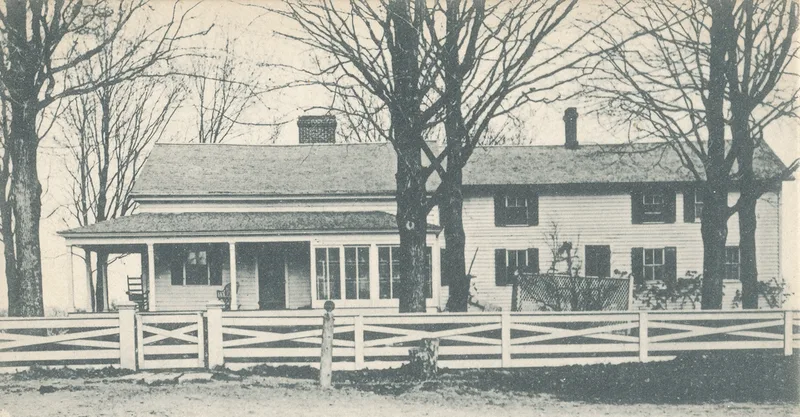
Built in 1838 as a two-story frame house on the edge of Princeton, Illinois, this 15-room dwelling was framed with hand-hewn native pine and black walnut joined by mortise and tenon. An east wing was probably added in the 1840s. The house was originally built by Butler Denham. After Denham died, his widow married Owen Lovejoy in 1843, and the house and farm became known by his name. Lovejoy was a minister and fierce anti-slavery orator who ran for office on the Liberty Party ticket, then served in Congress from 1857 until his death in 1864. He openly used the home as a station on the Underground Railroad, and it was called a divisional headquarters among routes leading north to Canada. In 1863 he introduced a universal emancipation bill that contributed the essence of the Thirteenth Amendment. The roof and foundation were repaired in 1972, and the property serves as a historic site and museum.
Significance in brief: The house was the home of Owen Lovejoy, a minister, orator, U.S. Representative and leading abolitionist. He openly operated it as a station on the Underground Railroad, and it was described as a divisional headquarters among stations from the South to Canada. Lovejoy also introduced a universal emancipation bill in Congress in 1863 that shaped the Thirteenth Amendment.
Machine-generated summary. This summary was generated by a language model from the official nomination document and has not been reviewed line by line by an editor. It may contain errors. Check the source document before relying on any detail. Source: nomination document (PDF) · National Archives catalog entry. NRHP reference 73000690, listed May 24, 1973. Summary generated October 2026 (model claude-sonnet-5-5, prompt v1.0-2026-10-29, confidence medium).
Key facts
| Address | Peru St. (U.S. 6), Princeton |
|---|---|
| County | Bureau County |
| Listed | May 24, 1973 |
| Reference number | 73000690 |
| Resource type | Building |
| Period of significance | 19th Century (specific dates 1856-1864) |
| Areas of significance | Politics/Government, Black, Social History |
| Level of significance | National, State |
| National Historic Landmark | Yes, designated February 18, 1997 |
| Status (as stated in the nomination) | Condition listed as excellent and altered, on its original site. The roof and foundation were repaired in 1972 and the property was restored to its original state. The form lists present use as a historic site, museum and underground slave station, and marks the property as occupied. |
| Acreage | 1.2 |
| Coordinates | 41.37364, -89.45114 (NPS GIS) |
What listing means for this property
National Register listing is honorary for a privately owned home: it does not by itself restrict what an owner may do with their own money, and it does not require public access. Restrictions come from local landmark or historic-district ordinances, which are separate (how they differ).
Owner-occupied houses are not eligible for the 20% federal rehabilitation tax credit, which applies to income-producing buildings, but many states offer credits for homeowners. Listing also opens the door to preservation easements and to buying a plaque. Start with what listing means for homeowners, renovating a listed house and selling one.
General information, not legal or tax advice. Rules change; confirm with your State Historic Preservation Office or a qualified adviser.
Sources and further reading
- National Park Service, National Register of Historic Places database (snapshot May 2026), reference 73000690.
- Nomination form (PDF, National Archives) — catalog entry
- Wikipedia article (used for cross-checking only; text not reproduced here)
- Wikidata Q7114548
- This listing as JSON
Last updated October 2026. Found an error? See the editorial policy for how to report it.