Seclusaval and Windsor Spring

Why it's listed
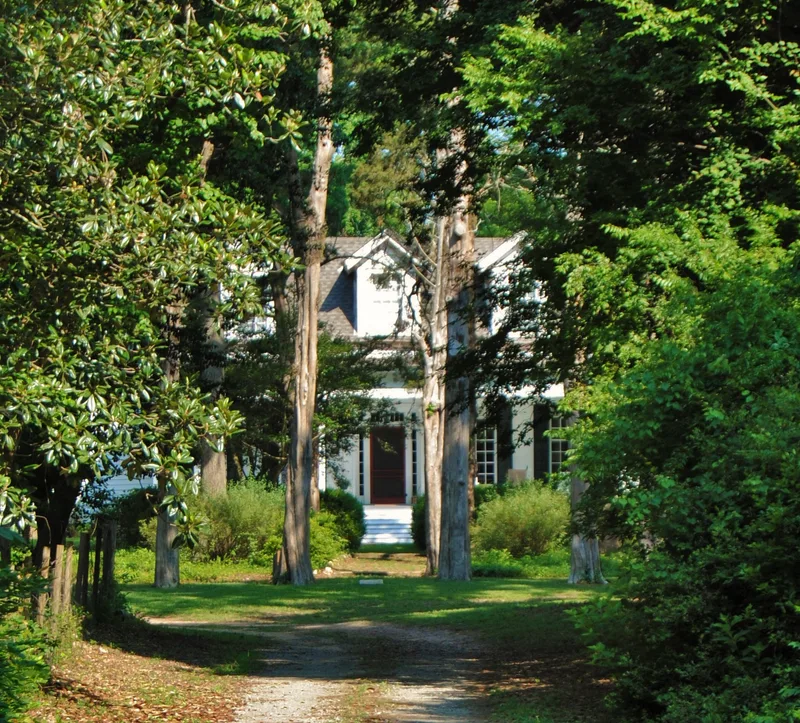
Seclusaval and Windsor Spring make up a small rural district near Hepzibah, outside Augusta, Georgia. The centerpiece is Seclusaval, a house begun around 1843 as a Sand Hills Cottage, a building type native to the Augusta area. In the 1850s or 1860s, rooms from the nearby Windsor house were dismantled and moved to the rear and sides, giving the house its unusual plan. It keeps its original doors, mantels, graining, moldings, floors and some historic wallpaper. Behind the house are historic outbuildings, including an 1916 barn, a smokehouse and a rebuilt slave house, and in front is a mature landscaped yard. Down the old roadbed lies Windsor Spring, with a stone springhouse and a frame pavilion from about 1916-1920. The spring water has been bottled and sold since the early twentieth century, and the same family has run the operation since 1907. The district was recognized for its architecture and for this long-running commercial enterprise.
Significance in brief: The revised nomination argues significance in architecture and commerce. Seclusaval is a good example of a vernacular Greek Revival Sand Hills Cottage, enlarged with rooms moved from the nearby Windsor house. Windsor Spring water has been bottled and marketed from the property since the early 20th century by the same family. The earlier draft also cited archaeology, transportation and landscape architecture, but the final form claims no archaeological significance.
Machine-generated summary. This summary was generated by a language model from the official nomination document and has not been reviewed line by line by an editor. It may contain errors. Check the source document before relying on any detail. Source: nomination document (PDF) · National Archives catalog entry. NRHP reference 87001331, listed October 11, 1988. Summary generated October 2026 (model claude-sonnet-5-5, prompt v1.0-2026-10-29, confidence medium).
Key facts
| Address | Jct. of Windsor Spring and Tobacco Rds., Hepzibah |
|---|---|
| County | Richmond County |
| Listed | October 11, 1988 |
| Reference number | 87001331 |
| Resource type | District |
| Period of significance | 1905-1933 |
| Architect / builder | Unknown |
| Architectural style | Greek Revival (vernacular Sand Hills Cottage) |
| Criteria |
|
| Areas of significance | Commerce, Architecture |
| Level of significance | State |
| Status (as stated in the nomination) | Occupied and in long-term use as a residence; spring water is still bottled by hand. Changes have been minimal. Some outbuildings survive only as sites or ruins. |
| Acreage | 100 |
| Coordinates | 33.38336, -82.07085 (NPS GIS) |
What listing means for this property
This is a historic district. Buildings within its boundary are either contributing (they add to the district's significance) or non-contributing. Owners of contributing income-producing buildings can claim the 20% federal rehabilitation tax credit; homeowners should look at state credits. National Register districts impose no design review by themselves; a local historic district ordinance, if one exists, does (the difference explained).
General information, not legal or tax advice. Rules change; confirm with your State Historic Preservation Office or a qualified adviser.
Sources and further reading
- National Park Service, National Register of Historic Places database (snapshot May 2026), reference 87001331.
- Nomination form (PDF, National Archives) — catalog entry
- Wikipedia article (used for cross-checking only; text not reproduced here)
- Wikidata Q7442935
- This listing as JSON
Last updated October 2026. Found an error? See the editorial policy for how to report it.