Old Rock House

Why it's listed
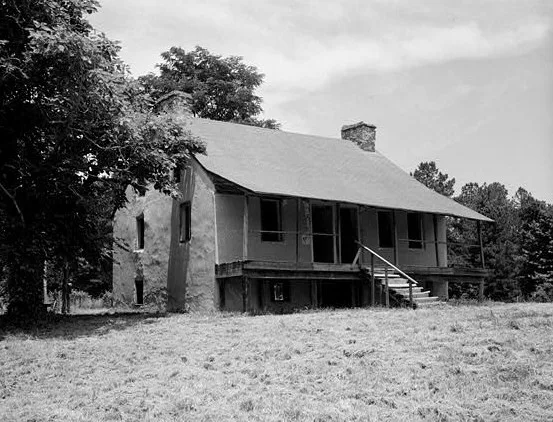
Built around 1784 by Thomas Ansley, this fieldstone house stands about three miles northwest of Thomson in McDuffie County, Georgia. Its twenty-four-inch-thick walls, scored cement finish, gable-end chimneys and two full stories over a basement give it a rough, fortress-like look that recalls New England garrison houses. The main floor holds five rooms and several fireplaces, including a small corner room locally called the birthing room. Ansley, a Quaker born in New Jersey, came to Georgia in 1768 with a group of Quaker families and later received land grants near the settlement of Wrightsborough. The house is the only surviving building associated with that community, apart from its cemetery, and is possibly the only known stone residence from its period in Georgia. Occupied until 1950, it was damaged by vandals before a preservation foundation acquired it and began stabilizing and restoring it as a record of Georgia's Quaker frontier heritage.
Significance in brief: It is the only surviving structure tied to the late 18th-century Quaker community of Wrightsborough, apart from the cemetery. It is also described as possibly the only known stone residence from a period when Georgia houses were mostly brick or wood. Its fortress-like construction recalls New England garrison houses.
Machine-generated summary. This summary was generated by a language model from the official nomination document and has not been reviewed line by line by an editor. It may contain errors. Check the source document before relying on any detail. Source: nomination document (PDF) · National Archives catalog entry. NRHP reference 70000841, listed December 29, 1970. Summary generated October 2026 (model claude-sonnet-5-5, prompt v1.0-2026-10-29, confidence high).
Key facts
| Address | NW of Thomson on Old Rock House Rd., Thomson |
|---|---|
| County | McDuffie County |
| Listed | December 29, 1970 |
| Reference number | 70000841 |
| Resource type | Building |
| Period of significance | 18th Century, 20th Century; c. 1784 and recent restoration |
| Architect / builder | Thomas Ansley (1737-1809) |
| Areas of significance | Exploration/Settlement, Architecture, Religion |
| Level of significance | State |
| Status (as stated in the nomination) | Occupied until 1950, then vandalized and abandoned; condition listed as deteriorated. A Quaker foundation acquired it, fenced the property, shuttered the windows, repaired the stonework and began restoration. |
| Acreage | 1 |
| Coordinates | 33.48223, -82.55782 (NPS GIS) |
What listing means for this property
National Register listing is honorary for a privately owned home: it does not by itself restrict what an owner may do with their own money, and it does not require public access. Restrictions come from local landmark or historic-district ordinances, which are separate (how they differ).
Owner-occupied houses are not eligible for the 20% federal rehabilitation tax credit, which applies to income-producing buildings, but many states offer credits for homeowners. Listing also opens the door to preservation easements and to buying a plaque. Start with what listing means for homeowners, renovating a listed house and selling one.
General information, not legal or tax advice. Rules change; confirm with your State Historic Preservation Office or a qualified adviser.
Sources and further reading
- National Park Service, National Register of Historic Places database (snapshot May 2026), reference 70000841.
- Nomination form (PDF, National Archives) — catalog entry
- Wikipedia article (used for cross-checking only; text not reproduced here)
- Wikidata Q7084862
- This listing as JSON
Last updated October 2026. Found an error? See the editorial policy for how to report it.